Can You Serve Overhand In Pickleball? (Rule Twist)
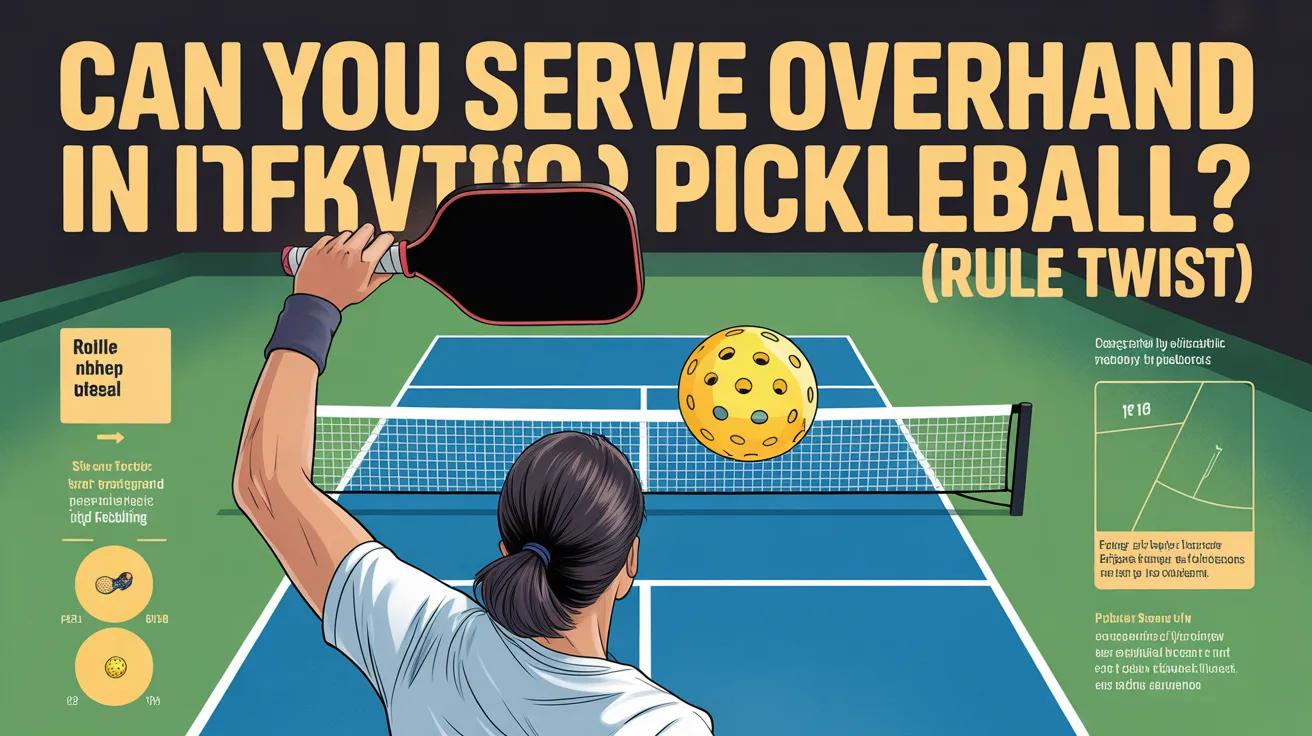
No, you cannot serve overhand in pickleball. The rules require an underhand serve, with contact made below the waist and the paddle moving upward. Overhand serves are considered illegal and will result in a fault during play.
In this article, we explain that you cannot serve overhand in pickleball. The serve must be underhand, with contact below the waist and an upward motion; it is considered a fault.
Is an Overhand Serve Allowed in Pickleball?
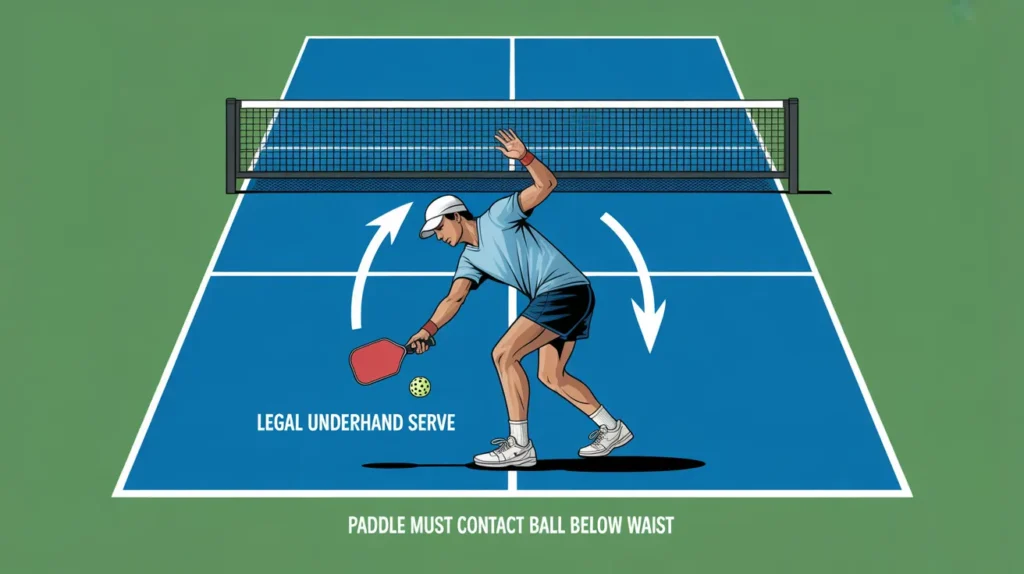
No, an overhand serve is not allowed in pickleball. The rules clearly say the serve must be underhand, with contact below the waist. If you try an overhand motion, it will be called a fault.
Key Points to Understand:
- The serve must be hit underhand, not overhand
- The ball contact must be below your waist (navel level)
- Your paddle should move in an upward direction
- Overhand serves are illegal in all standard play
In simple terms, pickleball keeps the serve easy and fair for everyone. That’s why overhand serving is not part of the game.
The Official Rule You Need to Know
Pickleball rules require an underhand serve. The paddle must contact the ball below the waist, and the motion should be upward. Any serve that breaks these rules is considered illegal.
Key Rules You Must Follow:
- Contact the ball below the waist (navel level)
- Keep the paddle head below your wrist at contact
- Use an upward swing motion
- At least one foot must stay behind the baseline
Also Read: Why Is Pickleball Scoring So Hard?
These rules come from official guidelines and are strictly followed in tournaments. Even a small mistake in your motion can turn your serve into a fault.
Why Overhand Serves Are Not Allowed
Overhand serves are banned in pickleball to keep the game fair and safe. An underhand serve ensures beginners and advanced players have equal chances to return the ball.
Why This Rule Exists:
- Fair Play: Overhand serves can be too fast and hard to return, giving an unfair advantage.
- Safety: High-speed serves could cause injuries, especially for beginners.
- Game Balance: The underhand serve keeps rallies longer and more enjoyable.
In short, banning overhand serves maintains a friendly, competitive game for all skill levels.
What Makes a Serve Illegal in Pickleball
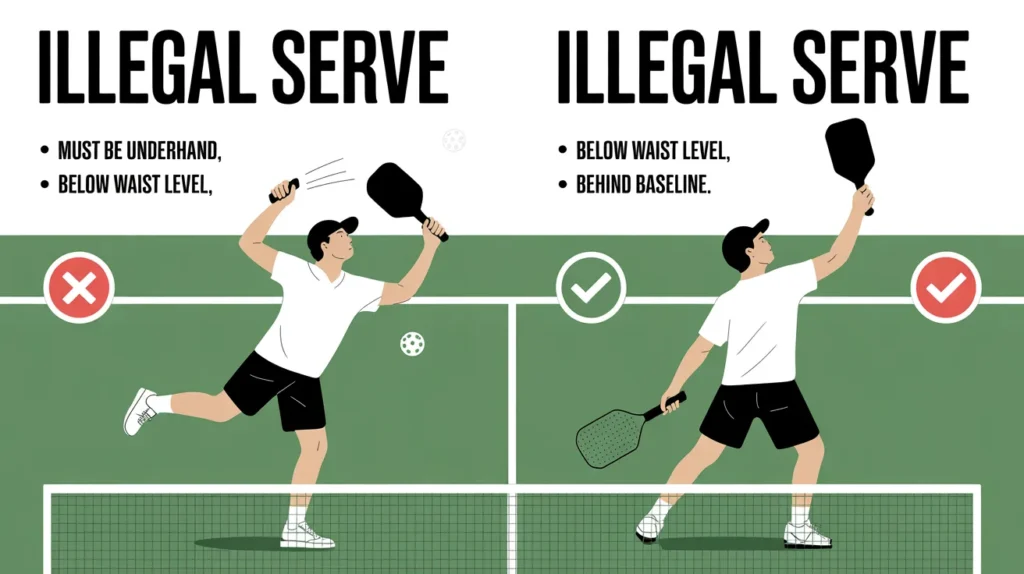
A serve becomes illegal when it breaks any official rule, like hitting the ball above the waist, using an overhand motion, or stepping on the baseline. Even small mistakes can quickly become faults
In pickleball, the serve has very clear rules, and players must follow them all at once. If one part of your motion is wrong, the entire serve is counted as illegal. This is why many beginners lose points without even realizing what they did wrong.
Common Reasons a Serve Becomes Illegal:
- Contacting the ball above the waist (navel level)
- Using an overhand or sidearm motion
- The paddle head is above the wrist at contact
- Not using a clear upward swing
- Stepping on or over the baseline while serving
Also Read: What Is The Double-Bounce Rule In Pickleball?
Many players think only power matters, but in reality, technique matters more than force. A simple, clean underhand serve is always safer than trying risky shots.
Also Read: What Are The Rules For Pickleball?
Key Requirements for Pickleball Legal Serve
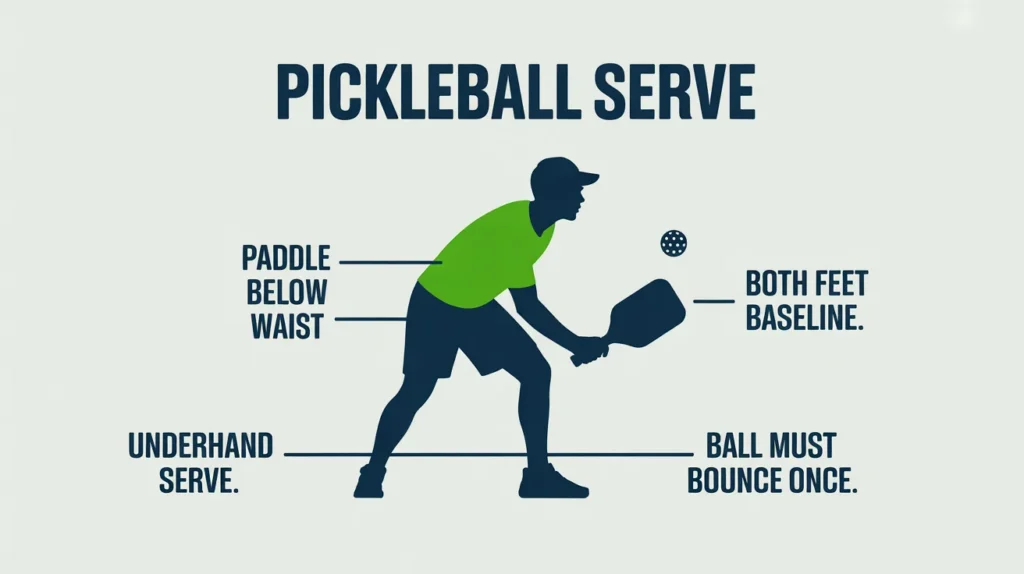
A legal pickleball serve must be underhand, with contact below the waist, and the paddle moving upward. You must also stay behind the baseline and hit into the correct service box.
| Rule Element | Legal Serve ✅ | Illegal Serve ❌ |
| Motion | Underhand | Overhand / Sidearm |
| Contact Point | Below waist | Above wrist |
| Paddle Position | Below wrist | Above wrist |
| Foot Position | Behind baseline | On/over baseline |
| Swing Direction | Upward | Downward |
A good serve is not about power but about control and correct form. If you follow these simple rules every time, you can avoid faults and play with more confidence.
Also Read: How Long Is A Pickleball Game?
Underhand vs Drop Serve Explained
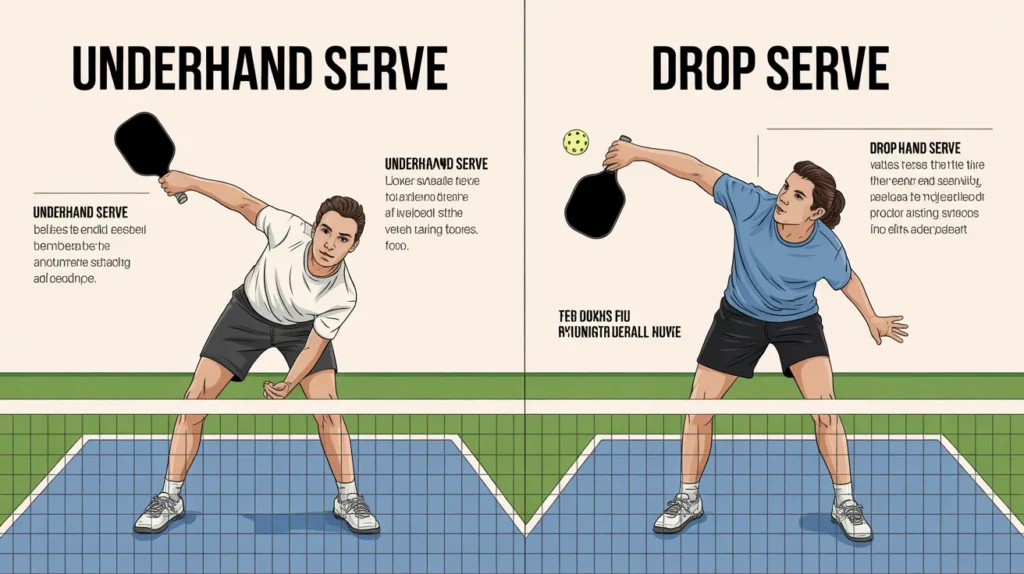
Pickleball allows two legal serves: the underhand serve and the drop serve. Both are useful, but they follow different rules and suit different skill levels.
Underhand Serve:
- Hit the ball before it bounces
- Contact must be below the waist
- The paddle must stay below the wrist
- Requires an upward swing motion
- Needs good timing and control
Drop Serve:
- The ball must bounce before hitting
- No waist restriction for contact
- No strict paddle position rule
- Allows a more natural swing
- Easier for beginners to learn
The underhand serve is more traditional and widely used, while the drop serve gives more flexibility and is great for players still improving their technique.
Also Read: How To Start Playing Pickleball?
Common Serve Mistakes Players Make
Many players lose points because of small serve mistakes. Most errors occur when players ignore basic rules such as contact height, paddle position, or foot placement.
Also Read: How To Be Good At Pickleball?
Common Mistakes to Avoid:
- Hitting the ball above the waist
- Using an overhand or sidearm motion
- Keeping the paddle above the wrist at contact
- Not using a clear upward swing
- Stepping on or over the baseline
- Serving too fast without control
These mistakes are very common, especially for beginners. The key is to focus on a simple, clean technique instead of power. A correct serve not only avoids faults but also helps you start the rally with confidence.
Also Read: How To Practice Pickleball Alone?
Can You Ever Hit Overhand in Pickleball?
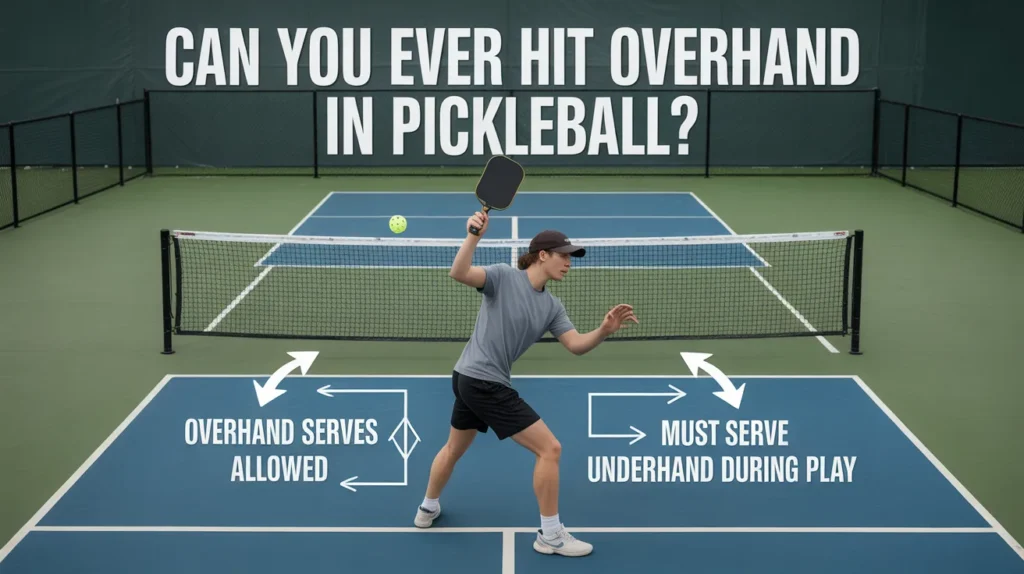
Yes, you can hit overhand in pickleball, but not on the serve. Overhand shots are allowed during rallies, such as smashes or volleys, once the point has started.
Many beginners get confused here because they think overhand shots are completely banned. In reality, the restriction only applies to the serve. After the serve, you are free to hit the ball in any way, including powerful overhand smashes.
Where Overhand Shots Are Allowed:
- During rallies after the serve
- For smashes and overhead winners
- When returning high balls or lobs
Where Overhand Shots Are NOT Allowed:
- On the serve
- During the serve motion itself
Understanding this difference is very important. It helps you play more aggressively during rallies while still following the correct rules on your serve.
Also Read: Is Pickleball Easy To Learn?
Overhand Shots During Rallies vs Serves
Overhand shots are allowed during rallies but not on the serve. The serve must always follow underhand rules, while rallies give you full freedom to hit aggressively.
Key Differences:
- Serve: Only an underhand motion is allowed
- Rally: Overhand shots are fully allowed
- Serve: Must follow strict rules (waist, paddle, motion)
- Rally: No such restrictions on shot style
- Serve: Focus is on starting the point safely
- Rally: Focus is on winning the point
- Serve: Overhand = automatic fault
- Rally: Overhand = powerful advantage
In simple terms, the serve is controlled and rule-based, while rallies are open and aggressive. Knowing when you can use overhand shots helps you avoid faults and play smarter during the game.
Also Read: Is Pickleball Played on a Tennis Court?
When Should You Be Concerned About Your Serve?
You should be concerned about your serve if you often lose points due to faults or feel unsure about your technique. Small mistakes can quickly turn into consistent errors.
Many players ignore their serve until it starts costing them points. If your serve feels inconsistent or others call it out, it’s a clear sign you need to fix it. Even a small issue in form can affect your whole game.
Signs You Should Pay Attention:
- You get frequent faults on your serve
- Opponents question your serve’s legality
- Your serve feels unstable or inconsistent
- You focus more on power than control
Improving your serve early can save you from bigger problems later. A simple and legal serve builds confidence and helps you start every point the right way.
How to Fix and Improve Your Serve Legally
To improve your serve, focus on correct form, not power. Follow the basic rules, practice simple motions, and build consistency step by step.
Also Read: How To Regrip A Pickleball Paddle?
Simple Ways to Improve Your Serve:
- Practice a smooth underhand motion every time
- Keep the ball contact below your waist
- Maintain a slow and controlled swing
- Stand fully behind the baseline
- Aim for accuracy before power
- Repeat the same motion to build muscle memory
Improving your serve doesn’t require advanced skills. The key is to stay consistent and follow the rules strictly. A clean and reliable serve will help you avoid faults and start each point with confidence.
Also Read: What Makes A Good Pickleball Paddle?
FAQs:
What happens if you break serve rules in pickleball?
It is called a fault, and you lose the point or your serve immediately.
How can beginners serve correctly without faults?
Use a simple underhand motion, keep contact below the waist, and focus on control.
Is a sidearm serve allowed in pickleball?
No, sidearm serves are not allowed because they break the required underhand motion rule.
Can you change your serve style during a match?
Yes, you can switch serve styles at any time as long as each serve follows the rules.
Do professional players follow the same serve rules?
Yes, the same serve rules apply to all players, including professionals.
Conclusion:
In conclusion, you cannot serve overhand in pickleball, as the rules require an underhand motion with proper technique. Understanding pickleball serve rules helps you avoid faults, improve consistency, and play with confidence while using legal and effective serving methods in every game.