
How Much Space Do You Need For A Pickleball Court? (Complete Guide)
A standard pickleball court needs 20 ft × 44 ft of playing space. For safe movement and comfortable gameplay, most experts recommend a total area of around 30 ft × 60 ft, especially for backyard or home courts with extra room around the edges.
In this article, you will learn exactly how much space you need for a pickleball court, including official dimensions, minimum backyard size, and the extra room most homeowners forget before building.
The Minimum Space You Need to Build a Pickleball Court
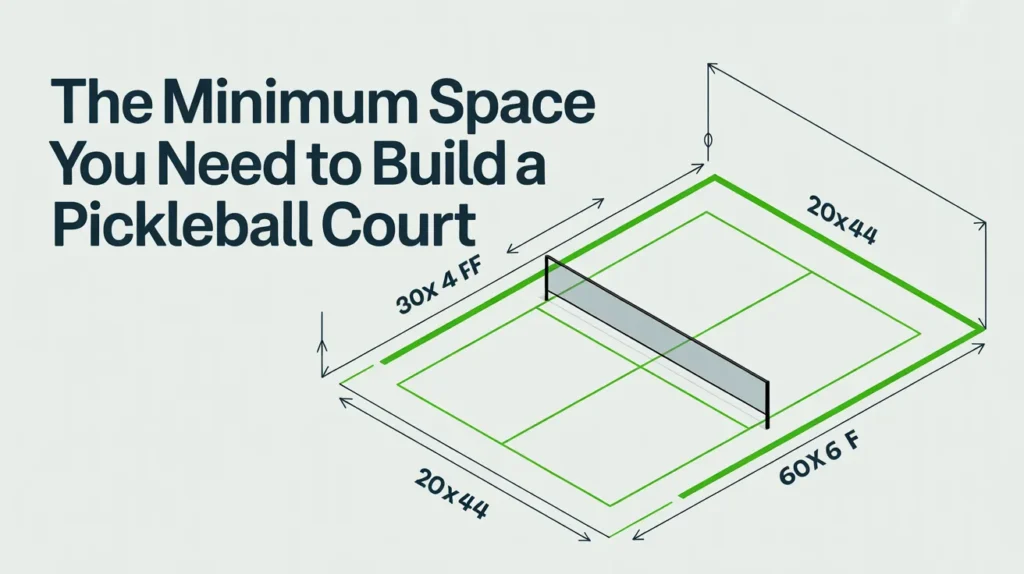
A standard pickleball court is small, but you still need extra space around it to play safely and comfortably. The court alone is not enough for real gameplay.
Key Idea:
The official court is fixed, but the total space depends on safety and movement.
- Official court size is 20 ft × 44 ft
- Minimum total space needed is around 30 ft × 60 ft
- The ideal space for smooth play is about 34 ft × 64 ft
- Extra space helps players move freely without hitting fences or walls
Simple Table for Clarity
| Setup Type | Space Needed |
| Court Only | 20 × 44 ft |
| Minimum Play Area | 30 × 60 ft |
| deal Setup | 34 × 64 ft |
In short, the court is small, but the real space depends on how comfortably you want to play.
Why Pickleball Courts Need More Room Than Most People Expect
A pickleball court may look small, but real gameplay needs extra space around it. Without that space, the game feels cramped and unsafe.
Simple Truth:
The court size is fixed, but the movement space is what makes the game playable.
- Players need space to run after shots
- Extra room prevents hitting fences or walls
- It improves reaction time and safety
- It makes casual play more enjoyable
What Determines the Total Space Required for a Pickleball Court?
The space you need is not just about court size. It depends on how and where you plan to build it. Various factors can increase or decrease the total area required for comfortable play.
Indoor vs Outdoor Court Requirements
Indoor courts don’t need weather protection, but ceiling height becomes very important. If the ceiling is too low, it affects gameplay.
Also Read: What Are Pickleball Courts Made Of?
Ceiling Height and Vertical Clearance
For indoor courts, height matters as much as floor space. A low ceiling can block high shots and reduce the quality of play.
That’s why gyms and sports halls usually need higher clearance for a proper pickleball setup.
Backyard Shape and Layout Limitations
Not every backyard is a perfect rectangle. Some are narrow, uneven, or blocked by walls or trees. These limitations often decide how big your court can realistically be, even if you have enough total land area.
Standard Measurements and Recommended Court Sizes
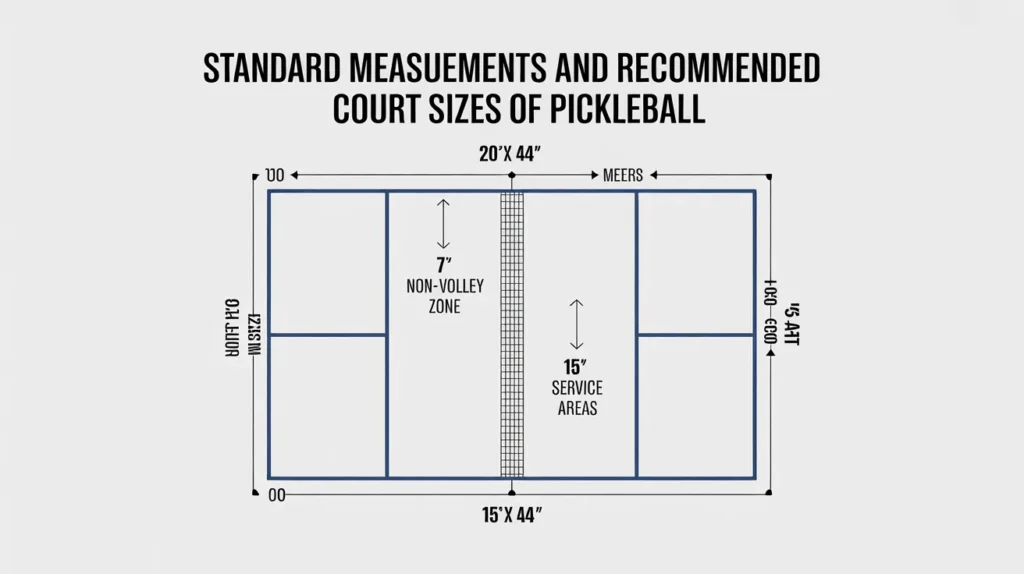
Pickleball has official dimensions, but the total space you choose depends on comfort and playing level. Most people need more than just the basic court size.
The court itself is always the same, but recommended space changes based on usage.
Official Pickleball Court Size
The official court size is 20 feet wide and 44 feet long. This does not change for singles or doubles play. It is the same standard used in every official game.
Minimum Backyard Space Requirement
The smallest workable space for a court is about 30 feet by 60 feet. This allows basic movement and some safety clearance. It works, but play can feel tight in smaller yards.
Ideal Space for Comfortable Play
For better gameplay, most experts recommend a size of around 34 by 64 feet. This gives enough room for smooth movement and fewer restrictions. It feels closer to professional play conditions.
Court Size in Feet and Meters
Pickleball courts are used worldwide, so both measurement systems matter.
- 20 × 44 ft equals about 6.1 × 13.4 meters
- 34 × 64 ft equals about 10.3 × 19.5 meters
Can a Pickleball Court Fit in Different Spaces?
Many people do not have a large open area, so they often wonder if a pickleball court can still fit in smaller or unusual spaces. The good news is that it often can, with smart planning. See this: backyard pickleball court ideas
It depends on how flexible your space is and how serious you are about gameplay quality.
Small Backyard Court Setup Ideas
Even a compact backyard can work if you adjust the layout. You may need to reduce buffer space, but the game is still playable.
Simple layouts and portable nets can help you make the most of limited space.
Building a Court on a Driveway
A driveway is one of the easiest options for a home pickleball setup. The surface is already flat and hard, which saves construction costs.
However, space is often tight, so it’s usually better for casual play.
Converting a Tennis Court into Pickleball Courts
A standard tennis court can fit multiple pickleball courts. This is one of the most efficient ways to maximize space.
Many communities now use shared tennis-to-pickleball conversions.
Also Read: Is Pickleball Played on a Tennis Court?
Common Space Mistakes to Avoid Before Building a Pickleball Court
Many people think building a pickleball court is only about fitting the court size, but small planning mistakes can cause big problems later.
Most issues happen because people ignore the extra space and the real movement needs.
- Not leaving enough safety buffer space
- Poor measurement of the backyard area
- Ignoring fence or wall distance
- Choosing the wrong layout direction
Ignoring Safety Buffer Space
One of the biggest mistakes is building the court too close to walls, fences, or obstacles. This reduces movement space and increases injury risk.
Even a small buffer makes a big difference in how safe the game feels.
Wrong Measurement of Available Space
Many homeowners only measure the court area, not the full usable space. This leads to surprises during construction.
Always measure the full yard, including walking space and clearance areas.
Poor Court Positioning and Layout
If the court is placed in the wrong direction or uneven space, gameplay becomes uncomfortable. Sunlight, wind, and slope can also affect play quality.
Smart Ways to Maximize Your Available Space
You do not always need a large backyard to enjoy pickleball. With the right setup, even smaller spaces can work surprisingly well.
Simple planning choices can help you save space without ruining gameplay.
Use Portable Nets for Flexible Setup
Portable nets are great for small spaces because they can be moved easily. This allows you to use the same area for different activities.
They are also more affordable than permanent court installations.
Create a Multi-Use Court Area
Many homeowners combine pickleball with basketball or other games. This helps maximize space while keeping the area useful for the whole family.
A shared court design also reduces construction costs.
Use Existing Concrete or Asphalt
Driveways, patios, and old sports areas can often be turned into pickleball courts with simple markings.
This saves money and avoids major construction work.
Keep the Layout Open and Simple
Avoid placing furniture, plants, or fences too close to the court area. Open layouts improve movement and make the space feel larger.
Even small changes can improve gameplay comfort.
How Much Does It Cost to Build a Pickleball Court?
The cost of a pickleball court depends on the court size, surface type, and whether you build it yourself or hire a professional. Simple home courts cost much less than full custom setups.
Most homeowners spend more on surface work than on the net or markings.
- DIY courts are cheaper
- Concrete and asphalt cost differently
- Lighting and fencing increase the budget
- Existing surfaces can reduce expenses
Simple Cost Comparison Table
| Court Type | Estimated Cost |
| DIY Setup | $500–$2,000 |
| Basic Backyard Court | $5,000–$15,000 |
| Professional Court | $20,000+ |
Also Read: How much does a pickleball court cost?
Planning Tips Before You Build a Pickleball Court
Good planning can save money, improve gameplay, and prevent future problems. Before building a court, it is important to check your space carefully.
Small details can make a big difference in comfort and safety.
Measure the Entire Area Carefully
Do not measure only the court lines. You also need room for movement, safety space, and walking areas around the court.
Accurate measurements help avoid layout mistakes later.
Check Drainage and Ground Level
A flat surface is very important for safe gameplay. Poor drainage can cause water buildup and damage the court over time.
Even small slopes can affect ball movement.
Choose the Best Court Direction
Many outdoor courts are built in a north-south direction. This helps reduce sunlight problems during games. Good court positioning improves visibility and comfort.
Review Local Rules and HOA Guidelines
Some neighborhoods have rules about fencing, lighting, or sports courts. Checking local requirements early can prevent delays later.
This is especially important for permanent backyard courts.
FAQs:
How Much Room Should Be Left Around a Pickleball Court?
Most players need extra space around the court for safe movement and comfortable gameplay during fast rallies.
What Surface Works Best for a Home Pickleball Court?
Concrete and asphalt are the most popular choices because they provide a smooth and durable playing surface.
Can You Build a Pickleball Court in a Small Backyard?
Yes, many homeowners build compact courts by adjusting buffer space and using portable equipment.
Is a Fence Necessary Around a Pickleball Court?
No, but fencing helps keep balls inside the court area and improves safety during games.
Can Existing Sports Areas Be Used for Pickleball?
Yes, driveways, tennis courts, and old basketball areas can often be converted into pickleball courts easily.
Conclusion:
In the end, how much space you need for a pickleball court depends on your setup and comfort level. While the official pickleball court size is 20×44 feet, most backyard pickleball courts need extra playing space for safety, movement, and a better overall game experience.