
How Do Pickleball League Standings Work? (Rank Explained)
Pickleball league standings are usually based on match wins and losses. If teams are tied, leagues use tiebreakers like point differential or head-to-head results. The more matches you win and the better your scores, the higher you rank overall.
In this article, you will discover how pickleball league standings really work and the small details that can unexpectedly boost or drop your ranking.
What actually decides your position in a pickleball league?
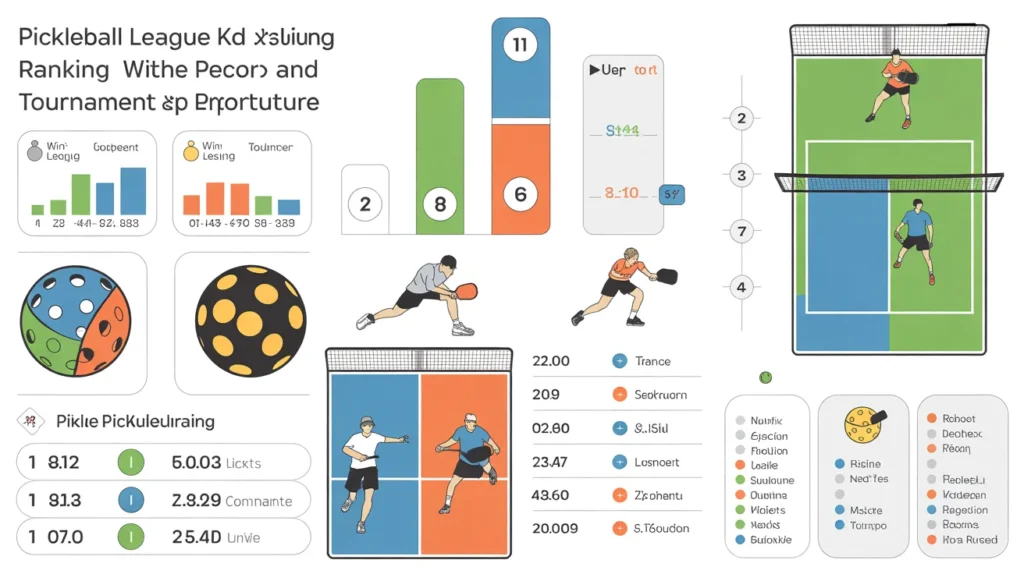
Your position in a pickleball league is mainly decided by how many matches you win and lose. But it doesn’t stop there; leagues also look at your overall performance, like points scored and margins, to rank players fairly.
Key factors that decide your ranking:
- Match wins: The more matches you win, the higher you rank.
- Losses: Fewer losses help you stay above others.
- Point differential: Winning by bigger margins can improve your position.
- Head-to-head results: If tied, who you beat matters.
Also Read: How To Know Your Pickleball Rating?
Simple example of how standings work:
| Team | Wins | Losses | Points Scored | Points Against | Rank |
| Team A | 5 | 1 | 110 | 90 | 1 |
| Team B | 5 | 1 | 105 | 95 | 2 |
| Team C | 4 | 2 | 100 | 98 | 3 |
In this example, Team A and Team B have the same number of wins, but Team A ranks higher due to a better point differential.
Also Read: What Are the Rules for Pickleball?
Why aren’t standings based on wins alone?
Wins are important, but they don’t show the full picture. Two teams can have the same number of wins, so leagues use additional factors to make rankings fairer and more accurate.
Also Read: Why Is Pickleball Scoring So Hard?
Why leagues use more than just wins:
- Fair ranking: Wins alone can’t break ties between teams.
- Performance quality: Close wins vs big wins show different strength levels.
- Consistency: Teams that perform well every match deserve better ranks.
What else matters besides wins:
- Point differential: How many points you win or lose by
- Head-to-head: Who won when tied teams played each other
- Total points scored: Overall scoring ability
In simple terms, leagues want to rank not just who wins but who plays better overall.
Also Read: What Is The Double-Bounce Rule In Pickleball?
What causes rankings to change even with the same record?
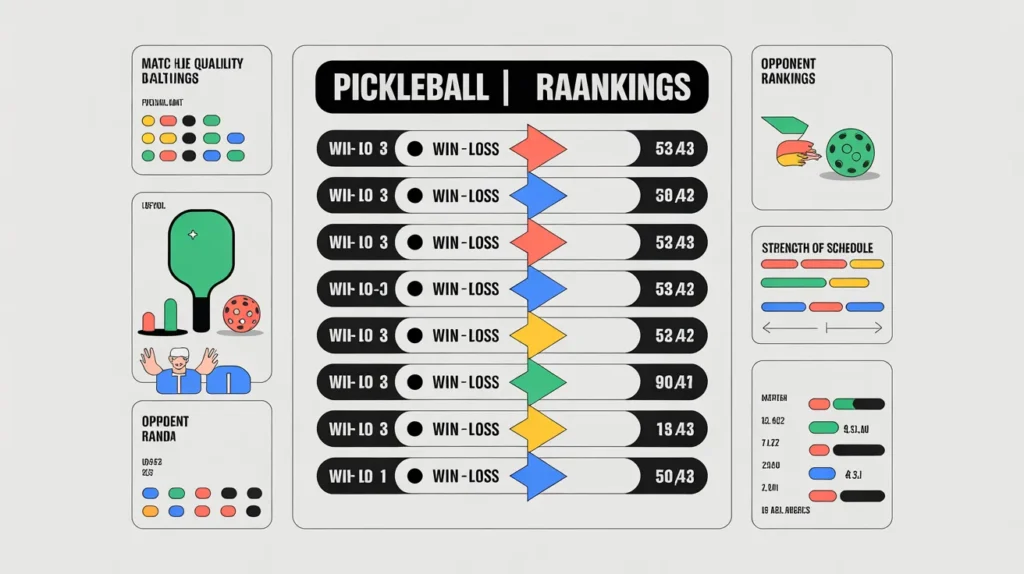
Even if two teams have the same wins and losses, their rankings can still change. That’s because leagues use tiebreakers and performance details to decide who truly performed better.
Main reasons rankings shift:
- Point differential: A team winning by bigger margins ranks higher
- Head-to-head result: The winner between tied teams gets the edge
- Points scored: More total points can improve ranking
Simple scenario:
| Team | Wins | Losses | Point Diff | Rank |
| Team A | 4 | 2 | +25 | 1 |
| Team B | 4 | 2 | +10 | 2 |
Even with the same record, Team A ranks higher due to better performance. This is why you might win the same number of matches but still rank lower.
What stats and metrics are used in most leagues?
Most pickleball leagues don’t rely on just one stat. They use a mix of simple numbers to rank players fairly and break ties when needed.
Common metrics used:
- Win and loss record: Total matches won and lost
- Win percentage: Wins compared to total matches played
- Point differential: Points scored minus points allowed
- Total points scored: Overall scoring strength
Quick breakdown of key stats:
| Metric | What it means | Why it matters |
| Wins/Losses | Matches won vs lost | Main ranking factor |
| Win % | Wins ÷ total matches | Shows consistency |
| Point Diff | Scored – allowed | Measures performance strength |
| Total Points | All points scored | Helps in close rankings |
Real example of a pickleball standings table (step-by-step breakdown)
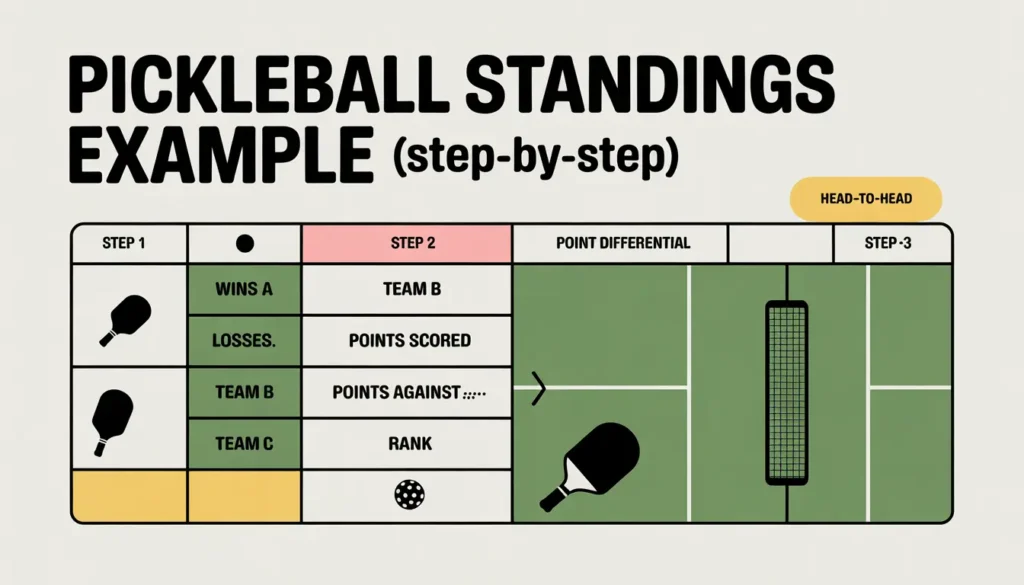
A real example makes it much easier to understand how standings actually work. When teams have the same wins, small details like points and margins decide who ranks higher.
Simple scenario:
- Team A and Team B both win 5 matches and lose 1
- Team A wins most games by big margins
- Team B wins by very small margins
In simple words, standings are not just about winning; they’re about how well you win.
Also Read: How To Start Playing Pickleball?
How do standings work in different league formats?
Standings don’t work the same way in every league. The format of the league changes how wins, points, and tiebreakers are counted, so understanding the system is key to knowing where you rank.
Common league formats:
- Round Robin: Every team plays all others. Rankings are based on wins, then points, and tiebreakers if tied.
- Ladder Leagues: Players challenge others above them. Winning a challenge moves you up; losing can drop you down.
- Team Leagues: Points from multiple players combine. A single player’s win contributes to the team’s overall ranking.
When should you worry about your ranking?
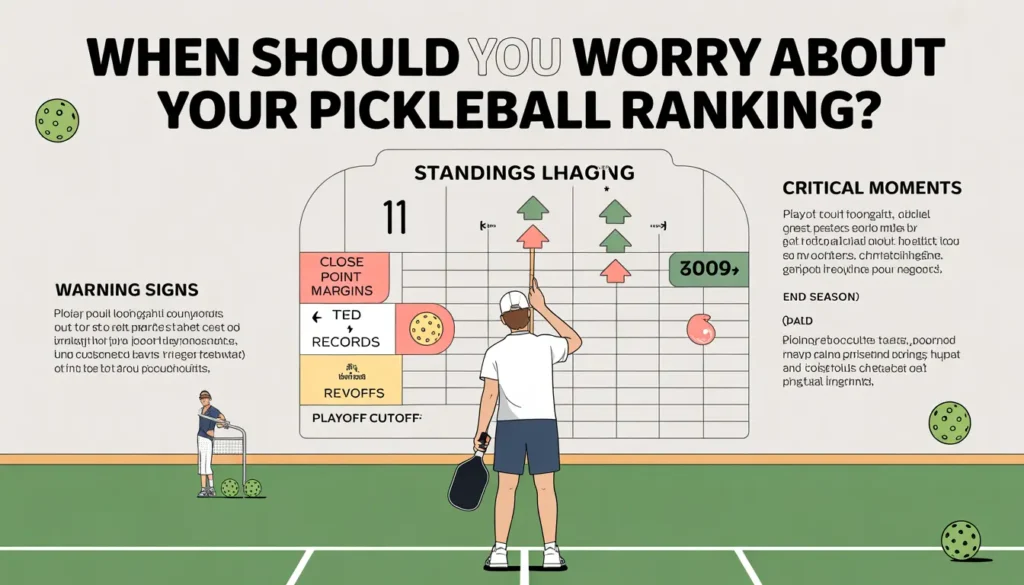
You don’t need to worry after every match, but certain signs show your position could drop. Paying attention at the right time helps you stay competitive and avoid surprises.
Signs your ranking may drop:
- Close point margins: Winning by small scores can hurt your position
- Tied records: Other teams can pass you using tiebreakers
- Strong opponents ahead: Upcoming matches can change standings fast
When it really matters:
- Near playoffs: Small ranking changes decide qualification
- End of season: Every point and match becomes important
Common mistakes players make when reading league standings
Many players misunderstand standings and think only wins matter. These small mistakes can lead to confusion about why their ranking is lower than expected.
Common mistakes:
- Focusing only on wins: Ignoring points and margins
- Not checking tiebreakers: Missing how rankings are actually decided
- Misreading point differential: Not understanding its impact
Why does this create confusion:
- Two teams may have the same wins, but one ranks higher due to better overall performance. If you don’t look at all factors, the standings can feel unfair.
Also Read: What Makes A Good Pickleball Paddle?
How can you improve your league standing faster?
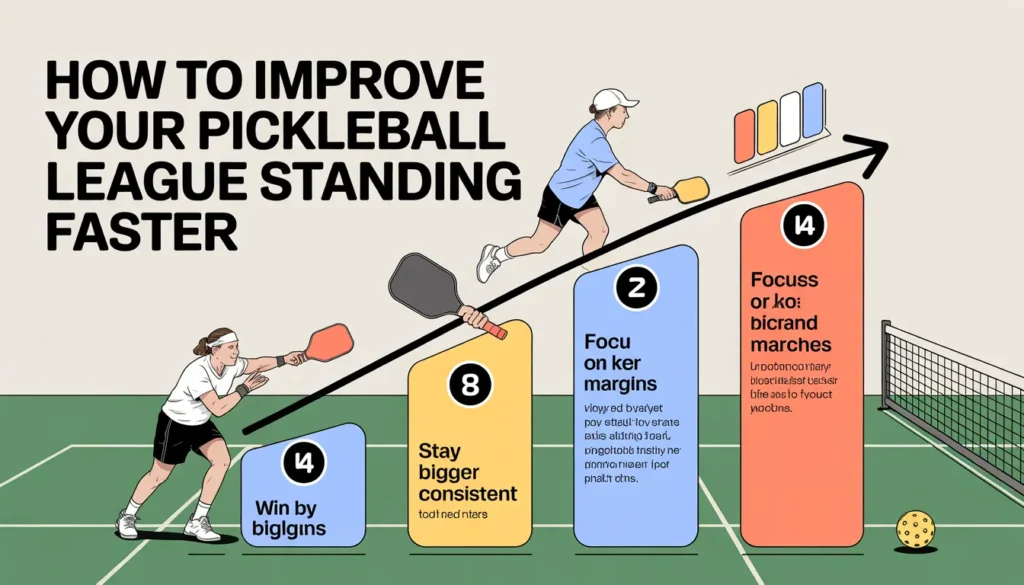
Improving your standing is not just about winning more matches. It’s about playing smart and maximizing every point so you gain an edge over others.
Smart ways to improve ranking:
- Win by bigger margins: Try to increase your point differential
- Stay consistent: Avoid big losses that hurt your stats
- Focus on key matches: Beat teams close to your ranking
Simple strategy that works:
Play every match seriously, even if you are winning. Many players relax after leading, but strong finishes can boost your ranking.
FAQs:
How are ties broken in pickleball league rankings?
Ties are usually broken using point differential, head-to-head results, or total points scored. The exact order depends on league rules.
Do all pickleball leagues follow the same ranking rules?
No, each league can have its own system. Some focus more on wins, while others include points and performance factors.
Does winning by more points improve your ranking?
Yes. Winning by bigger margins improves your point differential, which helps you rank higher in tied situations.
Can you rank higher with the same number of wins as another team?
Yes. Better performance, like a higher point differential or head-to-head wins, can place you above others with the same record.
Is it possible to qualify for the playoffs with fewer wins?
Yes. Strong overall performance and favorable tiebreakers can help a team qualify even with fewer wins.
Conclusion:
Pickleball league standings work by combining wins, points, and tiebreakers to rank players fairly. It’s not just about winning matches, but how well you perform overall. By understanding how pickleball league standings work, you can improve your strategy and move up the rankings faster.