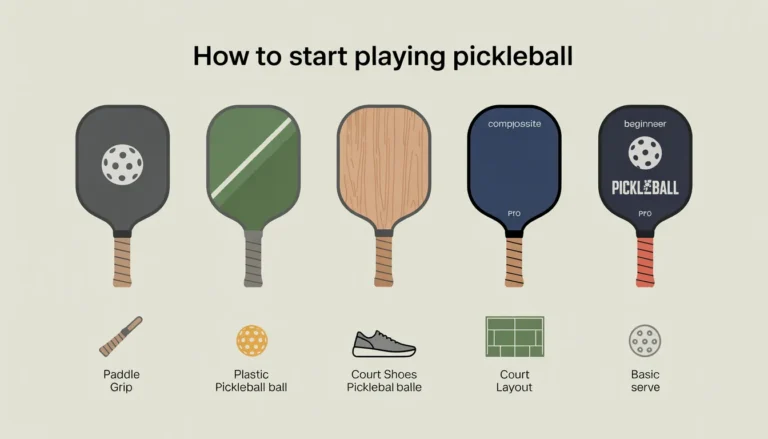

How To Organize A Pickleball Tournament? (Easy Guide)
To organize a pickleball tournament, choose a venue, set a date, decide the format, register players, arrange equipment, and create a schedule. Promote the event, manage matches, and ensure fair play while keeping everything organized and running smoothly.
We will explore how to organize a pickleball tournament, from planning the venue and format to managing players and schedules, so your event runs smoothly and delivers a great experience for everyone.
Why Simple Steps Matter When Planning a Successful Pickleball Tournament
Planning a pickleball tournament is simple if you follow a clear order. Start with a venue and date, choose a format, register players, and organize matches step by step.
Also Read: How much does a pickleball court cost?
Key Steps to Follow:
- Pick a court location and set a date that works for most players.
- Choose round robin or knockout based on player numbers.
- Define skill levels, scoring system, and match rules clearly.
- Use simple forms and set a deadline to avoid confusion.
- Make sure nets, balls, and volunteers are ready.
- Plan matches with proper time gaps to avoid delays.
- Share on social media and local groups to attract players.
Why Proper Planning Matters in a Pickleball Tournament
Good planning makes your tournament smooth and enjoyable. It helps avoid delays, confusion, and player frustration, ensuring everything runs on time.
Also Read: How much does a pickleball court cost?
Why Planning Is Important:
- A clear plan prevents long waiting times and chaos.
- Players enjoy well-organized and fair competitions.
- Planning helps you handle issues before they happen.
- A smooth event makes players trust you for future tournaments.
- Proper planning avoids unnecessary costs and mistakes.
What Makes Organizing a Pickleball Tournament Challenging?
Organizing a pickleball tournament can be challenging because many small details require attention. If one thing goes wrong, it can affect the whole event.
Common Challenges Organizers Face:
- Too many or too few players can disturb the format.
- Mismatched players reduce game quality and fairness.
- Player cancellations or weather can disrupt plans.
Also Read: How much does a pickleball court cost?
Tournament Size, Budget, and Format
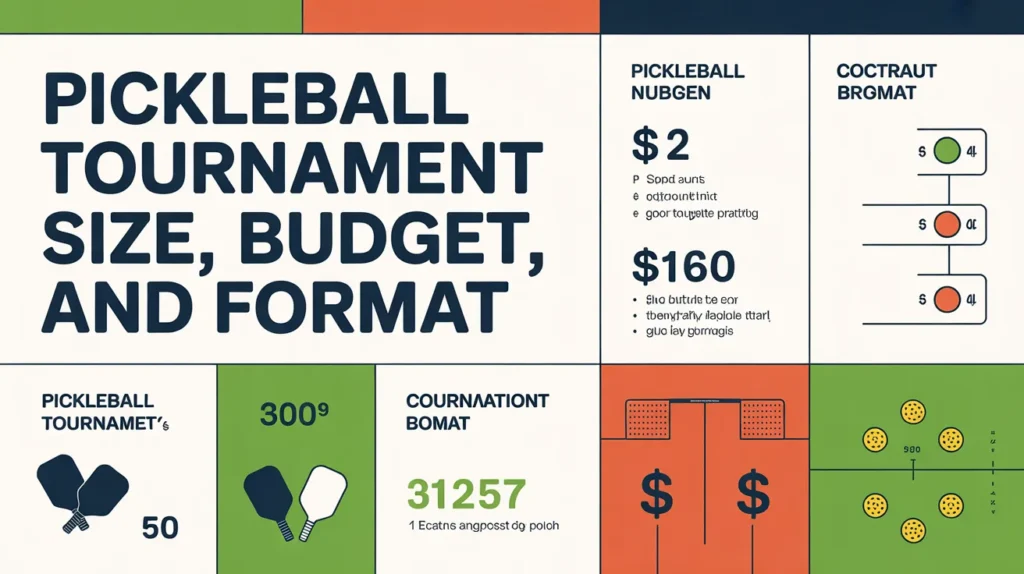
The size of your tournament, your budget, and the format determine how smoothly the event runs. Choosing them early helps you stay organized and avoid confusion later.
Tournament Size, Budget & Format (Easy View)
| Factor | Small Tournament | Large Tournament |
| Players | Few (10–30) | Many (50+) |
| Courts | 1–2 courts | 3 or more courts |
| Budget | Low cost | Higher cost |
| Staff | 1–2 helpers | Full team |
| Duration | Few hours | 1–2 days |
| Best Format | Round robin | Knockout or mixed |
Venue, Equipment, and Scheduling Requirements
A good venue, proper equipment, and a clear schedule are very important for running a smooth pickleball tournament. Choose a place with enough courts, safe playing conditions, seating, and basic facilities like parking and water for players and spectators
Also Read: Is Pickleball Played on a Tennis Court?
Ensure all equipment, such as nets, balls, scoreboards, and a first-aid kit, is ready before the event. Also, create an accurate match schedule in advance so games run on time and players don’t face long wait times.
Registration, Rules, and Player Management
Clear registration, simple rules, and good player management make your tournament fair and easy to control. It also helps avoid confusion during matches.
Also Read: Is Pickleball Played on a Tennis Court?
Organizing Tournaments in Different Situations
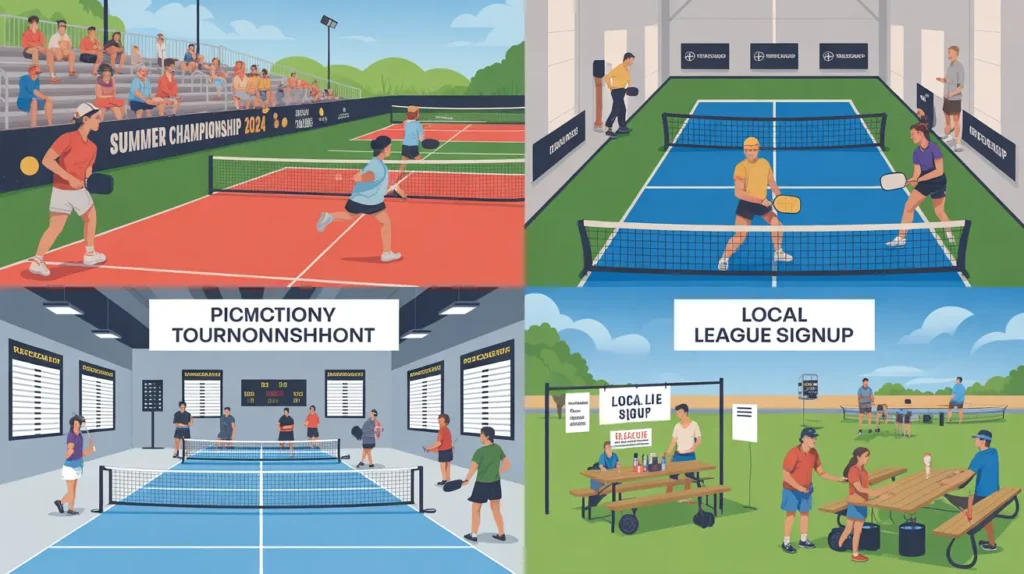
Every pickleball tournament is different, depending on size, location, and player level. Adjusting your plan based on the situation helps the event run smoothly.
Key Situations to Handle:
- Small local tournaments: Easy setup with fewer players and a simple round-robin format.
- Large competitive events: Need more courts, staff, and strict scheduling.
- Indoor tournaments: Weather-proof but require time control and ventilation planning.
- Outdoor tournaments: Depending on the weather, backup plans are important.
- Mixed skill events: Group players carefully to keep matches fair and balanced.
Also Read: Is Pickleball Played on a Tennis Court?
When Things Go Wrong
Problems can happen in any tournament, but spotting them early helps you stay in control. Quick action can save the event from getting messy.
Also Read: How much does a pickleball court cost?
Warning Signs to Watch:
- Matches are getting delayed. Poor scheduling or slow gameplay can cause long waiting times.
- Players are confused about the rules. Lack of clear instructions leads to arguments.
- Too many last-minute changes, Player dropouts, or court issues can disturb the flow.
- Staff or volunteers are unprepared. Weak coordination creates chaos during matches.
- Players seem frustrated. Unhappy players are a sign that something is not working.
Common Mistakes That Can Ruin Your Pickleball Tournament
Small mistakes can quickly turn into big problems in a tournament. Avoiding common errors helps you run a smooth and professional event.
How to Successfully Run the Tournament.
Also Read: How much does a pickleball court cost?
How to Successfully Run the Tournament
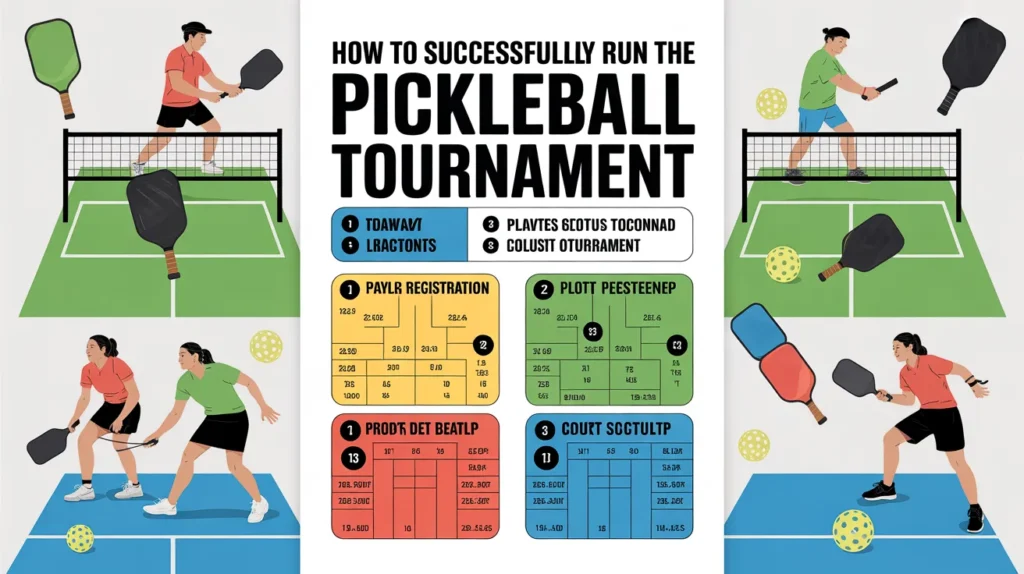
Running a tournament successfully means staying organized and active on event day. Good control and quick decisions keep everything on track.
Key Actions to Take:
- Begin matches as scheduled to avoid delays.
- Keep track of scores and progress regularly.
- Help players know where and when to play.
- Solve disputes or delays without wasting time.
- Announce updates so everyone stays informed.
Proven Tips to Run a Smooth and Successful Tournament
Simple strategies can make your tournament feel professional and stress-free. Focus on planning, communication, and player experience.
FAQs:
How long does it take to plan a pickleball tournament?
It usually takes a few weeks to a couple of months, depending on the size. Small events need less time, while bigger tournaments require more planning and coordination.
What is the best format for a beginner-friendly tournament?
Round robin is best for beginners because everyone gets more playtime. It is simple to manage and keeps players engaged throughout the event.
Can anyone host a pickleball tournament?
Yes, anyone can host a tournament with basic planning and organization. You don’t need special certification to get started.
Do you need a large budget to run a tournament?
No, you can start with a small budget by using local courts and simple setups. Costs increase only if you add prizes, staff, or bigger venues.
Is it hard to manage players during the event?
No, it becomes easy if you have a clear schedule and simple rules. Good communication helps keep everything under control.
Conclusion:
Organizing a pickleball tournament becomes simple when you follow the right steps, from planning the venue and format to managing players and schedules. With proper preparation and smart decisions, you can run a smooth, enjoyable event that delivers a great experience for everyone involved.