
What Makes A Good Pickleball Paddle? (Paddle Secrets)
A good pickleball paddle has balanced weight, a comfortable grip, and the right core and surface for your playstyle. It should offer control, power, and durability, helping you play consistently without strain or discomfort.
In this guide, we will explain what makes a good pickleball paddle, including weight, grip, core, and materials, so you can choose the right one and improve your performance on the court.
A Good Paddle Is Balanced, Comfortable, and Matches Your Play Style
A good pickleball paddle is not about price or brand. It is about how it feels in your hand and how well it fits your game. The right paddle gives you control, power, and comfort at once.
What really makes a paddle good:
- It has a balanced weight, so you don’t feel tired quickly
- The grip feels natural and does not slip during play
- It matches your style (power or control)
- It helps you play consistent shots without effort
Also Read: How To Be Good At Pickleball?
A beginner may need more control, while an aggressive player may prefer power. That’s why one paddle cannot be perfect for everyone. The best paddle is the one that works for you, not the most expensive one.
Why Paddle Choice Directly Affects Your Performance
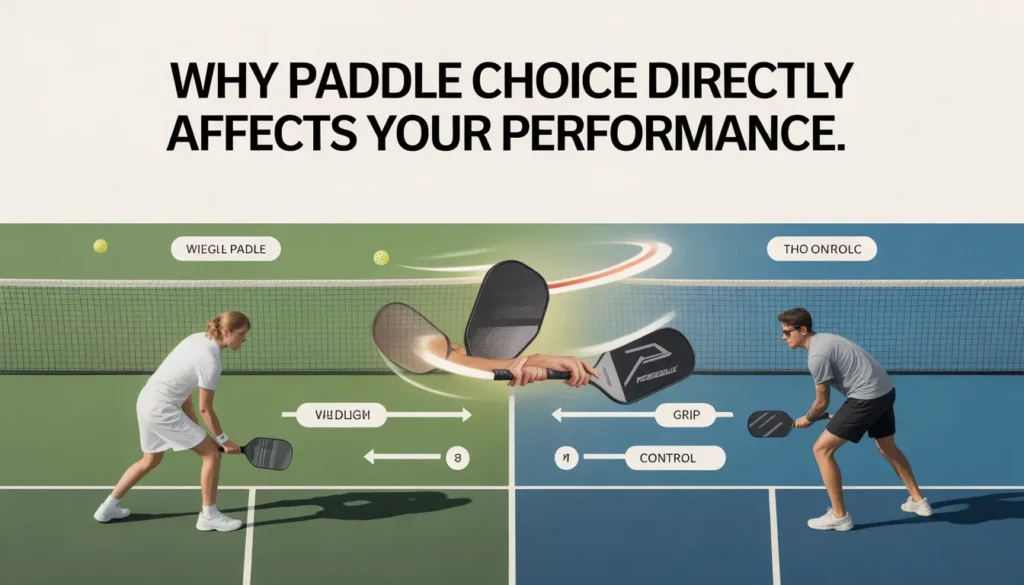
Your paddle is your main tool in the game. If it is not right for you, even good skills will not give the best results. The right paddle improves your shots, control, and overall confidence.
How paddle choice impacts your game:
- A heavy paddle gives more power but reduces control
- A light paddle improves control but may reduce shot strength
- The wrong grip size can cause discomfort or poor handling
- Poor material can reduce spin and shot accuracy
What happens with the wrong paddle:
- Shots feel inconsistent and hard to control
- You may feel arm fatigue or wrist pain
- Your reaction time becomes slower
- You lose confidence during important points
Also Read: Why Is Pickleball Scoring So Hard?
A well-chosen paddle makes the game feel easier and smoother. It supports your natural style instead of working against it.
What Makes a Paddle Feel Wrong for Most Players
Many players feel something is off in their game, but they don’t realize the paddle is the problem. A wrong paddle makes shots harder, not easier.
Signs your paddle feels wrong:
- You struggle to control soft shots
- Your hits feel too weak or too powerful
- The paddle feels heavy or uncomfortable in the hand
Common reasons behind it:
- Weight is too heavy or too light for you
- The grip size does not fit your hand properly
- Core type does not match your play style
Sometimes players blame their skills, but the real issue is poor paddle fit. When you switch to the right paddle, your game often improves quickly.
Also Read: Is Pickleball Easy To Learn?
Ideal Weight, Core, and Material Ranges
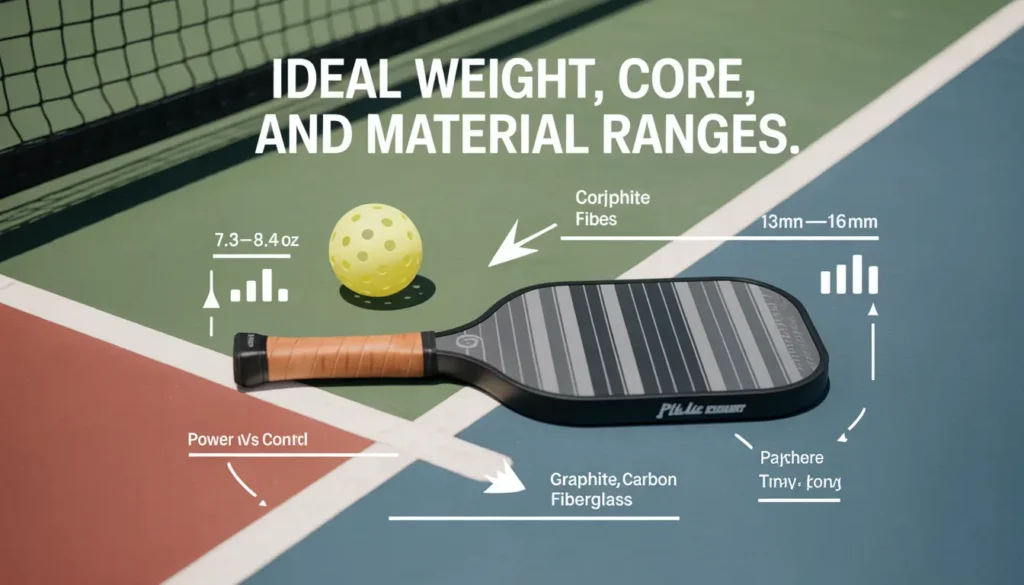
A good paddle is not random. It falls within certain ranges that suit most players. If you stay within these ranges, your chances of choosing the right paddle increase significantly.
Also Read: Are Wood Pickleball Paddles Good?
Recommended paddle ranges:
| Feature | Best Range | What It Means for You |
| Weight | 7.3 – 8.4 oz | Balance of power and control |
| Core Thickness | 13mm – 16mm | 13mm = power, 16mm = control |
| Grip Size | 4” – 4.5” | Comfort and better handling |
| Materials | Graphite / Carbon / Fiberglass | Feel, spin, and durability |
Weight guide (simple rule):
- 7.3–7.8 oz is better control and fast hands
- 7.9–8.4 oz is more power and stability
Core thickness guide:
- 13mm for stronger shots, less control
- 16mm for a softer feel, more control
Material differences:
- Graphite for light and control-focused
- Carbon fiber for more spin and durability
- Fiberglass for more power on shots
Most players make the mistake of choosing randomly. But when you understand these ranges, picking the right paddle becomes much easier and more accurate.
Which Paddle Type Fits Your Playing Situation?
Not every paddle works for every player or situation. Choosing the right type makes your game easier, more consistent, and enjoyable.
Also Read: Is Pickleball Played on a Tennis Court?
Beginner and Control Players:
- Lightweight, larger core, graphite surface
- Helps with accuracy and soft shots
Power and Aggressive Players:
- Heavier, thinner core, fiberglass surface
- Adds strength to smashes and fast drives
All-Round and Balanced Players:
- Midweight, medium core, carbon fiber surface
- Works well for both power and control
Situational guidance:
- Doubles: Choose lighter paddles for fast reactions
- Singles: Slightly heavier paddles help with stronger shots
- Outdoor play: Durable materials like carbon fiber withstand rough surfaces
- Indoor play: Lighter graphite paddles provide better touch and control
Also Read: What Are The Rules For Pickleball?
Using the right paddle for your situation ensures consistent performance and reduces fatigue. Most competitors list features but don’t connect them to real-life situations. This is where you stand out.
When You Should Worry About Your Paddle Choice
Many players ignore their paddle until it starts to affect their performance. Knowing the warning signs early can save frustration and prevent injuries.
Signs it’s time to reconsider your paddle:
- Your shots feel inconsistent or weak
- You experience wrist, elbow, or shoulder pain
- You feel tired quickly during normal play
- Your control or reaction time is noticeably worse
Why ignoring it is risky:
- Playing with the wrong paddle can slow improvement
- It may cause long-term strain or injury
- You might develop bad habits trying to compensate
If you notice these issues, it’s time to evaluate weight, grip, core, and materials. Switching to the right paddle often fixes these problems quickly and makes the game feel easier.
Also Read: How Long Do Pickleball Paddles Last?
How to Choose the Right Paddle Step by Step
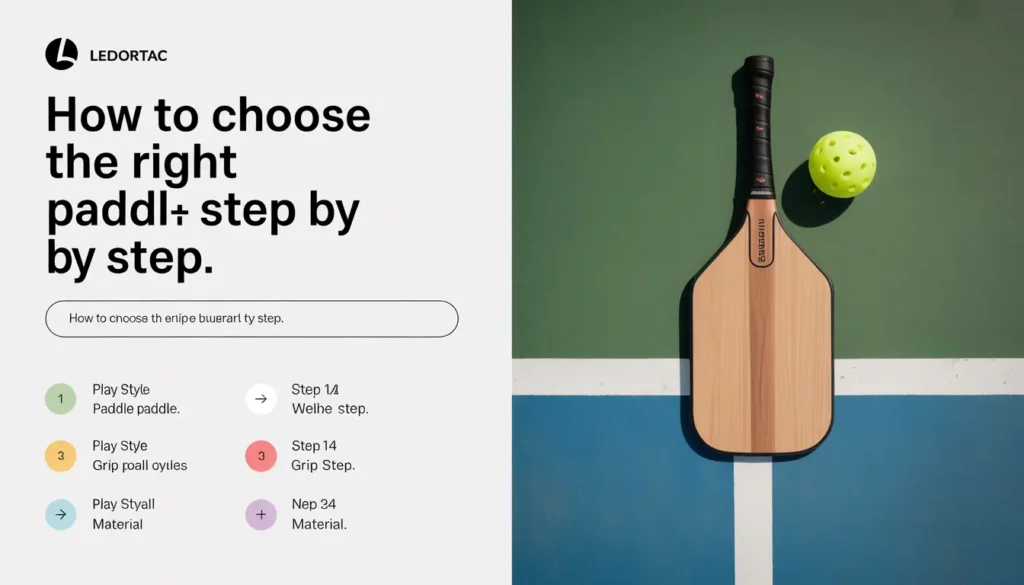
Choosing the right paddle doesn’t have to be confusing. Follow these steps, and you can pick a paddle that fits your style, comfort, and performance needs.
Also Read: How To Start Playing Pickleball?
Step-by-Step Guide:
Step 1: Identify Your Play Style
- Control player to choose lighter, larger-core paddles
Power player to choose heavier, thinner core paddles
Step 2: Pick the Right Weight
- Lighter paddles are easier for fast reactions and soft shots
- Heavier paddles are stronger smashes, more stability
Step 3: Choose Grip Size
- Too small is wrist strain
- Too large is reduced control
- Measure your hand for the best comfort
Step 4: Decide Core and Surface Material
- Graphite is control and touch
- Carbon fiber is durable and strong
- Fiberglass is a power shot
Step 5: Test Before You Step up (if possible)
- Try different paddles in real gameplay
- Choose the one that feels effortless in your hand
Also Read: How To Practice Pickleball Alone?
By following these steps, you can eliminate guesswork and instantly select a paddle that improves your performance and comfort
Common Mistakes to Avoid When Choosing a Paddle
Many players choose a paddle based on hype, not fit. These small mistakes can affect your game more than you think.
Mistakes you should avoid:
- Choosing a paddle only because it is expensive
- Ignoring grip size and hand comfort
- Picking power paddles without control skills
- Not checking the weight before buying
Why these mistakes matter:
- You may struggle with control and consistency
- Your arm can get tired or even injured
- You won’t improve even with practice
Most beginners think any paddle will work, but the wrong choice slows progress. Avoiding these mistakes helps you play better and enjoy the game more.
Also Read: Can You Step Into The Kitchen In Pickleball?
FAQs:
What Weight Paddle Is Best for Beginners?
A midweight paddle (around 7.3–8.0 oz) is best for beginners because it offers a good balance of control and power.
How Do You Know If Your Paddle Grip Size Is Correct?
Your grip is correct if it feels comfortable in your hand and allows control without wrist strain or slipping.
Is a More Expensive Pickleball Paddle Always Better?
No, an expensive paddle is not always better; the right fit for your play style matters more than price.
Do Heavier Paddles Give You More Power?
Yes, heavier paddles can generate more power, but they may reduce control and increase fatigue.
Can the Wrong Paddle Affect Your Game Performance?
Yes, a wrong paddle can reduce control, cause discomfort, and make your shots less consistent.
Conclusion:
A good pickleball paddle is all about balance, comfort, and matching your play style. By understanding weight, grip, core, and materials, you can choose the right paddle that improves control, power, and overall performance. The right choice helps you play better and enjoy the game more.