
Can You Spike In Pickleball? (Spike Rules 2026)
Yes, you can spike in pickleball, but only under certain conditions. You must stay outside the non-volley zone (kitchen) when hitting it. Spiking is allowed during rallies, but not on serves or if you violate foot rules.
In this journey, we will explain that, yes, you can spike in pickleball, but only if you stay out of the kitchen. It’s allowed during rallies, not on serves, and foot faults can instantly cost you the point.
Yes, You Can Spike in Pickleball (But There’s a Catch)
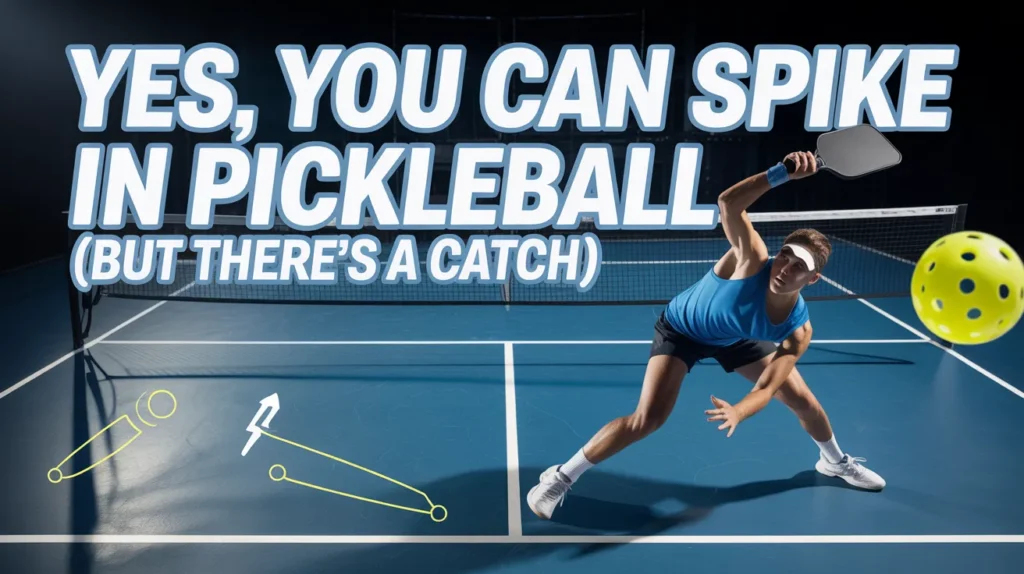
Yes, you can spike in pickleball, but only if you stay outside the kitchen and follow key rules.
Spiking is allowed and can help you win points, but it’s not just about power.
Many players lose points because they don’t understand the kitchen rule and foot positioning.
Read More: Can You Step Into The Kitchen In Pickleball?
What spiking really means in pickleball
A spike in pickleball is a fast, downward hit used to finish a rally. It usually happens when the ball is high and easy to attack.
- A strong downward shot
- Played above net height
- Used to end the rally quickly
The simple rule most players misunderstand
The main rule is that you cannot hit a volley while standing in the kitchen. Even stepping in after the shot can be a fault.
- Stay outside the kitchen line.
- Don’t step in during the shot.
- Momentum into the kitchen = fault
Why Spiking Is Restricted in Pickleball
Spiking is restricted to keep the game fair and prevent players from dominating the net with power. Pickleball is designed around control, not just strength. The kitchen rule stops players from smashing every ball at the net, making rallies longer and more strategic.
The purpose of the non-volley zone (kitchen)
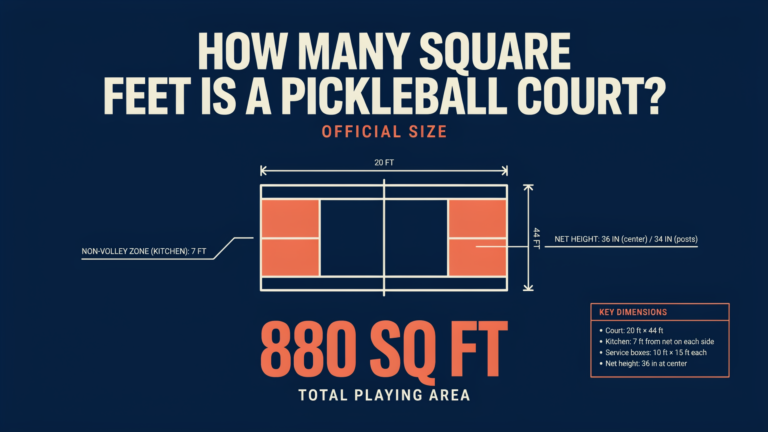
The kitchen is a small area near the net where volleys are not allowed. It helps balance the game and reduces easy winning shots.
- Stops players from standing at the net
- Prevents constant smashing
- Encourages soft and smart play
How rules prevent unfair net dominance
- Players cannot camp near the net and dominate points
- Both sides must stay active in rallies
- Encourages movement and smart positioning
Why does pickleball favor control over power
- Placement wins more points than raw power
- Soft shots like dinks are more effective
- Smart decision-making beats aggressive hitting
What Makes a Spike Illegal?
A spike is illegal in pickleball if you violate the kitchen rule, the foot-position rule, or the volley timing rule.
Most illegal spikes happen because players rush the shot without checking where they are standing. Even a small mistake can turn a winning shot into a fault.
Also Read: What Are The Rules For Pickleball?
Spiking inside the kitchen explained
- You cannot volley while standing inside the kitchen
- Even touching the line during a volley is a fault
- Jumping from the kitchen and hitting mid-air is still illegal
Foot faults and momentum mistakes
- Stepping on or over the kitchen line during a volley = fault
- Momentum, carrying you into the kitchen, also counts as a fault
- Losing balance after a spike often causes illegal movement
Violating the two-bounce rule
- The ball must bounce once on each side before volleys are allowed
- Spiking too early breaks the rule
- Common mistakes for beginners in fast rallies
Common beginner errors during spikes
- Rushing forward too close to the net
- Not checking the foot position before hitting
- Trying to spike low balls instead of waiting
Also Read: Can You Serve Overhand In Pickleball?
Key Rules and Specifications You Must Know
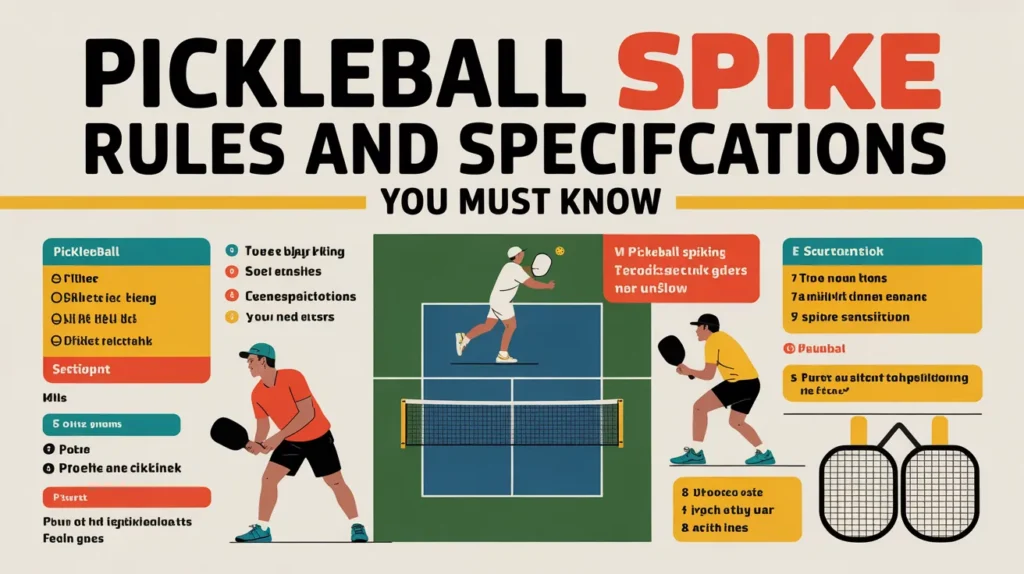
Spiking in pickleball follows clear court rules, especially around the kitchen, volleys, and timing.
Understanding these rules helps you avoid faults and play legally while still using spikes effectively during rallies.
Kitchen (non-volley zone) distance and limits
- The kitchen extends 7 feet from both sides of the net
- You cannot volley while inside this zone
- Even stepping on the line during a volley is a fault
When volleys are allowed in a rally
- You can only volley after the ball bounces once on each side
- After the two-bounce rule is complete, volleys are allowed
- Volleys must be made outside the kitchen
Also Read: Is Pickleball Played on a Tennis Court?
Serve rules vs spike rules
- Serves must be underhand and below waist level
- You cannot spike or smash directly from a serve
- Spikes are only allowed during rallies, not serves
Bounce vs air contact explained
- Bounce shots are safer for beginners near the net
- Air contact (volley) requires correct positioning
- Volleys near the kitchen require strict foot control
Spike vs Volley vs Smash: What’s the Difference?
A spike, volley, and smash are all attacking shots, but they differ in timing, power, and how the ball is hit in pickleball.
Many players confuse these terms, leading to incorrect shot choices and unnecessary faults during matches.
Is a spike the same as a volley?
- A spike is a powerful downward shot used to finish a rally
- A volley is hitting the ball before it bounces
- A spike can be a type of volley, but not always
What counts as an overhead smash
- A smash is a strong overhead shot used when the ball is high
- It is usually played with maximum power
- It is often used to end weak returns
Why terminology confuses beginners
- Players use “spike,” “smash,” and “volley” interchangeably
- Different coaches explain shots differently
- Beginners often misuse shots due to confusion
How using the wrong shot affects your game
- Wrong timing can cause easy errors
- Hitting too hard reduces control
- Poor shot choice leads to lost points in fast rallies
Also Read: How Long Is A Pickleball Game?
When You Can Spike During a Game
You can spike in pickleball during a rally after the two-bounce rule is completed and when you are outside the kitchen.
Timing is very important. Spiking at the right moment can help you win the point, but doing it too early or in the wrong position can lead to a fault.
When is it legal to spike the ball?
You can only spike the ball after the ball has bounced once on each side. After that, volleys and attacking shots are allowed.
- Wait for the two-bounce rule to finish
- Make sure you are outside the kitchen
- Hit the ball when it is above net height
What is the best time to use a spike?
A spike works best when the ball is high and easy to attack. This gives you better control and accuracy.
- Use it on high or weak returns
- Attack when your opponent is out of position
- Best used near the net (but outside the kitchen)
When should you avoid spiking?
Spiking is risky if the ball is too low or if your position is unstable. In such cases, a soft shot is safer.
- Avoid low balls near the net
- Don’t spike when off balance
- Skip spiking in fast or tight rallies
How positioning affects your spike timing
Your position on the court decides whether your spike will be legal and effective. Good positioning gives you control and balance.
- Stay behind the kitchen line
- Keep your body balanced before hitting
- Move into position before attacking
Real Game Scenarios Where Spiking Works Best
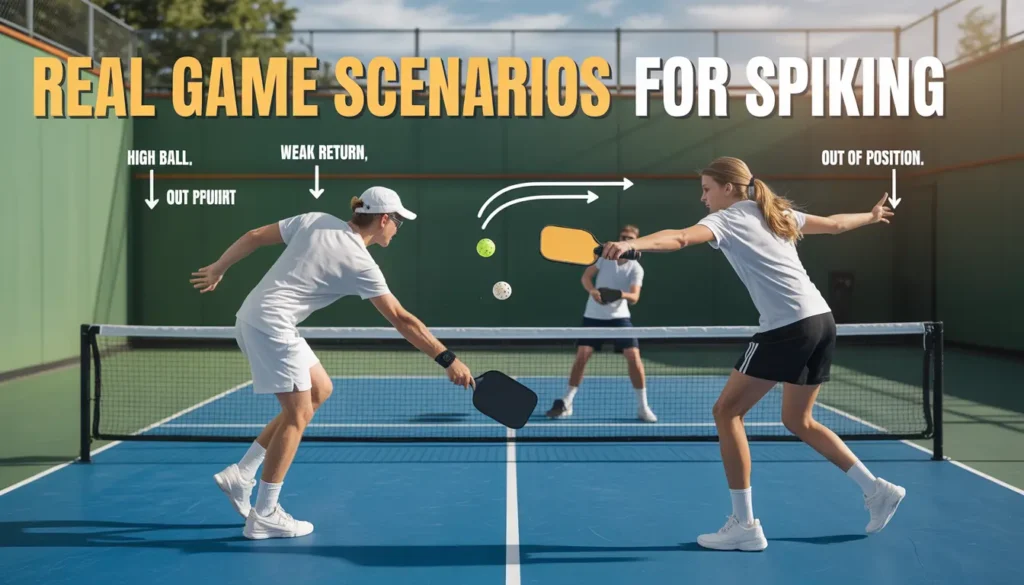
Spiking works best when the ball is high, your position is strong, and your opponent is under pressure.
In real matches, the right moment matters more than power. Choosing the correct situation can turn a simple shot into a winning point.
When do high balls become easy attack chances?
High balls give you more time and a better angle to hit a strong shot. These are the best chances to use a spike safely.
- Attack when the ball is above the net height
- Look for slow or weak returns
- Use angle instead of just power
Also Read: How To Be Good At Pickleball?
How weak returns create spike opportunities
A weak return gives you control of the rally. This is the perfect time to finish the point with a spike.
- Short returns are easier to attack
- High returns give more time to prepare
- Poor placement opens space for a winner
What changes in doubles vs singles play?
Spiking strategy is different in doubles and singles. In doubles, space is tighter, while singles gives a more open court.
- Doubles need better placement, not just power
- Singles allows more aggressive shots
- Communication matters in doubles play
How to read your opponent before spiking
Watching your opponent helps you decide the right moment to attack. Good reading improves your success rate.
- Notice weak positioning
- Watch their movement and balance
- Attack when they are not ready
Also Read: How To Practice Pickleball Alone?
When Spiking Becomes Risky
Spiking becomes risky when your position is weak, the ball is low, or you lose balance during the shot. Many players try to force a spike in bad situations. This often leads to faults, easy returns, or losing the point.
What happens in close-to-the-line situations?
Spiking near the kitchen line is risky because even a small step can cause a fault. Control becomes more important than power here.
- High chance of stepping on the line
- Hard to maintain balance near the net
- Small mistakes lead to instant faults
Why losing balance can cost you the point
Balance is key when hitting a strong shot. If your body is not stable, your spike can go out or into the net.
- Off-balance shots reduce accuracy
- Momentum may carry you into the kitchen
- Recovery becomes difficult after the shot
How fast rallies increase spike mistakes
In fast rallies, players have less time to think. This leads to rushed decisions and poor shot selection.
- Quick reactions lead to poor timing
- Players hit without proper positioning
- Mistakes increase under pressure
How opponents can counter your spike
A good opponent can defend your spike and turn the rally in their favor. Not every spike wins the point.
- Skilled players can block strong shots
- Poor placement makes spikes easy to return
- Predictable attacks give an advantage to the opponent
Common Myths About Spiking in Pickleball
Many players believe wrong things about spiking, which leads to confusion and mistakes during the game. Understanding these myths helps you play smarter and avoid simple errors that can cost you points.
Is spiking always illegal in pickleball?
Some beginners think spiking is not allowed at all. This is not true, but there are rules you must follow.
- Spiking is allowed outside the kitchen
- It must follow volley and timing rules
- Illegal only when rules are broken
Can you spike anywhere on the court?
Players often think they can spike from any position. In reality, your position decides if the shot is legal.
- Cannot spike while standing in the kitchen
- Must stay behind the kitchen line
- Court position affects shot legality
Does more power always win points?
Many believe hitting harder always gives better results. In pickleball, control is often more important than power.
- Too much power reduces accuracy
- Controlled shots are more effective
- Smart placement beats hard-hitting
What do beginners believe vs reality?
Beginners often rely on wrong ideas because they are new to the game. Learning the truth improves performance quickly.
- Think spiking is the best shot every time
- Ignore positioning and balance
- Learn rules later, make early mistakes
How to Spike Legally and Effectively
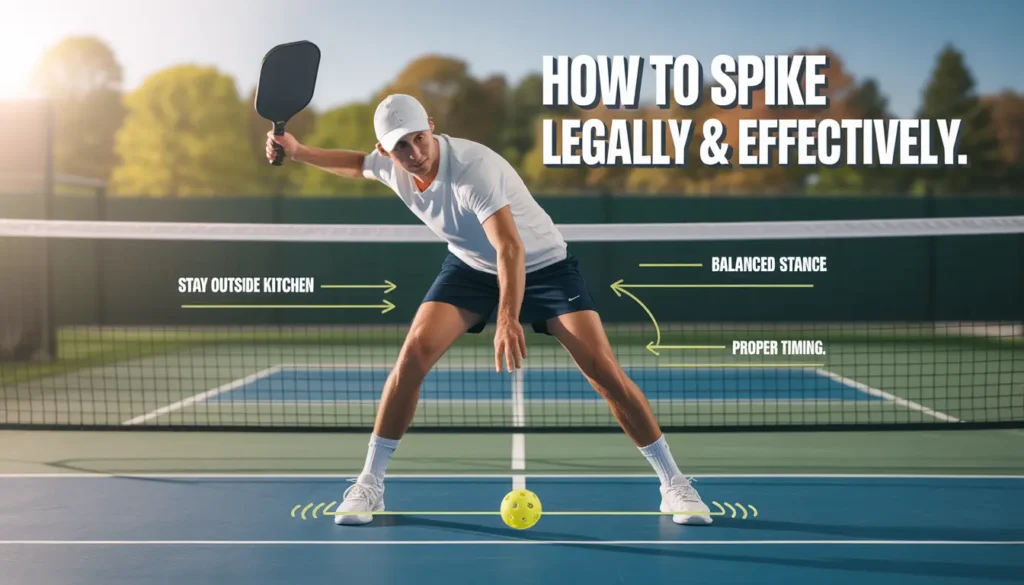
To spike legally and effectively, you must stay outside the kitchen, keep your balance, and choose the right moment to attack.
A good spike is not just about power. It’s about timing, positioning, and control. When done correctly, it can help you win points without risking faults.
How should you position your feet before a spike?
Your foot position decides if your spike will be legal. Staying in the right place helps you avoid faults and stay balanced.
- Keep both feet outside the kitchen line
- Maintain a stable and balanced stance
- Avoid stepping forward too early
What is the right timing for a perfect spike?
Timing is very important for a successful spike. Hitting too early or too late can lead to errors.
- Wait for the ball to rise above the net level
- Follow the two-bounce rule before attacking
- Strike when you feel fully balanced
How can you control your follow-through safely?
After hitting a spike, your movement must stay controlled. Poor follow-through can lead to faults.
- Stop your momentum before entering the kitchen
- Keep your body under control after the shot
- Avoid falling forward after hitting
What simple tips help you avoid faults?
Small adjustments can make a big difference in your game. These tips help you stay safe and effective.
- Always check your foot position
- Don’t rush aggressive shots
- Choose placement over power
FAQs:
Can your momentum carry you into the kitchen after a spike?
Yes, if your momentum carries you into the kitchen after hitting a volley, it is a fault even if the shot was good.
What happens if you spike the ball too early in a rally?
Spiking too early breaks the two-bounce rule, and you lose the point immediately.
Can you hit a spike while standing in the kitchen?
No, you cannot spike while standing in the kitchen if it’s a volley.
Is a spike allowed on the serve in pickleball?
No, a spike is not allowed on the serve because serves must be underhand.
Can beginners use spikes effectively in pickleball?
Yes, beginners can use spikes, but only when they focus on timing, balance, and proper positioning.
Conclusion:
Yes, you can spike in pickleball, but only when you follow the rules like staying out of the kitchen and timing your shot correctly. A smart spike can win points, but control, positioning, and knowing when to attack matter more than power in the game.