
Which Pickleball Is For Outdoors? (Outdoor Pickleball Guide)
Outdoor pickleballs are hard plastic balls with 40 small holes, designed to handle wind and rough surfaces. They’re heavier and more durable than indoor balls, making them ideal for outdoor courts like concrete or asphalt.
In this journey, you will discover why not all pickleballs are the same and how choosing the right outdoor ball can instantly improve your control, durability, and overall game performance.
Which Pickleball Should You Use for Outdoor Games?
You should use a hard plastic pickleball with 40 small holes designed specifically for outdoor courts and windy conditions.
Outdoor Pickleball Key Features:
The Outdoor pickleballs are made to handle rough surfaces and outdoor weather while keeping your shots stable and controlled.
- Made from hard, durable plastic for long outdoor use
- 40 small holes reduce wind impact and improve flight stability
- Slightly heavier than indoor balls for better control outdoors
- Designed for hard courts like concrete and asphalt
Why Outdoor Pickleballs Are Designed Differently
The Outdoor pickleballs are designed to handle wind, hard courts, and faster gameplay, unlike indoor balls, which are softer and lighter.
Key Design Reasons for Outdoor Pickleballs:
The outdoor conditions are unpredictable, so the ball must stay stable, durable, and consistent during play.
- Harder plastic helps the ball survive rough outdoor surfaces
- A 40-hole design reduces wind movement and keeps the flight steady
- Slightly heavier weight improves control in open-air conditions
- Built for faster and more aggressive outdoor rallies
What Happens If You Use the Wrong Pickleball Outdoors?
If you use an indoor pickleball outside, it will not perform well and can break or lose control quickly.
Key Problems You Notice in Real Play:
The Indoor pickleballs are made for smooth indoor courts, so they struggle outdoors where conditions are tougher.
Also Read: How Many Calories Do You Burn Playing Pickleball?
- They can crack or get damaged quickly on hard outdoor surfaces
- Wind makes them move off track and harder to control
- The bounce feels uneven, so timing your shots becomes difficult
- Overall, the play feels less smooth and less predictable outside
Key Specifications of Outdoor Pickleballs You Should
Know
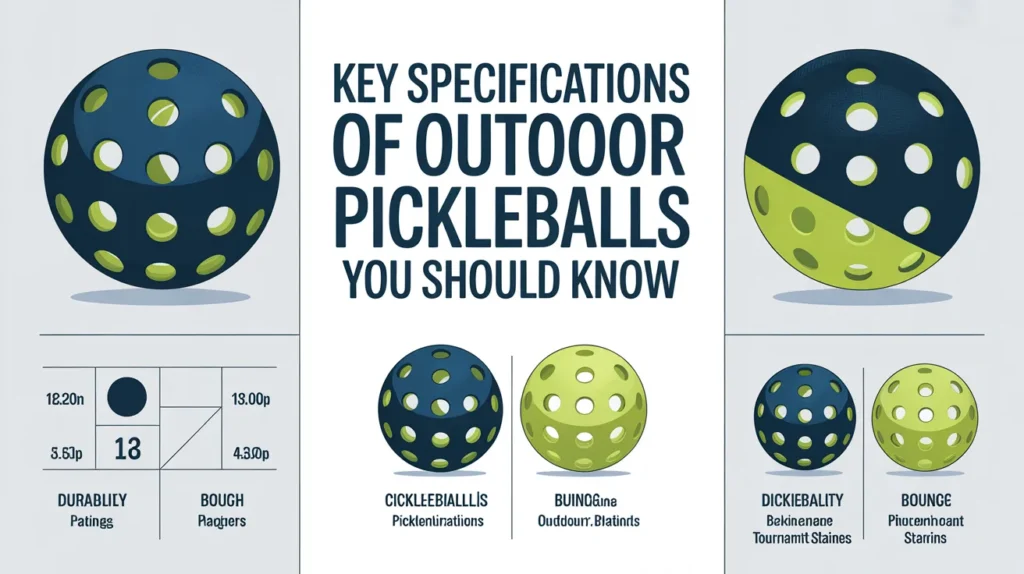
Outdoor pickleballs are harder, a bit heavier, and have 40 small holes to handle wind and rough courts.
What Makes an Outdoor Ball Different:
These small details are what you actually feel when you play outside. They help the ball stay strong and fly straight.
- 40 small holes help the ball stay steady in the wind
- Hard plastic makes it last longer on rough surfaces
- A slightly heavier weight gives better control during shots
- Designed to give a more consistent bounce on hard courts.
Also Read: What Makes A Good Pickleball Paddle?
Comparison of Outdoor vs Indoor Pickleballs :
| Feature | Outdoor Pickleball | Indoor Pickleball |
| Holes | 40 small holes | 26 bigger holes |
| Material | Hard and strong plastic | Softer plastic |
| Weight | A bit heavier | A bit lighter |
| Durability | Lasts longer outdoors | Wears out faster outside |
| Best For | Outdoor courts | Indoor courts |
Which Outdoor Pickleball Works Best in Different Situations?
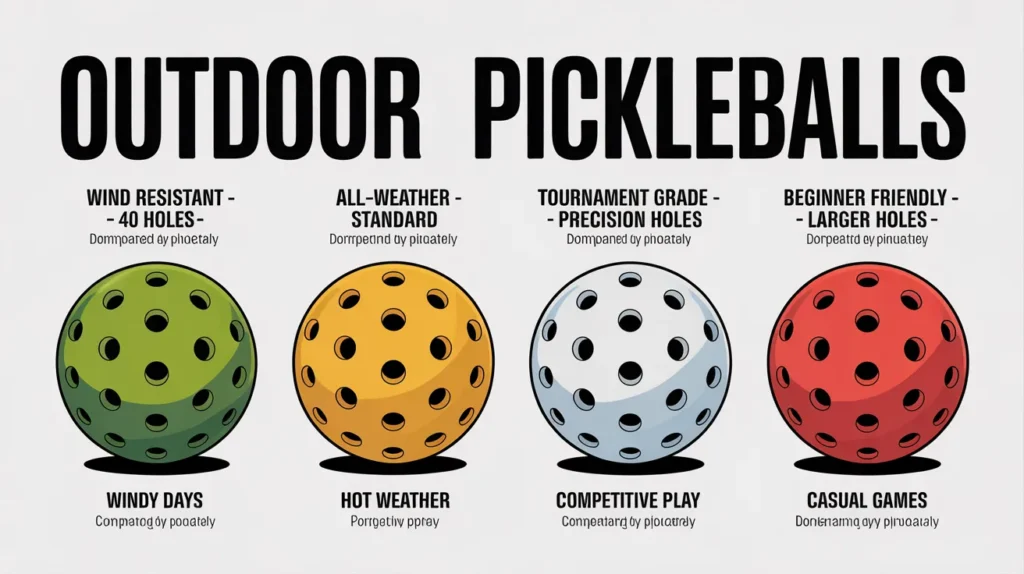
The best outdoor pickleball depends on the weather, the court surface, and your skill level.
Choosing the Right Ball for Real Game Situations:
Not every outdoor game feels the same, so picking the right ball for the situation can make a big difference.
- In windy weather, use a heavier and harder ball for better control
- In hot weather, go for a durable ball that won’t soften or crack easily
- In cold weather, choose a ball known for resisting cracks
- Beginners should use a balanced, easy-to-control ball
- Advanced players often prefer faster, harder balls for aggressive play
When Should You Care About Choosing the Right Pickleball?
You should care when your game feels off, the ball breaks often, or you want better control and performance.
Signs It’s Time to Pay Attention:
At first, any ball may feel fine. But as you play more, small differences start to affect your game.
- Your shots feel hard to control or go off-target
- The ball cracks or wears out too quickly
- Bounce feels uneven or unpredictable
- You start playing more serious or competitive games
Also Read: How To Know Your Pickleball Rating?
How to Choose the Right Outdoor Pickleball (Step-by-Step Guide)
Choose an outdoor pickleball based on weather, durability, and the level of control you want in your game.
Simple Steps to Pick the Right Ball:
You don’t need to overthink it; follow these easy checks before buying.
- Look for a ball with 40 small holes for outdoor use
- Choose a durable ball if you play on rough courts often
- Pick a slightly heavier ball for better control in the wind
- Go for a balanced ball if you are a beginner
- Select a harder, faster ball for competitive play
- Choose crack-resistant balls if you play in cold weather
Common Myths About Outdoor Pickleballs You Should Ignore
Many players believe all pickleballs are the same, but outdoor balls differ significantly in performance and durability.
Myths That Confuse Most Players:
These common beliefs can lead you to pick the wrong ball and hurt your game.
- All pickleballs work the same outdoors; they do not
- More holes always mean better performance, not true
- Expensive balls are always better, depending on your use
- Indoor balls can be used outside without issues, but they struggle outdoors
How Long Do Outdoor Pickleballs Last?
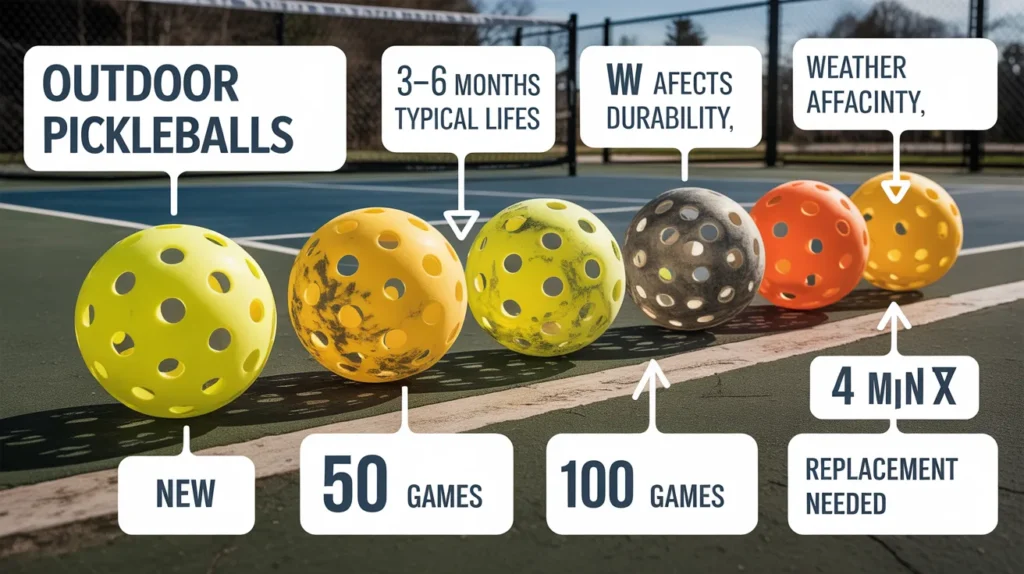
Outdoor pickleballs usually last a few games to several weeks, depending on the surface and weather.
What Affects Their Lifespan:
How long a ball lasts mostly depends on where and how often you play.
- Rough courts wear the ball faster.
- Cold weather can cause cracks quickly
- Frequent play reduces lifespan
- Harder hits and competitive play damage balls sooner
Outdoor Pickleball Buying Checklist (Quick Decision Guide)
Before buying, check durability, hole design, and how the ball performs in your playing conditions.
Quick Things to Check Before You Buy:
A simple checklist can save you from choosing the wrong ball.
- Make sure it’s made for outdoor use (40 holes)
- Check if the material is strong and long-lasting
- Pick a ball that suits your weather conditions
- Choose based on your skill level (beginner or advanced)
- Avoid very cheap balls that wear out quickly
FAQs:
What is the difference between indoor and outdoor pickleballs?
Outdoor balls are harder with 40 small holes, while indoor balls are softer with larger holes for better control inside.
How do you know if a pickleball is made for outdoor play?
Check for 40 small holes and a hard plastic feel, which are clear signs of an outdoor pickleball.
Can you use the same pickleball for both indoor and outdoor games?
No, using one ball for both reduces performance because each is designed for different conditions.
Do outdoor pickleballs crack easily in cold weather?
Yes, cold weather can make outdoor balls brittle, causing them to crack faster.
Are heavier pickleballs always better for outdoor play?
No, heavier balls help in the wind, but the best choice depends on your playing style and conditions.
Conclusion:
In the end, choosing the right pickleball for outdoor play really depends on durability, weight, and design. Outdoor balls with 40 small holes are built for wind and hard courts, helping you play better and avoid common issues. The right choice simply makes your game smoother and more enjoyable.