
What Are Pickleball Courts Made Of? (Complete Breakdown)
Pickleball courts are usually built on a concrete or asphalt base and covered with an acrylic surface coating. Official pickleball guideline. This top layer adds color, grip, and a smooth, consistent bounce, making the court safe, durable, and suitable for both indoor and outdoor play.
In this article, we will explain that pickleball courts are typically made from a concrete or asphalt base, finished with an acrylic coating that adds grip, color, and a smooth, consistent playing surface for safe, durable indoor and outdoor use.
What materials are used to build a pickleball court
Most pickleball courts are built on concrete or asphalt and then covered with an acrylic coating that makes the surface smooth, safe, and ready for play.
The basic materials used in most courts
- Concrete: Very strong and long-lasting, it gives a steady and true bounce.
- Asphalt: A bit softer and more budget-friendly than concrete.
- Acrylic coating: Adds color, grip, and protects the court from wear.
What the top surface layer is made of
- Acrylic surface system: The main playing layer that controls how fast the ball moves.
- Fine sand (silica): Mixed into the coating to stop slipping.
- Court line paint: Special paint that keeps lines clear and visible.
Simple breakdown of court layers
- Base: Concrete or asphalt for strength and support.
- Surface: Acrylic coating for smooth and even play.
- Texture: Sand mixed in for grip and safety.
- Lines: Painted markings to define the court.
Why are these materials used for pickleball courts?
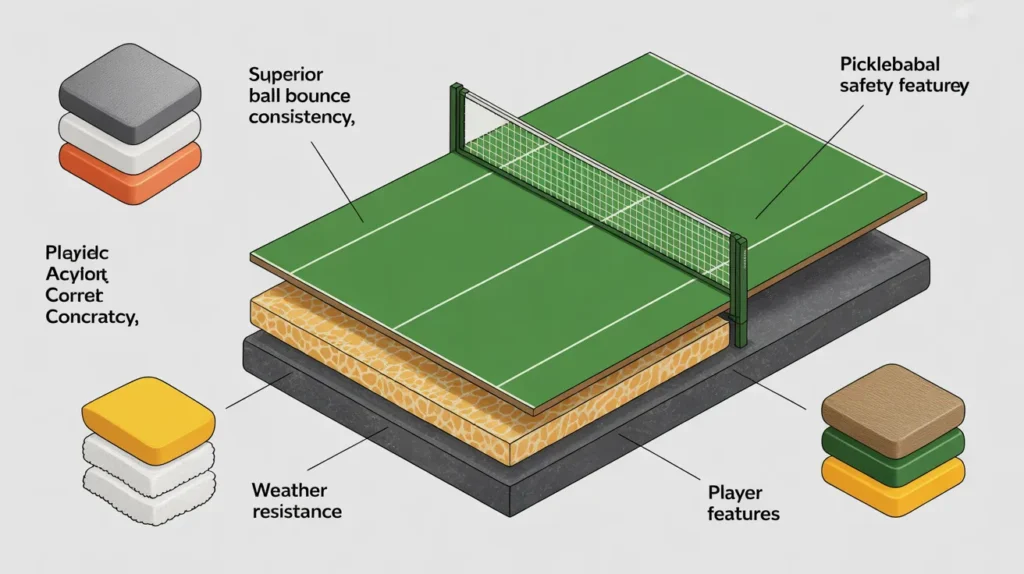
These materials are used because they make the court strong and safe, and give a consistent ball bounce for better gameplay.
Also Read: Is Pickleball Good Exercise?
How surface material affects ball bounce and speed
- Hard base (concrete/asphalt): Gives a reliable and even bounce.
- Smooth coating: Helps control ball speed during play.
- Texture layer: Keeps the game balanced, not too fast or slow.
How materials impact player safety and grip
- Acrylic coating: Adds grip so players don’t slip easily.
- Sand texture: Improves traction during quick movements.
- Even surface: Reduces risk of trips and falls.
Why durability matters for outdoor courts
- Concrete and asphalt base: Handles heavy use and weather changes.
- Acrylic layer: Protects against sun, rain, and cracks.
- Low maintenance: Keeps courts in better condition with fewer repairs.
What makes one court surface different from another
Not all pickleball courts feel the same. The difference comes from the base material, surface coating, and how the court is built.
Base material plays a big role
- Concrete courts: More solid and long-lasting.
- Asphalt courts: Slightly softer and less expensive.
- Stronger base: Gives better and more consistent bounce.
- Weak base: Can crack and affect gameplay over time.
Surface coating changes how the game feels
- Thick coating: Slows the ball a little and adds control.
- Thin coating: Makes the game faster.
- Quality coating: Improves durability and look.
- Poor coating: Wears out quickly and becomes rough.
Texture level affects grip and movement
- More texture: Better grip but slightly slower play.
- Less texture: Faster play, but can be slippery.
- Balanced texture: Ideal for most players.
- Uneven texture: Can cause slips or bad bounce.
Installation quality makes a big difference
- Proper leveling: Ensures smooth and even gameplay.
- Good drainage: Prevents water damage and cracks.
- Professional work: Increases court life and safety.
- Poor installation: Leads to early damage and uneven surface.
Also Read: What Makes A Good Pickleball Paddle?
Standard materials, layers, and specifications explained
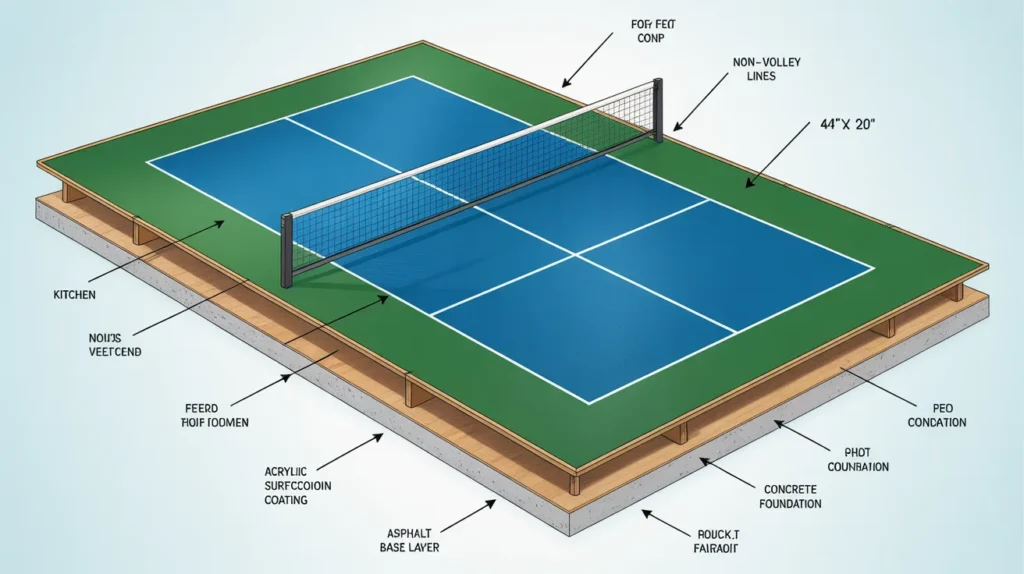
A standard pickleball court uses a strong base, layered coatings, and specific measurements to ensure smooth play, proper bounce, and long-term durability.
Concrete vs asphalt, what’s the difference
- Concrete: More durable and gives a consistent bounce.
- Asphalt: Cheaper but may need more maintenance over time.
- Concrete lasts longer: Better for long-term investment.
- Asphalt is flexible: Slightly better in cold climates.
Standard court layers and thickness
- Base layer: Usually 4 to 6 inches thick for strength.
- Acrylic coating: Applied in multiple thin layers.
- Texture layer: Mixed with sand for grip.
- Top finish: Smooth and even for gameplay.
Official court size and markings
- Court size: 20 feet wide and 44 feet long.
- Non-volley zone: 7 feet on each side of the net.
- Service areas: Divided into right and left boxes.
- Clear lines: Painted with durable acrylic paint.
Optional surface systems and upgrades
- Cushioned coatings: Reduce stress on joints.
- Modular tiles: Easy to install and maintain.
- Indoor surfaces: Use gym-style flooring.
- Color systems: Improve visibility and aesthetics.
Also Read: How much does a pickleball court cost?
How different materials affect real gameplay situations
The material of a pickleball court directly changes how the ball moves, how fast the game feels, and how comfortable it is for players.
Indoor vs outdoor court surfaces
- Outdoor courts: Harder surfaces for faster and stronger bounce.
- Indoor courts: Slightly softer, often slower gameplay.
- Outdoor coating: Made to handle sun and weather.
- Indoor floors: Focus more on comfort and control.
Which materials are better for beginners vs advanced players
- Beginners: Prefer slower surfaces for better control.
- Advanced players: Like faster courts for quick shots.
- Textured surfaces: Help new players with grip.
- Smooth surfaces: Suit experienced, fast gameplay.
Fast vs slow courts, what creates the difference
- Smooth coating: Makes the ball move faster.
- Rough texture: Slows the ball down.
- Hard base: Increases bounce speed.
- Soft feel: Reduces ball speed slightly.
Player comfort and injury impact
- Hard surfaces: Can be tough on knees and joints.
- Cushioned layers: Reduce stress on the body.
- Good grip: Lowers risk of slipping.
- Even surface: Prevents trips and injuries.
Also Read: What Is The Double-Bounce Rule In Pickleball?
How climate and location impact court materials
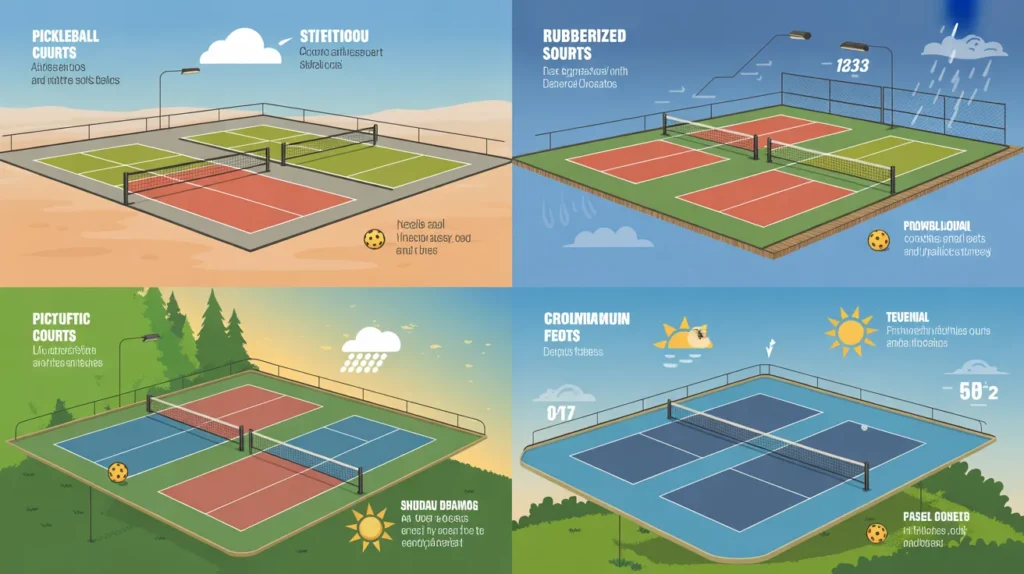
Weather and location play a big role in how a pickleball court performs, ages, and what materials work best.
Hot weather and sun exposure
- High heat: Can soften asphalt and fade coatings.
- UV rays: Break down surface color over time.
- Acrylic coating: Protects against sun damage.
- Light colors: Stay cooler than dark surfaces.
Rain and moisture effects
- Water buildup: Can damage the base over time.
- Poor drainage: Leads to cracks and surface wear.
- Acrylic layer: Helps repel water.
- Wet surfaces: Become slippery and unsafe.
Cold weather and temperature changes
- Freezing temperatures cause cracks in the base.
- Expansion and shrinkage: Weakens the surface.
- Asphalt flexibility: Handles cold better than concrete.
- Proper sealing: Reduces weather damage.
Also Read: Can You Step Into The Kitchen In Pickleball?
Location-based material choices
- Humid areas: Need better moisture protection.
- Dry regions: Focus on UV-resistant coatings.
- Coastal areas: Require corrosion-resistant materials.
- High-use areas: Need stronger and thicker surfaces.
Cost, maintenance, and lifespan of different surfaces
The cost, upkeep, and lifespan of a pickleball court depend on the material used, with concrete lasting longer, asphalt costing less upfront, and coatings needing regular maintenance.
Initial cost of different court materials
- Concrete courts: Higher upfront cost but long-term value.
- Asphalt courts: Cheaper to build but may need repairs sooner.
- Acrylic coating: Adds extra cost but improves performance.
- Extra features: Cushioning or tiles increase the total cost.
Maintenance needs over time
- Regular cleaning: Keeps the surface safe and smooth.
- Recoating: Needed every few years for optimal performance.
- Crack repair: Prevents further damage later.
- Line repainting: Maintains clear visibility.
Lifespan of common court surfaces
- Concrete base: Can last 20 to 30 years with care.
- Asphalt base: Usually lasts 10 to 20 years.
- Acrylic coating: Needs to be refreshed every 3 to 5 years.
- Good maintenance: Extends overall life.
Cost vs performance, what really matters
- Low-cost option: Asphalt works for tight budgets.
- High performance: Concrete gives better long-term results.
- Balanced choice: Depends on usage and location.
- Smart investment: Spending more can reduce future repairs.
Also Read: How To Practice Pickleball Alone?
Common problems with pickleball court surfaces
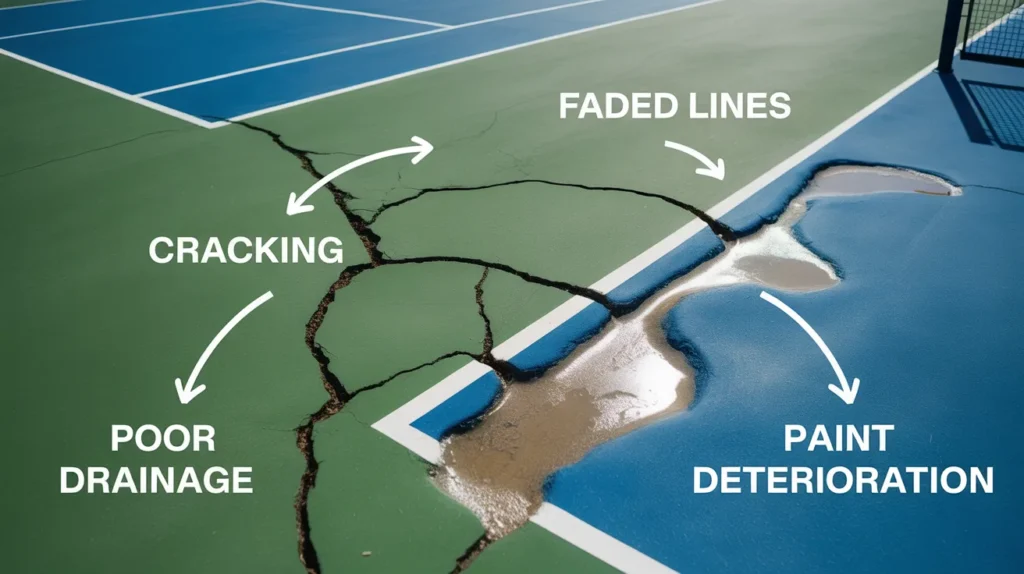
Over time, pickleball courts can develop cracks, fading, and surface wear, which affect both gameplay and safety.
Cracks and surface damage
- Ground movement: Causes cracks in concrete or asphalt.
- Heavy use: Wears down weak areas faster.
- Poor base: Leads to early structural issues.
- Ignored damage: Small cracks turn into bigger problems.
Fading and color wear
- Sun exposure: Fades court color over time.
- Low-quality coating: Wears out quickly.
- Heavy play: Reduces surface finish.
- Old courts: Lose visibility and look dull.
Slippery or rough surfaces
- Worn-out texture: Reduces grip and safety.
- Too smooth coating: Makes the surface slippery.
- Too rough areas: Affect ball bounce.
- Poor maintenance: Increases risk of slips.
Drainage and water issues
- Standing water slowly damages the surface.
- Bad drainage design: Leads to long-term issues.
- Moisture buildup: Weakens the base layer.
- Wet courts: Become unsafe for play.
When court material becomes a safety concern
The court materials become a safety concern when the surface is damaged, slippery, or uneven, increasing the risk of injuries during play.
Signs the court is no longer safe
- Visible cracks: Can cause trips and bad ball bounce.
- Uneven surface: Makes movement risky for players.
- Loose coating: Peeling areas reduce grip.
- Faded lines: Hard to judge boundaries clearly.
Slippery surfaces and fall risks
- Worn texture: Reduces traction while running.
- Wet conditions: Make courts dangerous to play on.
- Smooth coating: Increases chances of slipping.
- Lack of maintenance leads to the buildup of dirt and moisture.
Impact on joints and long-term injuries
- Hard surfaces: Put stress on knees and ankles.
- No cushioning: Increases fatigue during long games.
- Rough spots: Cause uneven foot pressure.
- Frequent play: Raises injury risk on poor courts.
When to stop playing and take action
- Deep cracks appear: Time to repair immediately.
- Surface feels unsafe: Better to avoid playing.
- Water doesn’t drain: Needs proper fixing.
- Regular issues: Indicates full resurfacing is needed.
Best solutions and alternatives for better court surfaces
The best solution depends on your needs: concrete for durability, asphalt for budget, and newer options like cushioned coatings or tiles for better comfort and performance.
Choosing the right material for your needs
- Long-term use: Concrete is the most reliable option.
- Low budget: Asphalt works well for basic courts.
- Comfort focus: Cushioned coatings reduce joint stress.
- Indoor play: Wood or synthetic floors are suitable.
Repair vs full resurfacing
- Small cracks: Can be repaired easily.
- Worn coating: Needs recoating for better grip.
- Major damage: Full resurfacing is the best fix.
- Regular upkeep: Prevents costly repairs later.
Modern alternatives to traditional surfaces
- Modular tiles: Easy to install and replace.
- Cushioned systems: Safer for knees and joints.
- Hybrid surfaces: Mix durability with comfort.
- Portable courts: Good for temporary setups.
How to improve an existing court
- Add new coating: Restores smooth gameplay.
- Fix drainage issues: Prevents water damage.
- Upgrade texture: Improves grip and safety.
- Repaint lines: Makes the court look new again.
FAQs:
What surface gives the best bounce and control in pickleball?
Acrylic-coated concrete gives the most consistent bounce and better control for players.
How long does a pickleball court surface typically last?
Concrete courts last many years, while the top coating usually needs renewal every few years.
Can pickleball be played on surfaces other than hard courts?
Yes, it can be played on indoor floors or turf, but hard courts perform best.
Is a smooth court surface always better for gameplay?
No, too smooth surfaces can be slippery and reduce player control.
Does court color affect how the game is played?
No, color does not change gameplay, but it improves visibility and player experience.
Conclusion:
Pickleball courts are made of simple but well-planned materials like concrete or asphalt, finished with an acrylic coating for smooth and safe play. Once you understand how these surfaces work, it becomes easier to choose the right option based on cost, comfort, and how you like to play.