
Where To Put Weights On A Pickleball Paddle? (Read Now)
If you are looking for more power, place the weight at the top of your paddle (the 12 o’clock position). For added stability, try putting it on the sides at 3 and 9 o’clock. And if quicker control is your goal, adding weight to the handle works best. Start with a small amount, test how it feels, and tweak it until it suits your playing style.
In this guide, we will explain where to put weights on your pickleball paddle so you can boost power, improve control, and find the perfect balance for your game.
Where Should You Add Weight on a Pickleball Paddle?
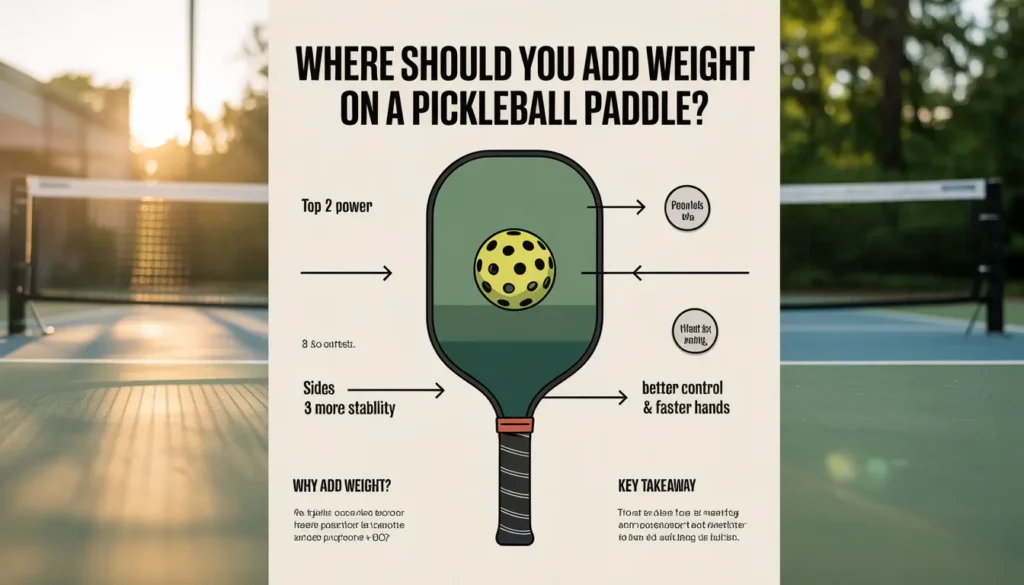
Add weight at the top for more power, on the sides for better stability, and on the handle for easier control and quicker hands.
- Top (12 o’clock): helps you hit stronger and deeper shots
- Sides (3 & 9 o’clock): makes the paddle feel more stable on off-center hits
- Handle: improves control and makes your hands faster at the net
- Start with a small amount of weight so it doesn’t feel too heavy
- Try a few shots and adjust until it feels right for your game
Why Weight Placement Changes Power, Control, and Stability
Where you place weight changes how your paddle swings, which directly affects your power, control, and how stable it feels on impact. See this: Weight & Balance Guide
- Weight at the top increases swing force, so you get more power but slightly slower hands
- Weight on the sides keeps the paddle steady, especially on off-center hits
- Weight in the handle shifts the balance down, giving you more control and faster reactions
- Small changes in placement can make a big difference in how the paddle feels
- The right balance helps you play more consistently and comfortably
What Causes Players to Add Weight to Their Paddle?
Players add weight when their paddle feels off, like it’s too light, unstable, or not giving enough power or control.
Common problems (lack of power, unstable hits, slow hands)
- Lack of power: shots do not go deep or feel weak
- Unstable hits: paddle twists on off-center contact
- Slow hands: hard to react quickly at the net
- Inconsistent shots: control feels off during rallies
Also Read: What Makes A Good Pickleball Paddle?
Signs your paddle balance is not right
- Paddle feels unstable or shaky in your hand
- Shots are inconsistent without a clear reason
- You struggle with quick reactions at the net
- The paddle feels too light or poorly balanced
Also Read: Is Pickleball Easy To Learn?
Ideal Weight Ranges and Placement Guidelines
Most players add small amounts of weight (2–8 grams) and adjust slowly to find the best balance for power, control, and comfort.
How much weight should you add (grams & ounces)
- 2–4 grams: light adjustment, good for beginners
- 4–6 grams: noticeable change in power or stability
- 6–8 grams: stronger effect, better for experienced players
- Over 8 grams: can feel heavy and harder to control
Standard paddle weight ranges for beginners vs advanced players
- Lightweight (7.0–7.5 oz): faster hands, less power
- Mid-weight (7.6–8.4 oz): balanced power and control
- Heavyweight (8.5+ oz): more power, slower reactions
- Beginners prefer lighter paddles; advanced players customize more
How placement changes swing weight and feel
- Top placement increases swing weight and power
- Side placement improves balance and stability
- Handle placement lowers swing weight for faster hands
- Even small shifts can change how the paddle feels during play
Where Exactly to Place Weight on the Paddle Face
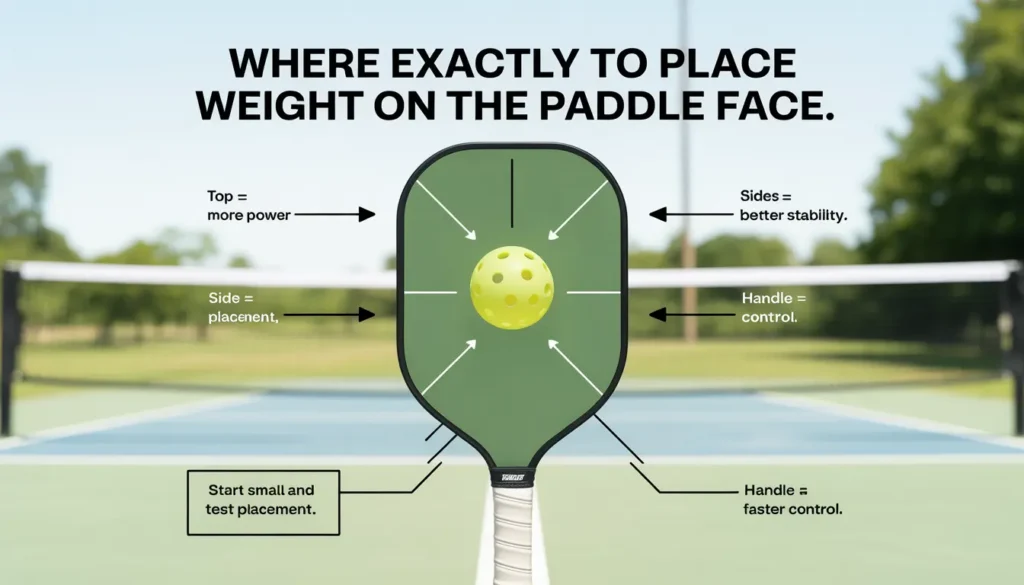
Place weight at the top for power, sides for stability, and near the handle for faster control. Each position changes how your paddle performs.
12 o’clock position (top edge)
- Best for players who want more attacking power
- Helps the ball travel deeper with less effort
- It can slightly slow down hand speed if overused
3 and 9 o’clock positions (side edges)
- Keeps the paddle stable during off-center hits
- Reduces twisting in fast rallies
- Ideal for consistent control in longer games
Handle and throat area placement
- Shifts balance lower for quicker hand movement
- Makes the paddle feel lighter in fast exchanges
- Great for net play and defensive control
Best Weight Placement for Different Playing Situations
The best weight placement depends on how you play. Power hitters, control players, and fast net players all need slightly different setups.
For more power (baseline players)
- Add weight at the top (12 o’clock) for stronger, deeper shots
- Helps you hit with more force without extra effort
- Useful for players who stay back and drive the ball
- Too much weight here can slow quick reactions
For control and soft game (dinks & drops)
- Add weight to the handle for better touch and feel
- Makes it easier to control soft shots near the net
- Helps reduce overhitting during delicate plays
- Keeps your paddle steady during slow rallies
Also Read: How To Be Good At Pickleball?
For fast hands at the net
- Keep more weight near the handle for quicker movement
- Helps react faster during volleys and quick exchanges
- Makes the paddle feel lighter in your hand
- Ideal for aggressive net players
For an all-around balanced performance
- Split the weight between sides (3 & 9 o’clock) for stability
- Gives a mix of power, control, and consistency
- Reduces errors on off-center hits
- Best for players who want a balanced playing style
Also Read: How To Practice Pickleball Alone?
What Type of Weight Material Should You Use?
Most players use lead tape or tungsten tape; both work well, but tungsten is safer and more compact, while lead is cheaper and easier to find.
Lead tape vs tungsten tape (which is better?)
- Lead tape is cheaper and widely available
- Tungsten tape is denser, so you need less of it
- Tungsten feels cleaner and less bulky on the paddle
- Lead works well but needs careful handling
Pros and cons of each material
- Lead tape: affordable, easy to apply, but can be toxic if not handled properly
- Tungsten tape: safer, smaller strips, but more expensive
- Lead adds weight quickly; tungsten gives more precise control
- Both can improve performance if used correctly
Safety tips when using lead tape
- Always wash your hands after handling lead tape
- Avoid touching your face while applying it
- Cover the tape with overgrip or edge guard if possible
- Store it safely away from kids
When Should You Avoid Adding Weight?
Avoid adding weight if your paddle already feels comfortable, or if extra weight causes fatigue, slower reactions, or arm pain.
Risks like arm fatigue and slower reactions
- Too much weight can make your paddle feel heavy over time
- It may slow down your hand speed during fast rallies
- Long games can cause arm or wrist fatigue
- Power may increase, but control and timing can suffer
Mistakes beginners make with added weight
- Adding too much weight too quickly without testing
- Copying pro setups without understanding their own needs
- Ignoring comfort and focusing only on power
- Not adjusting placement after testing different shots
How to Add Weight to Your Paddle (Step-by-Step)
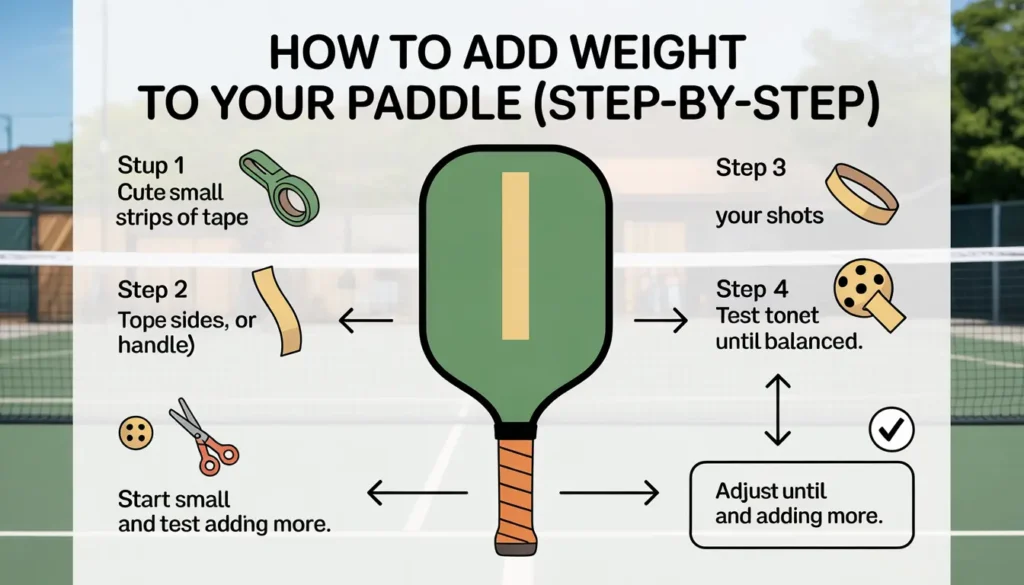
Start small, place the tape in the right spot, test your shots, and adjust until the paddle feels comfortable and balanced.
Tools you need (lead tape, tungsten tape)
- Use lead tape for a budget-friendly option
- Choose tungsten tape for a cleaner and safer setup
- Keep scissors to cut small strips easily
- An overgrip or edge guard can help secure the tape
Also Read: How To Regrip A Pickleball Paddle?
How to test placement without damaging your paddle
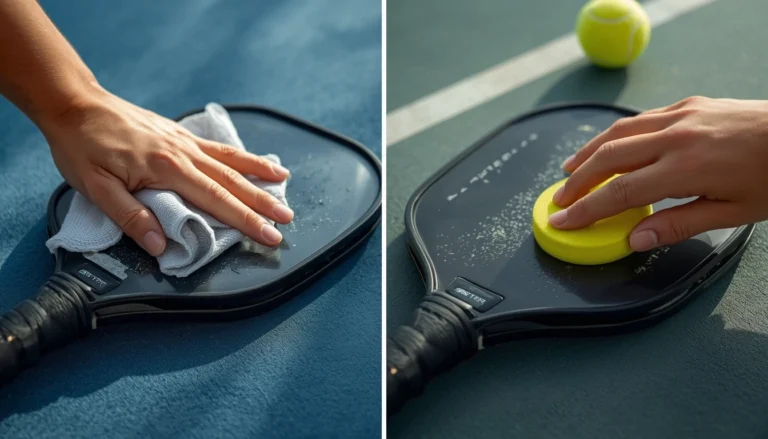
- Start with a small strip and place it lightly
- Hit a few shots before fixing it permanently
- Move the tape around to feel the difference
- Avoid adding too much at once
How to adjust based on feel
- If shots feel weak, try moving weight toward the top
- If the paddle feels unstable, add weight to the sides
- If reactions feel slow, shift weight toward the handle
- Keep adjusting until it feels natural and comfortable
Also Read: What Makes A Good Pickleball Paddle?
Pro Tips to Fine-Tune Your Paddle Like Advanced Players
Making small changes, testing often, and focusing on feeling tiny adjustments can make a big difference in your performance.
Start small and adjust slowly
- Add weight in small steps instead of all at once
- Test your paddle after every change
- Give your hand time to adjust to the new feel
- Stop when the paddle feels natural and balanced
Focus on feel, not just power
- Do not chase power if it hurts your control
- A balanced paddle helps you play more consistently
- Pay attention to how shots feel, not just how far they go
- Comfort matters more than extra weight
Test in real game situations
- Try your setup during actual matches, not just practice
- Notice how it performs during fast rallies
- Adjust based on your playing style
- Keep refining until it fits your game perfectly
FAQs:
How do I know if my paddle needs extra weight?
If your shots feel weak, unstable, or hard to control, a small amount of weight can help improve balance.
What is the best place to start when adding weight?
Start with the sides (3 & 9 o’clock) since it adds stability without affecting control too much.
Does adding weight make your shots more powerful?
Yes, especially when added to the top, it helps generate more power and deeper shots.
Can too much weight affect your game negatively?
Yes, it can slow your hands, reduce control, and cause arm fatigue over time.
Is it okay for beginners to customize their paddle weight?
Yes, but they should start small and focus on comfort rather than adding too much weight.
Conclusion:
In conclusion, knowing where to put weights on a pickleball paddle helps you improve power, control, and stability. Whether you choose the top, sides, or handle, small adjustments make a big difference. Test different setups and find the best balance that matches your playing style and comfort.