
How To Practice Pickleball At Home? ( Complete Guide)
To practice pickleball at home, use a wall for hitting drills, focus on footwork, and practice your serves and dinks. Set up a small practice area, stay consistent, and work on control over power. Even 15–20 minutes daily can improve your skills, timing, and confidence on the court.
In this guide, you will learn simple at-home pickleball drills, smart practice routines, and one overlooked trick that can quickly boost your control, consistency, and confidence.
The simplest way to practice at home
You can practice pickleball at home by using a wall for drills, improving your footwork, and doing short daily sessions to build control and timing.
You do not need a full court or partner to get better. A small space and a wall are enough to work on your shots. The key is to stay consistent and focus more on control than power. See this: https://usapickleball.org/what-is-pickleball/. Even 15 minutes a day can make a real difference in your game.
What can you realistically do in a small space?
You do not t need much room to practice. A small area, such as a hallway, garage, or even a backyard, works well for basic drills.
- Practice soft shots to improve control
- Work on paddle handling and ball touch
- Take small side steps to build footwork
- Focus on accuracy instead of power
Read More: How To Start Playing Pickleball?
Small spaces actually help you stay controlled, which is important in real matches.
How a wall can replace a practice partner
A wall is one of the best tools for solo practice. It gives you instant returns and helps you build rhythm.
- Hit the ball continuously to improve timing
- Change angles to practice different shots
- Try slow and fast hits to build control
- Keep rallies going as long as possible
This kind of practice improves your consistency and reaction speed, just like playing with a real partner.
Also Read: Is Pickleball Easy To Learn?
Why practicing at home actually improves your game
Practicing at home improves your game because it builds consistency, control, and muscle memory through regular repetition.
When you practice at home, you get more touches on the ball than in a normal match. This helps you develop better control and timing. Short, daily practice sessions also keep your skills sharp and improve your confidence during real games.
How repetition builds muscle memory and control
Repeating the same shots again and again trains your body to react without thinking. This is how muscle memory develops.
- Repeating shots improves your consistency
- Your paddle control becomes more natural
- You make fewer mistakes during matches
- Your reactions become faster over time
The more you repeat correct shots, the more automatic your game becomes.
Why short daily practice works better than long sessions
Short sessions are easier to stay consistent with, and consistency is what really improves your game.
- Daily practice keeps your timing sharp
- You avoid fatigue from long sessions
- It builds a strong habit over time
- Even 15 minutes can give real results
Also Read: Is Pickleball Good Exercise?
Practicing a little every day is more effective than practicing a lot once in a while.
What stops most players from improving at home
Most players do not improve at home because they practice without a plan, repeat mistakes, and focus on power instead of control.
Many people practice, but they don’t practice the right way. They hit the ball randomly without clear goals. Over time, this builds bad habits instead of improving skills. That’s why progress feels slow or stuck.
Common mistakes beginners make during solo practice
Beginners often focus on hitting hard instead of hitting smart. This leads to poor control and more errors.
- Hitting the ball too hard instead of controlled shots
- Not focusing on accuracy or placement
- Practicing without a clear goal
- Ignoring footwork while hitting
Fixing these small mistakes can quickly improve your game.
Also Read: Why Is Pickleball Scoring So Hard?
Why random drills do not give real progress
Doing random drills without structure doesn’t help much. You may feel active, but you’re not improving specific skills.
- No clear focus means slow improvement
- You repeat the same mistakes again and again
- No tracking of progress or results
- Skills do not transfer well to real matches
A simple plan makes your practice more effective.
Space, setup, and consistency problems
Many players struggle because they do not set up a proper practice routine at home.
- Not having a fixed practice area
- Skipping practice days often
- Limited space, but no adjustment in drills
- Getting distracted easily at home
Consistency and a simple setup are key to real improvement.
Also Read: How To Be Good At Pickleball?
Can you really get better without a partner?
Yes, you can improve your pickleball skills without a partner by focusing on solo drills such as wall practice, footwork, and control drills.
You may not get a full match experience, but solo practice is still very powerful. It helps you build control, accuracy, and reaction speed. Many beginners actually improve faster at home than on a real court.
What skills improve fastest when practicing alone
Yes, you can improve your pickleball skills without a partner by focusing on solo drills such as wall practice, footwork, and control drills.
You may not get a full match experience, but solo practice is still very powerful. It helps you build control, accuracy, and reaction speed. Many beginners actually improve faster at home than on a real court.
What skills improve fastest when practicing alone
Some skills improve very quickly when you practice alone because they depend on repetition and control.
- Ball control becomes more stable
- Hand-eye coordination improves quickly
- Shot accuracy gets better with repetition
- Footwork becomes more natural over time
These are the foundation skills of pickleball.
What skills require a real opponent
What skills require a real opponent
Not everything can be learned alone. Some parts of the game need real players.
- Reading opponent shots and strategy
- Reaction to unpredictable plays
- Doubles communication and teamwork
- Game pressure and decision-making
That’s why combining solo + court practice is best.
Also Read: How To Practice Pickleball Alone?
What setup, space, and time do you really need?
You do not need a big space or an expensive setup. A small area, a wall, and just 10–20 minutes a day are enough to practice pickleball effectively at home.
The goal is not perfect equipment, it’s consistency. Even a garage, hallway, or backyard can work if you adjust your drills. What matters most is how regularly you practice, not how big your space is.
Minimum space required for effective drills
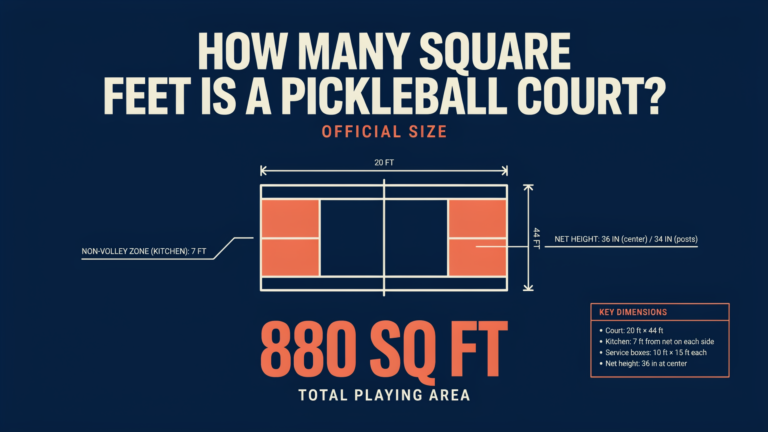
You can start with very little space if you focus on control-based practice instead of full-court movement.
- Around 6–10 feet of wall space is enough
- A small room or garage can work well
- Even a hallway can be used for soft shots
- Focus on stationary drills in tight areas
Small spaces actually help you improve accuracy faster.
Basic equipment vs DIY alternatives
You do not need expensive gear to get started. Simple tools are enough for effective practice.
- A pickleball paddle and balls are enough
- A wall can replace a training partner
- Tape can be used for target practice
- Even a basket or box can act as a target
Also Read: How much does a pickleball court cost?
DIY setups work surprisingly well for beginners.
Ideal daily practice time (5–20 minutes vs longer sessions)
Short, consistent practice is more effective than long, irregular sessions.
- 5–10 minutes is good for beginners
- 15–20 minutes builds real improvement
- Long sessions can cause fatigue and mistakes
- Daily practice is more important than duration
Even a small daily effort leads to steady progress.
Also Read: What Are Pickleball Courts Made Of?
Best places at home to practice pickleball
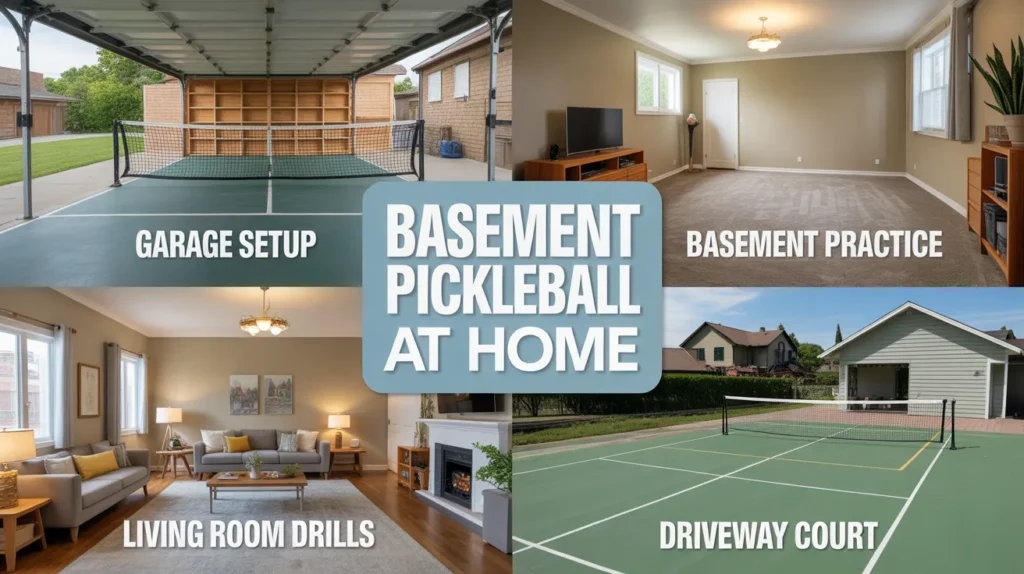
You can practice pickleball at home in small spaces like a garage, driveway, hallway, or backyard as long as you have a flat surface and a safe hitting area.
The best place is the one where you can repeat drills without interruption. You do not need a court, just a simple, clear space where you can focus on control, movement, and consistency.
Indoor spaces (garage, hallway, basement)
Indoor areas are great because they let you practice anytime, even in bad weather.
- A garage is perfect for wall drills and control practice
- A hallway works well for soft shots and accuracy training
- A basement can be used for slow, controlled repetition
- Make sure the area is safe and free from breakable items
Indoor practice helps you stay consistent all year.
Outdoor options (driveway, backyard)
Outdoor spaces give you more freedom to move and practice longer rallies.
- Driveways are great for footwork and hitting drills
- Backyards allow more space for movement practice
- Flat surfaces help improve shot accuracy
- You can also mark targets with tape or cones
Outdoor practice feels closer to real match conditions.
Apartment-friendly practice ideas
Even if you live in an apartment, you can still improve your game with smart practice.
- Use a small wall for controlled hitting drills
- Practice shadow footwork without a ball
- Focus on paddle control and slow swings
- Use soft foam balls if space is limited
You do not need a court, just smart adjustments.
Also Read: Which Pickleball Is For Outdoors?
Practice situations you can simulate at home
You can simulate real game situations at home with wall drills, target practice, and movement exercises that replicate actual match shots and reactions.
Even without a court or partner, you can train your body for real gameplay. The goal is to practice in a way that feels similar to match situations, so your skills transfer easily when you play on the court.
Solo wall drills for real game reactions
Wall drills can feel very close to real gameplay if you use them the right way.
- Hit at different speeds to simulate game pressure
- Change angles to copy real shot directions
- Practice quick returns to improve reaction time
- Try continuous rallies without stopping
Also Read: What Is The Double-Bounce Rule In Pickleball?
This helps you react faster during actual matches.
Footwork drills for faster court movement
Good movement is a big part of real game situations, and you can train it at home.
- Move side to side like you’re covering the court
- Practice quick, small steps instead of big jumps
- Combine movement with shadow swings
- Stay balanced while changing direction
Better footwork helps you reach more shots in real games.
Target drills to improve accuracy under pressure
Target practice helps you control where the ball goes, just like in a match.
- Mark small targets on the wall or ground
- Aim for the same spot again and again
- Practice soft and controlled placement
- Try to hit targets under time pressure
This improves your shot precision during real points.
How to simulate match scenarios without a partner
You can still create match-like situations even when practicing alone.
- Mix slow and fast shots in one routine
- Change direction after every few hits
- Add movement between each shot
- Set small challenges like “no mistake streak.”
These simple changes make your practice feel more like a real game.
Also Read: Can You Spike In Pickleball?
How to practice pickleball at home step by step
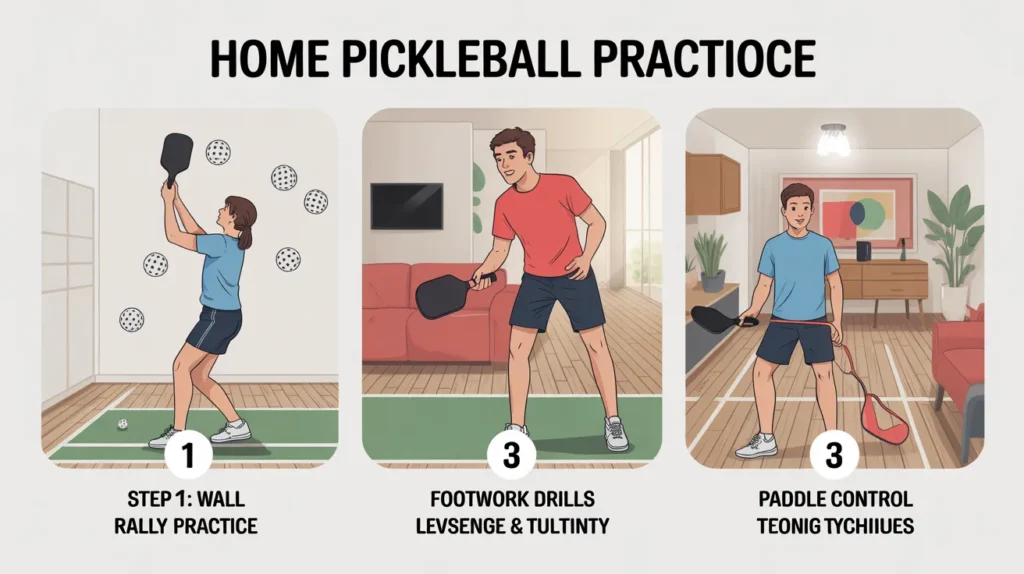
Start with a short warm-up, then focus on wall drills, footwork, and control exercises for 10–20 minutes daily to improve your pickleball skills at home steadily.
The key is having a simple routine you can repeat every day. You do not need complex training; just basic drills done with focus and consistency will improve your game faster than irregular practice.
5-minute warm-up routine
A quick warm-up prepares your body and helps prevent mistakes during practice.
- Light stretching for arms and legs
- Slow paddle swings to loosen up
- Gentle ball taps against the wall
- Easy foot movement side to side
This helps you get into rhythm before real practice starts.
10-minute skill drill plan
This is the main part of your home practice where real improvement happens.
- Hit the ball against a wall to improve timing
- Focus on soft shots to build control
- Practice both forehand and backhand
- Try to keep a steady rally without losing control
Also Read: Do You Get Two Serves In Pickleball Singles?
Stay relaxed and focus on accuracy, not speed.
5-minute consistency challenge
This final part helps you improve focus and control under pressure.
- Try hitting 20–30 clean shots in a row
- Reduce mistakes with each attempt
- Focus on steady rhythm and balance
- End practice only when you feel in control
This builds mental focus and game confidence.
Also Read: Can You Serve Overhand In Pickleball?
When you are at home, practice is not enough
At home practice is great, but it’s not enough when you need real match experience, opponent reaction, and game pressure to improve further.
Home drills help you build control and consistency, but at some point, you must play with real players. This is when you start learning strategy, timing under pressure, and how to react to unpredictable shots.
Signs your progress has plateaued
Sometimes you stop improving even if you keep practicing at home. That’s a sign you need to change your training.
- You can hit the ball well, but struggle in real games
- Your shots feel predictable and easy
- You are not improving your reaction speed
- You make the same mistakes again and again
When this happens, your practice needs more challenge.
When you need real court practice or a partner
Some skills can only improve with real opponents.
- Reading your opponent’s shots and strategy
- Reacting to fast and unexpected plays
- Learning doubles teamwork and positioning
- Handling pressure during real points
Playing on a real court helps you connect all your skills
Limitations of wall drills you should know
Wall practice is powerful, but it has limits you should understand.
- No real opponent decision-making
- No game pressure or scoring situation
- Limited movement compared to real matches
- Predictable ball returns after a while
That’s why mixing wall practice with real games is the best approach.
How to stay consistent and motivated at home
You can stay consistent by setting a simple daily routine, tracking little progress, and keeping your practice short but regular so it becomes a habit, not a task.
Most people stop practicing because they lose motivation, not because they lack ability. The key is to make practice easy, fun, and part of your daily routine so you don’t feel pressure to skip it.
Simple habit-building tricks that work
Building a habit is more important than long practice sessions. Small steps done daily give the best results.
- Practice at the same time every day
- Keep sessions short (10–20 minutes)
- Start with easy drills to build confidence
- Track your progress in a simple way
When practice feels easy, you are more likely to stay consistent.
Tracking progress without a coach
You do not need a coach to see improvement. You just need to notice small changes.
- Count how many clean hits you can do in a row
- Record yourself to check mistakes
- Compare your control every week
- Set small weekly goals
Seeing little progress keeps you motivated to continue.
Common motivation mistakes to avoid
Many players lose motivation because they make practice too hard or too serious.
- Practicing too long and getting tired
- Expecting fast results
- Skipping days and losing rhythm
- Not having a clear goal for each session
Keep it simple, and focus on steady improvement instead of perfection.
Proven drills and routines that actually work
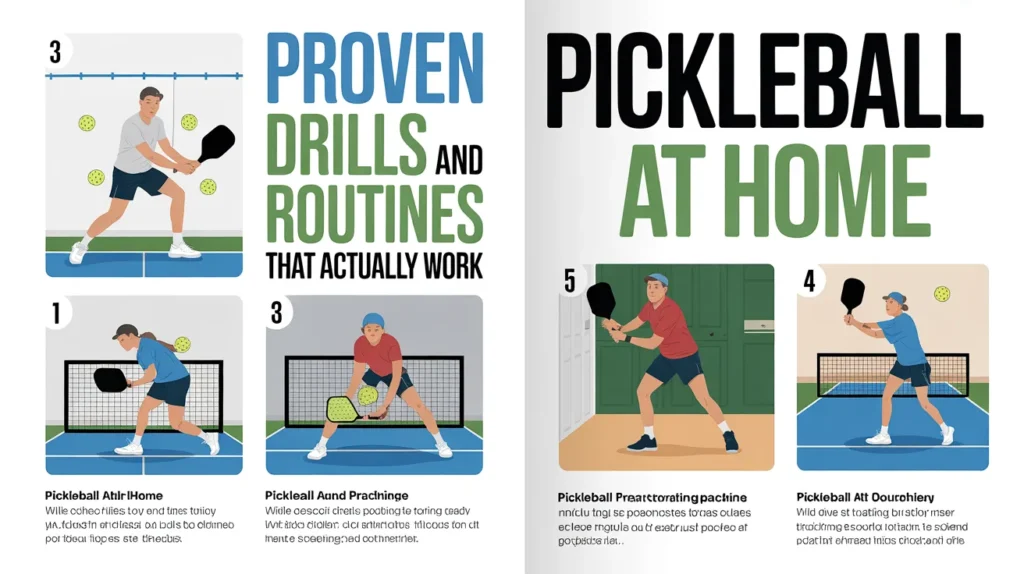
The most effective way to improve at home is to follow simple wall drills, footwork practice, and short daily routines that focus on control, consistency, and repetition.
You do not need complex training. Check this: https://pickleballcentral.com/blog/our-guide-to-pickleball-at-home/. What really works is repeating basic drills every day with focus. These proven routines help you build better timing, control, and confidence, even without a court or partner.
15-minute daily practice routine (step-by-step)
A short daily routine is enough if you stay consistent and focused.
- Start with 3–5 minutes of light warm-up swings
- Spend 5–7 minutes doing wall rally practice
- Use 3–5 minutes for soft shot control (dinks)
- End with 2–3 minutes of steady clean hits
This simple structure helps you improve without feeling tired or overwhelmed.
Best wall drills for control and consistency
Wall drills are one of the fastest ways to improve your game at home.
- Hit the ball against the wall and keep a steady rhythm
- Focus on soft, controlled returns instead of power
- Try alternating forehand and backhand shots
- Aim for a consistent rally without mistakes
These drills improve your reaction time and paddle control.
Also Read: How To Regrip A Pickleball Paddle?
Simple footwork and coordination exercises
Good footwork makes a big difference in real matches, even if you practice at home.
- Move side to side while shadow swinging
- Practice small, quick steps instead of big movements
- Stay light on your feet during drills
- Combine movement with slow ball control practice
Better footwork helps you reach shots faster on the court.
Also Read: How Long Do Pickleball Paddles Last?
Advanced drills to level up faster
Once you get comfortable, you can challenge yourself with harder drills.
- Increase the wall rally speed gradually
- Aim for specific target areas on the wall
- Mix fast and slow shots in one session
- Try longer rallies without losing control
These drills push your skills closer to real match level.
Also Read: What Makes A Good Pickleball Paddle?
FAQs:
What is the fastest way to improve pickleball at home?
Practice daily with simple wall drills and focus on control and consistency instead of power.
How long does it take to see improvement at home?
Most players notice better control and timing within 1–2 weeks of regular practice.
Can beginners learn pickleball at home?
Yes, beginners can build basic skills like control, coordination, and simple shots at home.
Is a wall enough for effective pickleball practice?
Yes, a wall helps improve timing, control, and reaction speed through continuous practice.
Can you master pickleball without playing on a court?
No, you still need real matches to learn strategy and handle real game pressure.
Conclusion:
Practicing pickleball at home is a simple and effective way to build control, consistency, and confidence. With wall drills, smart routines, and regular effort, you can improve quickly. Stay consistent, focus on basics, and combine home practice with real games to get the best results.