What Does Dink Mean In Pickleball? Dink Explained )
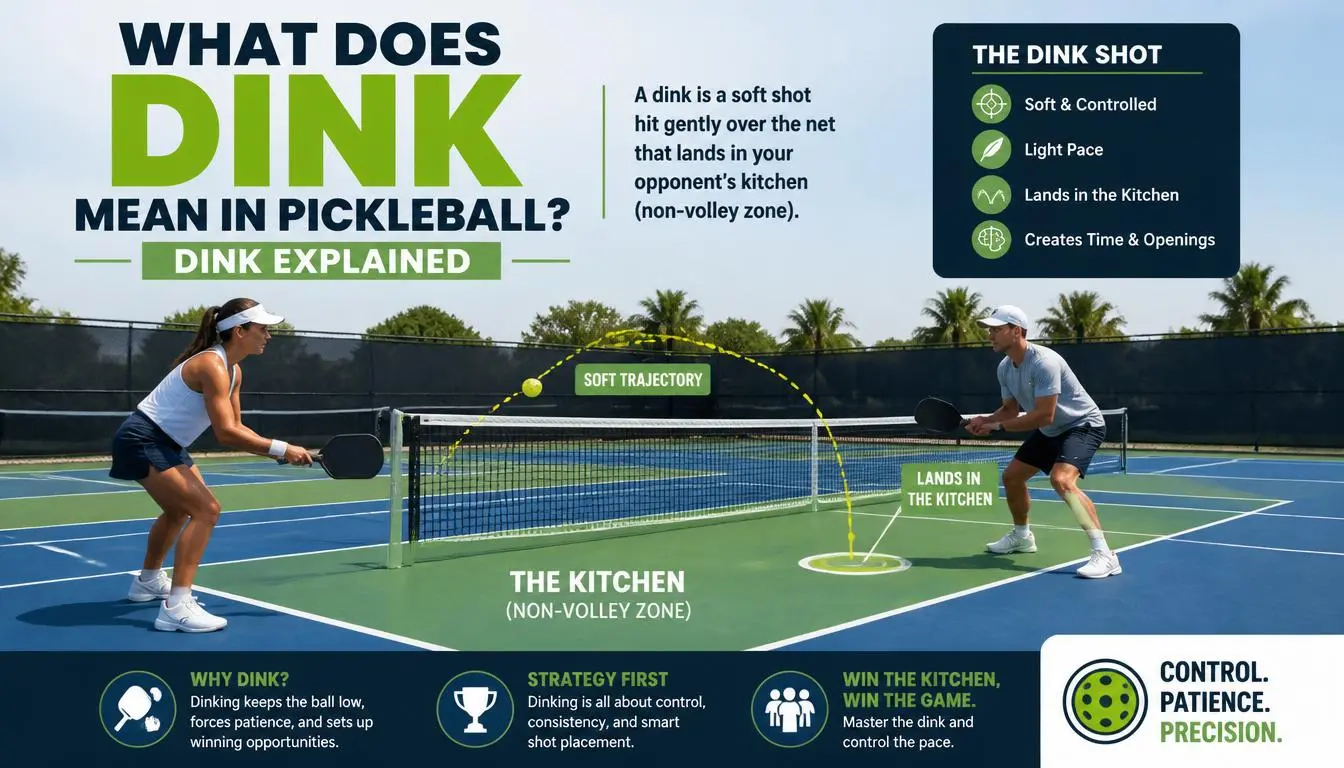
In pickleball, a dink is a soft shot hit gently over the net into the opponent’s kitchen area. Players use dinks to slow the game, control rallies, and force opponents to make mistakes during longer exchanges near the net.
In this article, you will learn what a dink means in pickleball, why players use it so often, and how this simple shot can help you control rallies and win more points.
Understanding the Dink Shot
A dink is a soft shot played gently over the net into the opponent’s kitchen area. Official Pickleball Rules. Players use this shot to control the pace of the game and force difficult returns during rallies.
A Simple Explanation for Beginners
- A dink is a soft and controlled shot.
- It is usually played near the kitchen line.
- The ball stays low after crossing the net.
- Players use it to stay in control of rallies.
Also Read: What Is The Double-Bounce Rule In Pickleball?
Where the Shot Lands on the Court
- A dink lands inside the non-volley zone.
- The shot should bounce low near the net.
- Good placement makes returns harder.
- Most players aim for the kitchen corners.
Why Players Prefer Dinks Over Power Shots
- Soft shots reduce easy mistakes.
- Dinks help players stay patient in rallies.
- Hard shots can be risky near the net.
- Controlled play creates better scoring chances.
Why Players Use This Shot So Often
The dink shot helps players stay in control during fast rallies near the net. Instead of using power, players use soft shots to create pressure and force opponents into mistakes.
How a Dink Helps During Rallies
- Soft shots slow the game down.
- Players get better control near the net.
- Dinks help avoid risky power shots.
- Longer rallies create smarter scoring chances.
Why Skilled Players Prefer Dinking
- Patience is important in pickleball.
- Soft shots make opponents move more.
- Controlled play reduces simple mistakes.
- Dinking creates better attack opportunities.
How Opponents Make Mistakes Against Dinks
- Low balls are harder to return strongly.
- Players may hit the ball too high.
- Quick kitchen rallies increase pressure.
- Long exchanges test player focus and control
Also Read: Can You Spike In Pickleball?
What Makes a Good Dink Shot
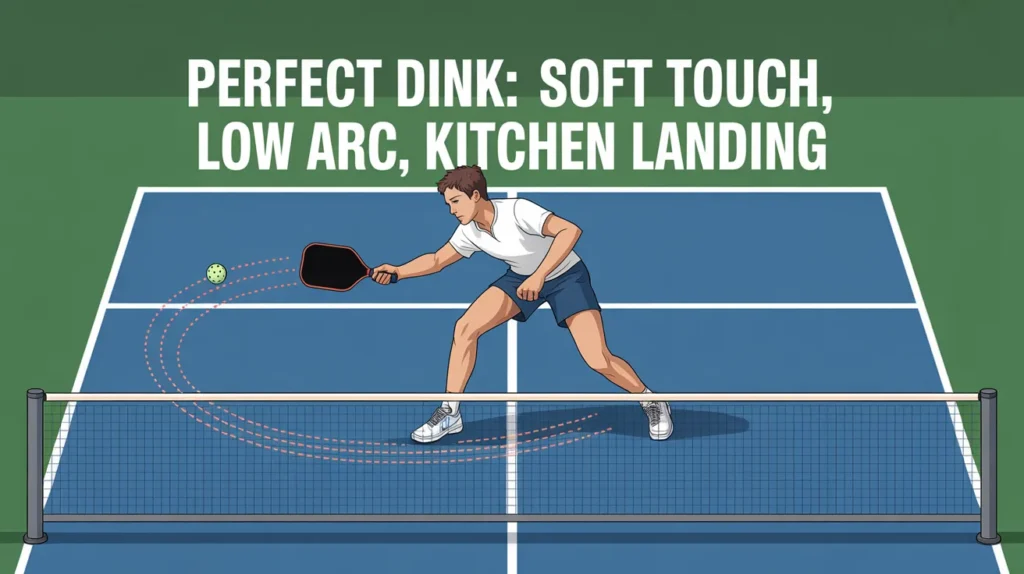
A good dink shot stays low, lands softly near the kitchen, and is difficult for opponents to attack. Players need control, balance, and patience to hit consistent dinks during rallies.
The Right Height and Speed
- A dink should travel low over the net.
- Soft speed makes the shot harder to attack.
- High shots give opponents easy chances.
- Good control is more important than power.
Forehand and Backhand Dinks
- Forehand dinks feel easier for many players.
- Backhand dinks help during quick exchanges.
- Both shots need soft paddle control.
- Practice improves consistency on both sides.
Cross-Court and Straight Dinks
- Cross-court dinks give more court space.
- Straight dinks increase pressure near the net.
- Different angles keep opponents guessing.
- Smart placement creates better rally control.
How Paddle Control Affects the Shot
- A loose grip helps create softer shots.
- Proper paddle angle keeps the ball low.
- Smooth movement improves shot accuracy.
- Controlled hands reduce unnecessary mistakes.
Common Mistakes Players Make With Dinks
Many beginners struggle with dinks because they add too much power or lose control near the net. These small errors can disrupt the rhythm and give the opponent easy points.
Hitting the Ball Too Hard
- Power shots go out of bounds easily.
- Hard hits remove control from the player.
- Opponents get easy counterattacks.
- Soft touch is always more effective.
Poor Position at the Kitchen Line
- Standing too far reduces control.
- Bad balance affects shot accuracy.
- Late movement leads to errors.
- Good positioning improves consistency.
Popping the Ball Up
- High balls are easy to smash.
- Lack of control increases mistakes.
- Opponents gain an attacking advantage.
- Low shots keep the rally safe.
Weak Paddle Control
- A tight grip reduces soft touch.
- The incorrect angle sends the ball too high.
- Jerky movement affects accuracy.
- Smooth control improves dinking skill.
Different Types of Dinks Used in Pickleball
Players use different types of dinks depending on the situation in a rally. Each type helps control pace, placement, and pressure at the net.
Offensive Dinks
- Used to create pressure on the opponent.
- Placed closer to the kitchen line.
- Slightly deeper to force a weak return.
- Helps set up winning shots.
Defensive Dinks
- Used when under pressure in a rally.
- Focuses on safety over attack.
- Keeps the ball low and controlled.
- Helps reset the point calmly.
Cross-Court Dinks
- Played diagonally across the net.
- Gives more space for error control.
- Slows down fast net exchanges.
- Forces opponent movement.
Straight Dinks
- Played directly in front of the player.
- Increases pressure in tight rallies.
- Requires precise control and balance.
- Common in fast kitchen battles.
When to Use a Dink During a Match
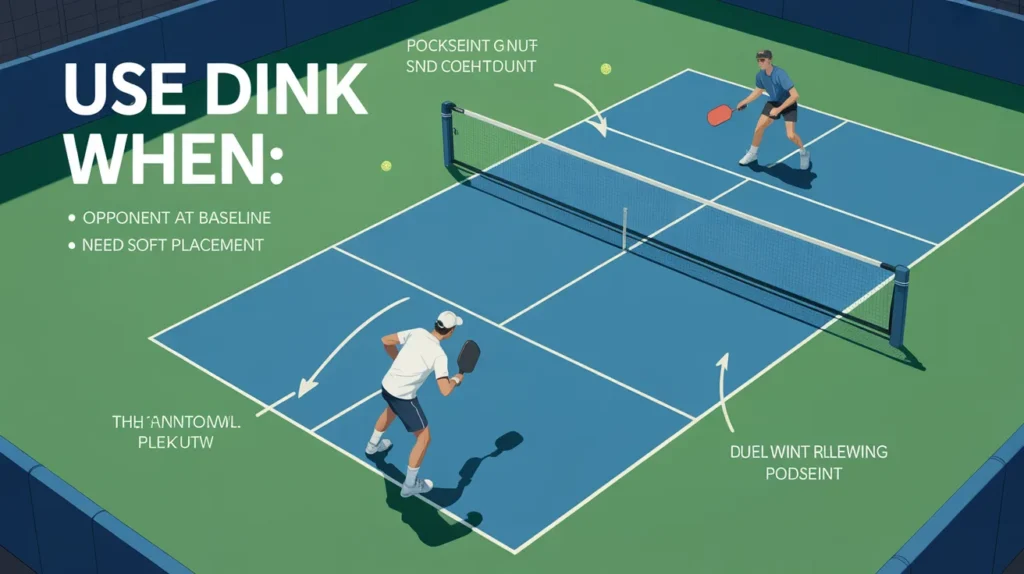
A dink is most useful when the rally is slow or both players are close to the net. It helps you stay safe, control the point, and wait for the right moment to attack.
Early Rally Situations
- Used when both players are settling into the point.
- Helps slow down fast exchanges.
- Builds control from the start.
- Reduces risky early mistakes.
Kitchen Line Exchanges
- Common during close net battles.
- Keeps the ball low and controlled.
- Forces opponents into soft returns.
- Helps maintain a steady rhythm.
Doubles Play Situations
- Very important in doubles strategy.
- Helps control space at the net.
- Reduces attacking chances for opponents.
- Builds teamwork in rallies.
When to Switch From Dink to Attack
- Switch when the ball sits up too high.
- Attack when the opponent is off balance.
- Stop dinking if control is lost.
- Look for weak returns to finish the point.
Signs Your Dink Needs Improvement
A weak dink can make rallies harder and give opponents easy chances to attack. Improving small mistakes can help you stay more confident and consistent near the net.
Losing Control During Rallies
- The ball goes too high over the net.
- Shots land outside the kitchen area.
- Fast rallies become difficult to manage.
- Soft control starts to disappear under pressure.
Making Too Many Unforced Errors
- Simple shots often go into the net.
- Easy returns are missed during exchanges.
- Mistakes happen without opponent pressure.
- Poor timing affects shot consistency.
Struggling With Consistent Placement
- Shots land too deep or too short.
- Opponents get easy attacking chances.
- Ball placement becomes unpredictable.
- Controlled aiming needs more practice.
Feeling Uncomfortable Near the Net
- Quick exchanges create panic.
- Footwork becomes slow or unbalanced.
- Players hesitate during soft rallies.
- Confidence drops in kitchen battles.
Simple Ways to Improve Your Dink Shot
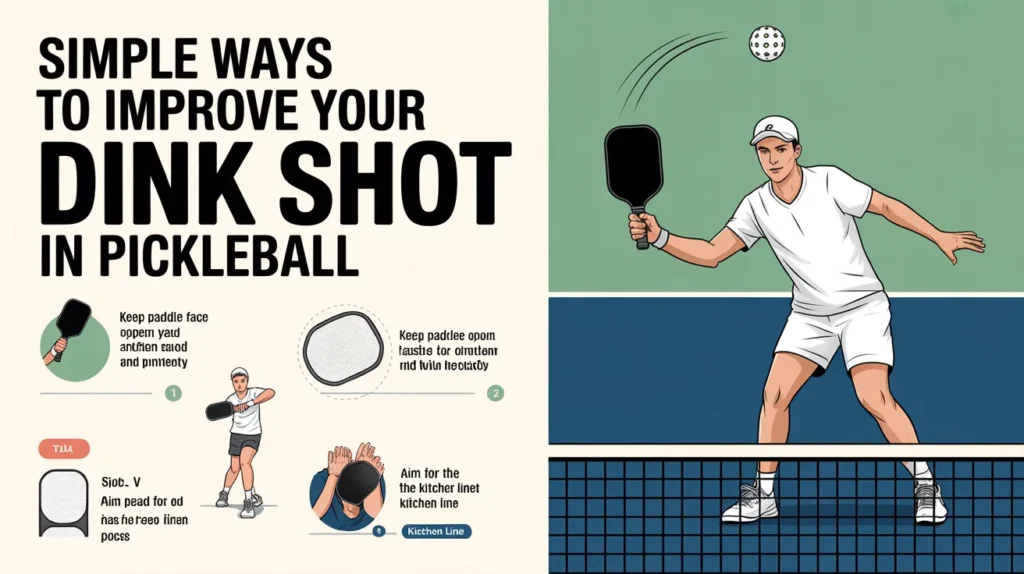
Improving your dink shot takes practice, control, and patience. Small adjustments in movement and paddle control can make your shots more accurate and consistent during rallies.
Practice Soft Touch Shots
- Focus on control instead of power.
- Hit the ball gently over the net.
- Try to keep every shot low.
- Practice short kitchen rallies often.
Also Read: How To Practice Pickleball Alone?
Improve Your Footwork
- Stay balanced near the kitchen line.
- Move your feet quickly into position.
- Avoid reaching too far for the ball.
Hold the Paddle Correctly
- Use a relaxed grip during soft shots.
- Tight hands reduce ball control.
- Keep the paddle angle steady.
- Smooth swings improve shot accuracy.
Train With Consistent Drills
- Practice cross-court dink exchanges.
- Aim for the same spot repeatedly.
- Train with a partner for better rhythm.
Dink Shot vs Other Common Pickleball Shots
Different pickleball shots are used for different situations during a match. A dink is mainly used for control, while other shots focus more on speed, defense, or attack.
Dink vs Drop Shot
- A dink is played near the kitchen line.
- A drop shot is usually hit from deeper court areas.
- Both shots focus on soft control.
Dink vs Volley
- A dink bounces before being returned.
- A volley is hit before the ball bounces.
- Volleys are usually faster and more aggressive.
- Dinks create slower and more controlled rallies.
Dink vs Lob
- A dink stays low over the net.
- A lob sends the ball high into the air.
- Lobs push opponents toward the baseline.
FAQs:
Can a Dink Win a Point in Pickleball?
Yes, a well-placed dink can force mistakes and create winning opportunities during long kitchen rallies
Why Do Beginners Struggle With Dinks?
Most beginners use too much power and lack soft paddle control near the kitchen line.
Is Dinking More Important Than Power Shots?
Yes, controlled dinking is often more effective than hard hitting during close net exchanges.
Can You Use a Dink in Singles Matches?
Yes, players use dinks in singles to slow rallies down and create better court positioning.
Is a Dink Difficult to Learn?
No, most players can learn basic dinks quickly with regular practice and simple control drills.
Conclusion:
Mastering the dink shot in pickleball can improve your control, patience, and overall game strategy. Now that you understand what dink means in pickleball, you can use this soft shot to manage rallies, force mistakes, and create better scoring chances during competitive matches.