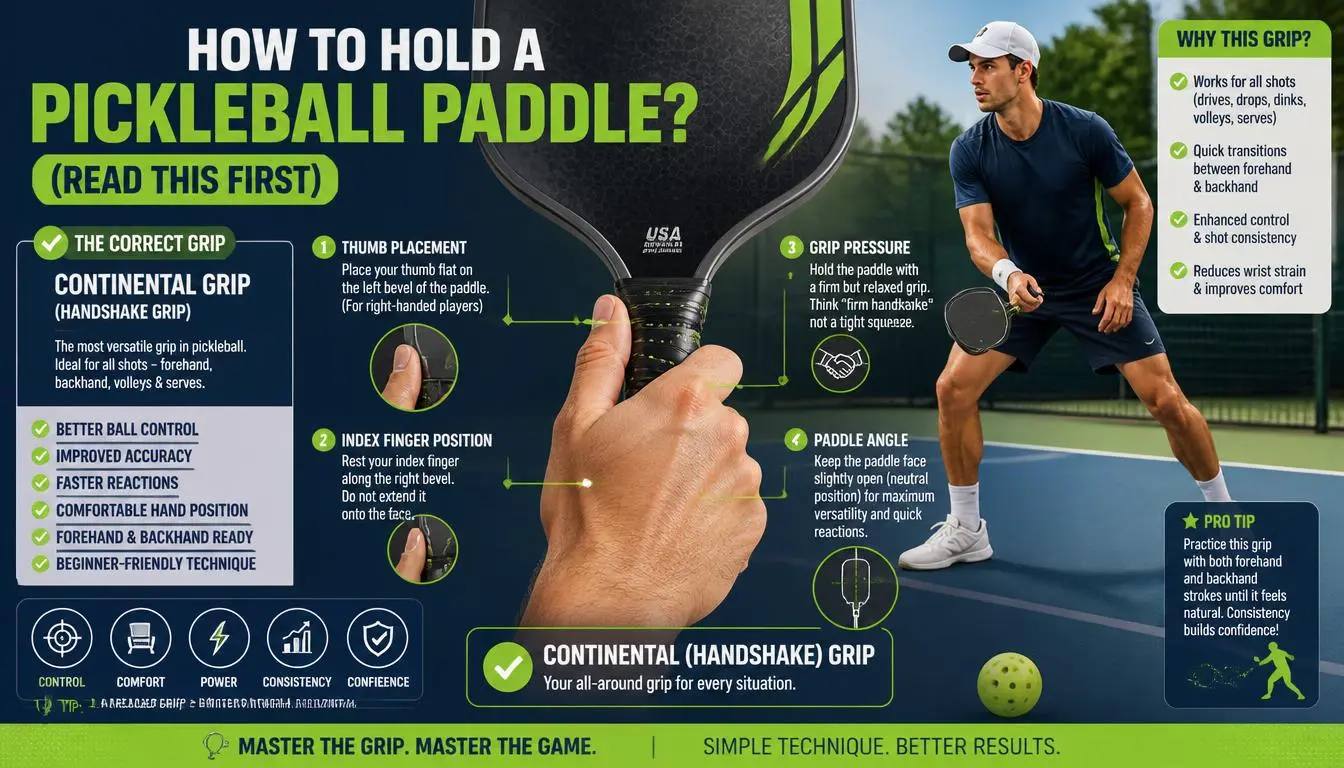
How To Hold A Pickleball Paddle? (Read This First)
To hold a pickleball paddle correctly, use a relaxed handshake-style grip, also called the Continental grip. Hold the handle firmly but not too tightly. This grip provides better control, comfort, and versatility for serves, volleys, dinks, and other common pickleball shots.
In this journey, you will discover how a simple change in the way you hold a pickleball paddle can improve your control, accuracy, and confidence on the court.
The Correct Grip Most Players Should Start With
The best grip for most pickleball players is the Continental grip, often called the handshake grip. It allows you to switch easily between forehand and backhand shots without changing your hand position. This grip is simple to learn and works well for beginners and advanced players alike.
Also Read: How To Start Playing Pickleball?
Key Benefits of This Grip
- Provides better control over the ball.
- Makes serves, volleys, and dinks easier to execute.
- Helps you react faster during rallies.
- Reduces unnecessary grip changes.
- Works well in most game situations.
Many new players focus on power, but experienced coaches know that control is what wins more points. That is why the Continental grip is considered the foundation of a solid pickleball game.
What Is the Continental Grip?
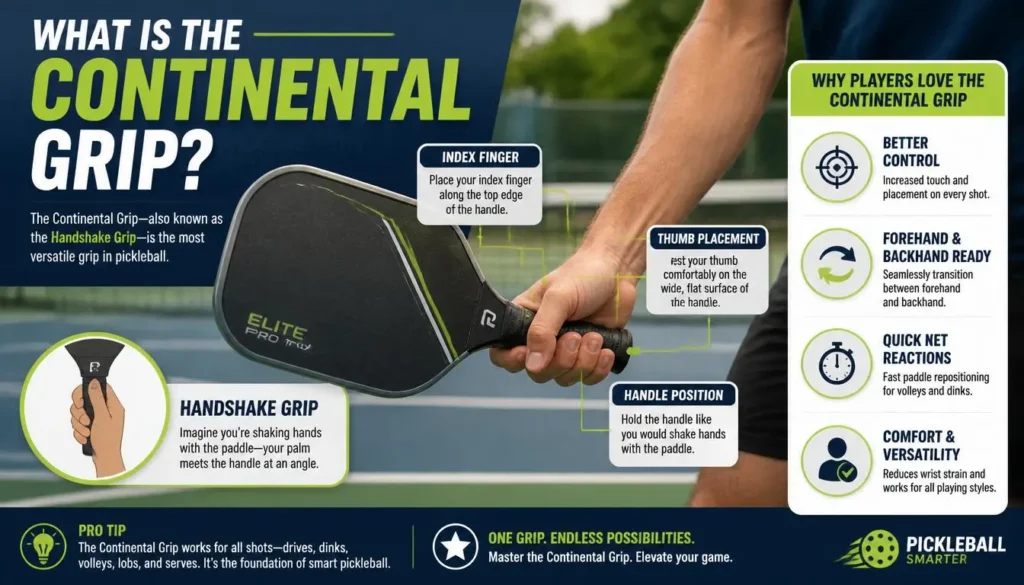
The Continental grip is a way of holding the pickleball paddle as if you are shaking someone’s hand. The official USA Pickleball guide on grips: It is the most commonly recommended grip because it provides a good balance of control, comfort, and versatility for different shots.
- Keeps the paddle face stable during play.
- Works well for both forehand and backhand shots.
- Makes quick reactions at the net easier.
- Reduces the need to change grips during rallies.
Most coaches teach the Continental grip first because it helps players develop proper technique from the beginning. Once you are comfortable with it, you can handle almost every shot with greater confidence and consistency.
How to Position Your Hand on the Handle
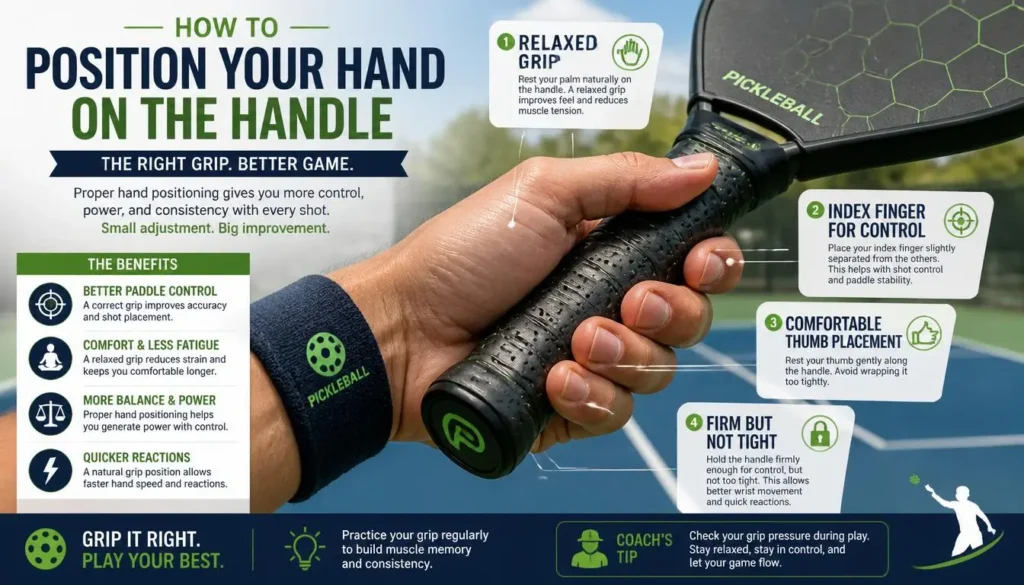
Place your hand on the paddle handle as if you are shaking someone’s hand. Your palm should rest comfortably on the handle, while your fingers wrap around it without squeezing too hard.
- Keep your grip relaxed and natural.
- Place your index finger slightly apart for better control.
- Let your thumb rest comfortably along the handle.
A proper hand position helps you stay in control of the paddle and react quickly during rallies. It also makes it easier to switch between different shots without adjusting your grip.
How Firmly Should You Hold the Paddle?
You should hold the pickleball paddle with a relaxed grip, not too tight and not too loose. Medium pressure helps you stay in control while still reacting quickly during fast rallies.
- Use a light-to-medium grip for better control and flexibility.
- Avoid squeezing the handle too hard, as it reduces wrist movement.
- Keep your hand relaxed to improve shot accuracy.
- A tight grip should only be used for powerful smashes.
A relaxed grip gives you smoother shots and better control at the net. Most beginners make the mistake of gripping too tightly, which reduces performance and causes early fatigue.
Why Your Grip Matters More Than You Think
Your grip is the foundation of every shot in pickleball. If your grip is wrong, even perfect timing and footwork will not give you consistent results.
- A correct grip improves shot control and placement.
- It helps you switch quickly between forehand and backhand.
- A good grip reduces wrist strain and improves comfort.
- It builds consistency during long rallies.
Most beginners focus on power, but experienced players focus on control first. A stable grip helps you play smarter, not just harder, especially in fast net exchanges.
Also Read: How To Be Good At Pickleball?
Common Reasons Players Hold the Paddle Incorrectly
Most players develop a wrong grip without realizing it. It usually happens because they copy habits from other racket sports or rush into gameplay without learning the basics.
- Many beginners grip the paddle like a tennis racket, which reduces control.
- Some hold it too tightly, thinking it will add more power.
- Others place their hand too high or too low on the handle.
- Lack of coaching or guidance leads to bad habits early on.
These mistakes may seem small, but they can seriously affect shot accuracy, reaction time, and overall comfort during play. Fixing them early improves much faster.
Grip Pressure and Paddle Position Guidelines
The right grip pressure and paddle position help you stay balanced and in control during every shot. Think of it as finding a “middle zone” between too tight and too loose.
- Use light pressure for dinks and soft net shots.
- Switch to medium pressure for volleys and rallies.
- Increase firmness slightly for drives and smashes.
- Keep the paddle in front of your body for faster reactions.
Your index finger should stay relaxed, and your wrist should remain flexible. This balance helps you react quickly and maintain control in fast-paced rallies.
How Your Grip Changes in Different Game Situations
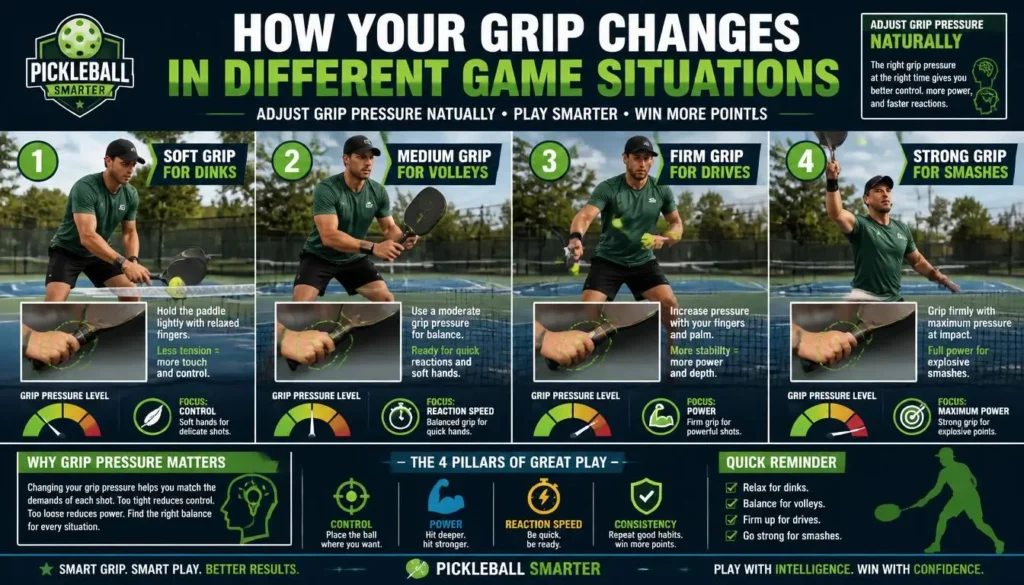
Your grip does not stay the same in every moment of a pickleball match. Skilled players adjust grip pressure slightly based on the type of shot they are playing.
- Use a softer grip for dinks and soft net exchanges.
- Switch to a medium grip for volleys at the kitchen line.
- Firm up your grip for fast drives and powerful shots.
- Stay relaxed between shots to react faster.
In real games, these small changes happen naturally with practice. The key is learning when to stay soft and when to add firmness without overthinking.
Signs Your Grip May Be Hurting Your Performance
If your grip is wrong, your game will feel inconsistent even if your technique is good. Your body usually gives early warning signs when something is off.
- You miss easy shots or lose control during rallies.
- Your wrist or forearm feels sore after playing.
- You struggle to switch between forehand and backhand.
- The ball often goes too high or too far.
These signs show that your grip may be too tight, too loose, or incorrectly placed. Fixing it early helps you play with more control and less effort.
How to Improve Your Grip Technique
Improving your grip takes simple practice and awareness. Small daily adjustments can quickly turn a weak grip into a strong, controlled one.
- Start by holding the paddle in a relaxed Continental grip.
- Practice switching between forehand and backhand slowly.
- Keep your grip pressure light during practice sessions.
- Repeat short drills to build natural muscle memory.
Also Read: How To Practice Pickleball Alone?
Focus on consistency, not speed. With time, your hand will automatically find the correct position during real matches without thinking.
FAQs:
Is Continental Grip good for beginners?
Yes, it is the easiest and most recommended grip because it gives control, comfort, and works for almost every shot.
Can a wrong paddle grip affect my performance?
Yes, an improper grip can reduce control, slow your reactions, and make your shots inconsistent during rallies.
Should I always keep a tight grip on the paddle?
No, a tight grip reduces wrist movement and control; a relaxed grip works better for most shots.
Can I change my grip during a match?
Yes, experienced players slightly adjust grip pressure based on shots like dinks, volleys, and smashes.
Is grip size important in pickleball?
Yes, the right grip size improves comfort, reduces strain, and helps you control the paddle better during play.
Conclusion:
Learning how to hold a pickleball paddle correctly is one of the simplest ways to improve your game. Using the Continental grip with proper grip pressure gives better control, comfort, and consistency. Mastering your pickleball paddle grip helps you play more confidently, react faster, and execute shots with greater accuracy.