Are Let Serves Legal in Pickleball? (Official Rules)
Yes, lets can occur in pickleball, but the rules depend on the organization. In recreational play, a serve that touches the net and lands correctly is usually replayed. Some official tournaments no longer use let serves.
In this article, you will learn whether there are lets in pickleball, how the rules have changed over time, and what players need to know about let serves in recreational and official games.
No, There Are No Let Serves in Modern Pickleball
No, modern pickleball does not use let serves. If a serve touches the net and still lands in the correct service area, the ball remains in play. This rule applies in official matches and helps keep the game moving.
- Let serves were removed from official rules.
- A legal serve stays in play even after touching the net.
- The rule makes matches faster and easier to manage.
What Happens if a Serve Touches the Net and Lands In?
If the ball clips the net and lands inside the correct service court, play continues. Players do not stop or replay the serve.
| Situation | Result |
| Ball touches the net and lands in the correct court | Play continues |
| Ball touches the net and lands outside the court | Fault |
| Ball hits the net and does not cross over | Fault |
- The server does not get another chance.
- Players should keep playing until the point ends.
- This rule is used in official pickleball tournaments.
Why Was the Let Rule Removed?
Pickleball removed let serves to make the game faster and easier to manage. The change also reduced confusion and helped create more consistent rules for players.
- Games move at a quicker pace.
- Players have fewer arguments over calls.
- The rules are easier for beginners to understand.
How the Rule Change Speeds Up Play
Without let serves, players do not have to stop and replay points. This keeps matches flowing and saves time.
- Fewer interruptions during games.
- Faster points and shorter matches.
- Smoother experience for players.
Why Removing Lets Reduced Arguments Between Players
Players no longer need to decide whether the ball barely touched the net. This has made the game fairer and less stressful.
- Fewer disputed calls.
- Less confusion between opponents.
- Easier for recreational players to follow.
How the New Rule Improved Consistency
The same rule now applies to every legal serve. This makes pickleball easier to learn and keeps competition fair.
- Players know exactly what to expect.
- Rules are simpler to enforce.
- Matches run more smoothly.
- New players can learn the game faster.
What Used to Count as a Let in Pickleball?
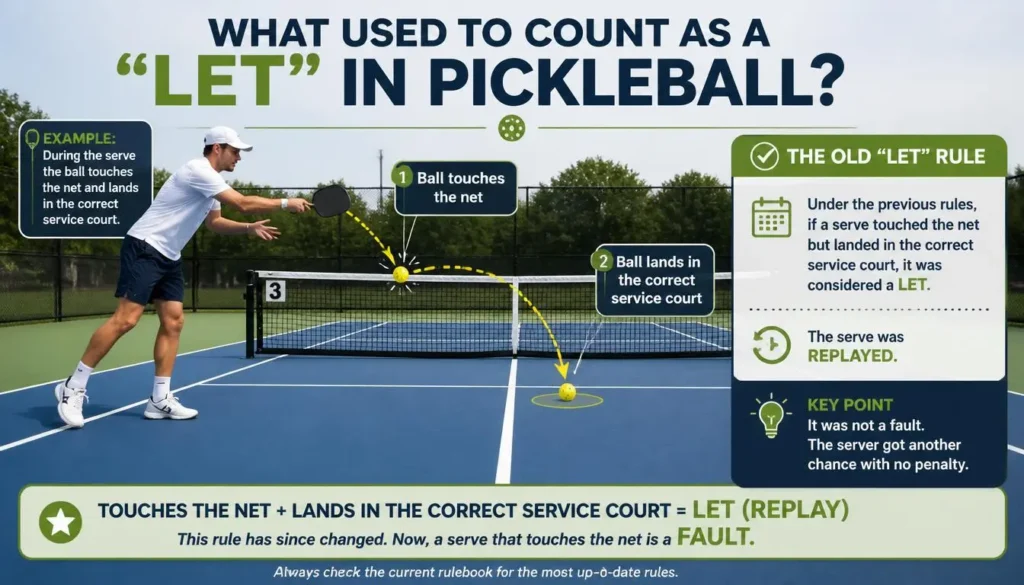
Before the rule change, a let happened when a serve touched the net but still landed in the correct service court. In that case, the serve was replayed instead of counting as a point.
- Let serves were allowed in the past.
- Players stopped play and served again.
- The rule applied only to serves, not rallies.
How the Old Let Rule Worked
Under the old rules, players replayed a serve if it clipped the net and landed in the proper service area. This was similar to the let rule used in tennis.
- The server got another chance.
- No point was awarded.
- Play restarted with a new serve.
When the Rule Officially Changed
USA Pickleball removed let serves from its official rulebook in 2021. Since then, a legal serve remains in play even if it touches the net. USA Pickleball Official Rulebook
- The change took effect in 2021.
- It applies to official matches.
- Most players now follow the no-let rule.
- The update made the game faster and easier to officiate.
What Happens When the Ball Hits the Net?
A ball that touches the net can lead to different results depending on where it lands. In modern pickleball, net contact alone does not stop play.
- The outcome depends on where the ball finishes.
- A legal serve stays in play.
- An illegal serve results in a fault.
Serve Hits the Net and Lands in the Correct Court
If the serve clips the net and lands inside the proper service area, play continues. The receiving team must return the ball.
- The serve is legal.
- No replay is allowed.
- The rally continues as normal.
Serve Hits the Net and Lands Out
If the ball touches the net and lands outside the correct service court, the serve is a fault. The server loses that attempt.
- The point does not continue.
- The receiving team gains the advantage.
- Net contact does not excuse an out serve.
Serve Hits the Net and Fails to Clear It
If the ball hits the net and stays on the server’s side, it is an immediate fault. The server must follow the normal serving rules.
- The rally never starts.
- No second chance is given.
- The same rule applies in official play.
Are There Any Exceptions to the No-Let Rule?
Yes, there are a few rare situations where play can be stopped or replayed, but they are not called “let serves.” These are mostly related to interference or safety issues, not net contact.
- Normal net contact on a serve is never replayed.
- Exceptions occur only due to external factors.
- The referee (if present) can decide a replay.
Interference Lets and Replay Situations
Sometimes a rally may be replayed if something outside the game affects fair play. This is not a let serve, but a referee decision.
- A ball from another court enters your court.
- A sudden distraction affects both players.
- A technical issue interrupts play (like broken equipment).
Outside Distractions That Can Stop a Rally
If something unexpected makes it unfair to continue, players can stop and replay the point. This is rare in casual games.
- Loud or sudden external interruptions.
- Safety hazards on the court.
- Players cannot clearly continue the rally.
When Officials Decide a Replay
In official matches, only referees can call a replay. Players should never assume a let is automatic.
- The referee has the final decision.
- Must ensure fairness for both teams.
- Used only in unusual situations.
Do Recreational Games and Professional Matches Use the Same Rules?
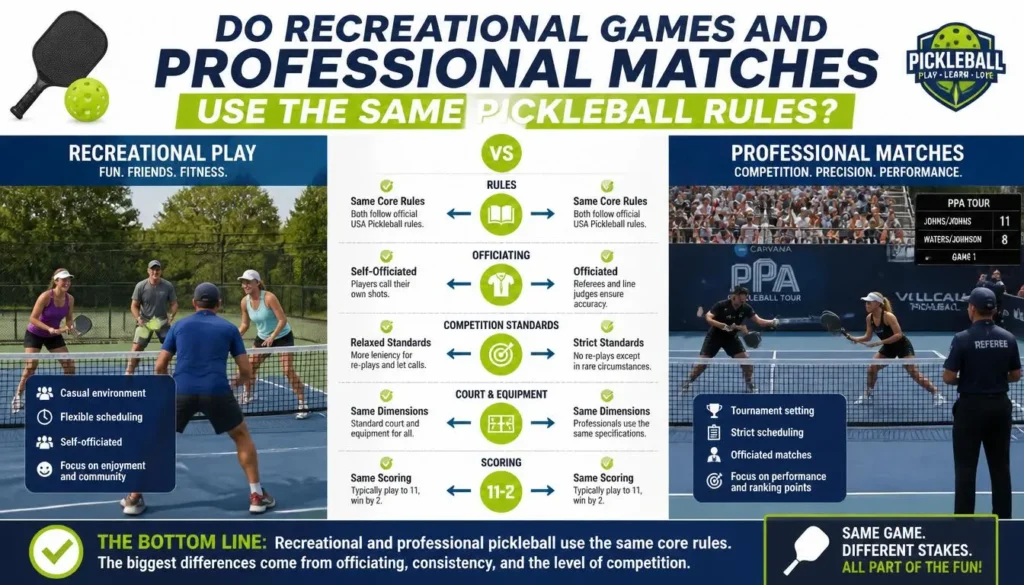
Not always. Most official games follow USA Pickleball rules, but casual or recreational games can vary depending on players and location. That’s why let-related confusion still exists in friendly matches.
- Official tournaments follow strict rules.
- Recreational games may use house rules.
- Players often agree on rules before starting.
House Rules: Some Players Still Follow
In casual play, some groups still allow let serves out of habit or fairness. These rules are not official but are used to keep games friendly.
- Some players replay net serves.
- Rules depend on local agreement.
- Beginners may not know updated rules.
Differences Between Official and Recreational Play
Professional matches are stricter and more standardized, while casual games are more flexible. This is where confusion about lets often comes from.
- Official play = no let serves.
- Recreational play = may vary.
- Clubs often follow official rulebooks.
Why This Difference Matters
Understanding both versions helps avoid disputes during games. Players should always clarify rules before starting.
- Prevents arguments during play.
- Helps beginners learn correct rules.
- Keeps matches fair and enjoyable.
When Should Players Pay Attention to Let Rules?
Even though let serves are removed from official pickleball, players still need to understand the rule to avoid confusion during matches. This is especially important for beginners and mixed-level games.
- Helps avoid wrong calls during play.
- Prevents arguments between players.
- Builds confidence in serving.
Why Tennis Players Often Get Confused
Tennis uses let serves, so new pickleball players sometimes apply the same rule by mistake. This leads to hesitation or incorrect stoppage of play.
Also Read: What Is the Difference Between Tennis and Pickleball?
- Tennis allows replay on net serves.
- Pickleball does not follow this rule.
- Transition players need time to adjust.
Common Mistakes Beginners Make
New players often stop play when the ball touches the net, even though it is legal. This slows down the game and creates confusion.
Also Read: Is Pickleball Easy to Learn?
- Stopping play after a legal serve.
- Calling a let incorrectly.
- Asking for a replay that is not allowed.
How Can You Avoid Confusion During a Match?
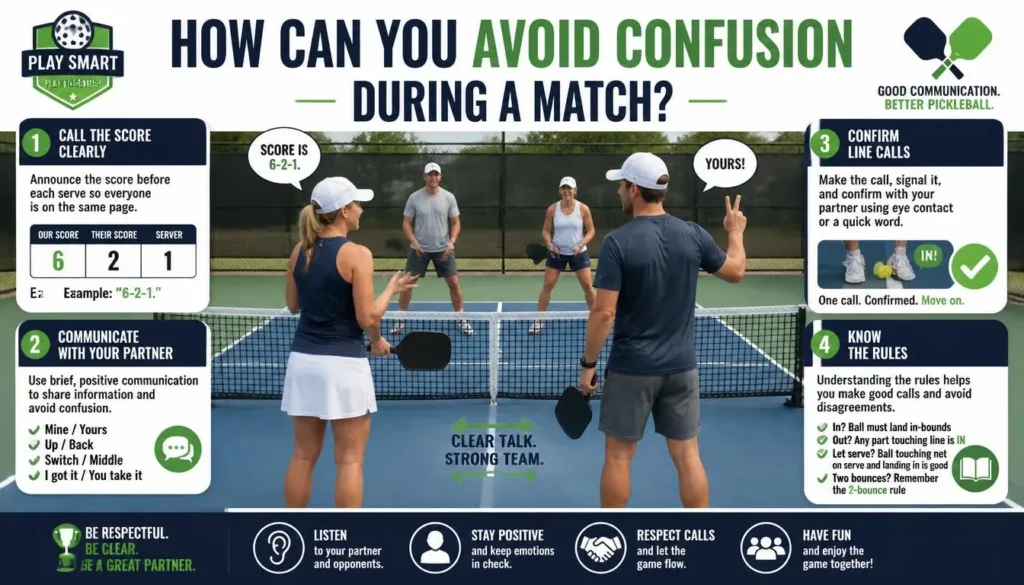
The best way to avoid let-rule confusion is to know the current rules before you start playing. Clear communication keeps the game smooth and fair for everyone.
- Learn the basic serve rules.
- Confirm rules before the match starts.
- Stay consistent with official guidelines.
Agree on the Rules Before Playing
Before starting a game, players should quickly confirm whether they are using official USA Pickleball rules or house rules. This avoids disagreements later.
- Ask if let serves are allowed or not.
- Confirm if any local rules apply.
- Keep everyone on the same page.
Learn the Current USA Pickleball Rules
Understanding official rules helps you play correctly in any setting, especially in clubs or tournaments. Pickleheads Pickleball Rules Guide
- No let serves in official play.
- A serve that hits the net and lands in is legal.
- Rules are the same in sanctioned matches.
Also Read: What Are the Rules for Pickleball?
What to Do if an Opponent Calls a Let
If someone incorrectly calls a let, stay calm and refer to the agreed rules before continuing play.
- Pause and clarify the rule.
- Follow agreed or official rules.
- Avoid arguments by staying respectful.
FAQs:
Can a Pickleball Rally Be Replayed After a Distraction?
Yes, a rally may be replayed if an outside distraction affects fair play.
What Rulebook Governs Let Calls in Pickleball?
Official let rules are governed by the USA Pickleball rulebook.
Can a Serve Touch the Net and Still Be Legal?
Yes, a serve is legal if it touches the net and lands in the correct court.
Do All Pickleball Clubs Follow the Same Let Rules?
No, some recreational clubs still use their own house rules.
Should Beginners Learn the No-Let Rule?
Yes, understanding the no-let rule helps beginners avoid common mistakes.
Conclusion:
In conclusion, are there lets in pickleball? Officially, no. Modern pickleball rules no longer allow let serves, although some recreational games still use house rules. Understanding how net serves work and when exceptions apply can help players avoid confusion and enjoy fair, consistent matches.