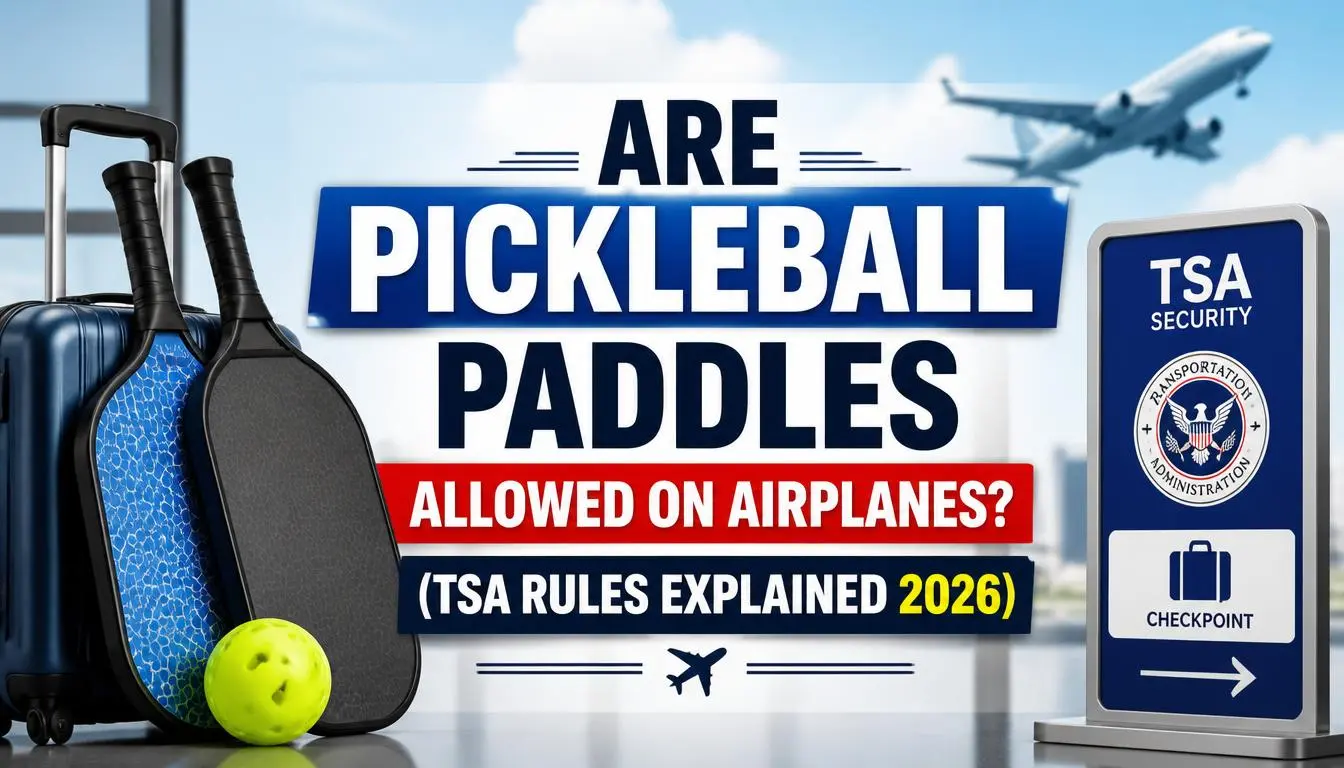
Are Pickleball Paddles Allowed On Airplanes? (TSA Rules Explained 2026)
Yes, pickleball paddles are allowed on airplanes in both carry-on and checked luggage. TSA does not restrict them since they’re not sharp or dangerous. Just pack them so they do not take up too much overhead bin space if you are carrying them on.
In this journey, we will answer the one question every pickleball player wonders before flying: will your paddle actually make it past security and onto the plane?
Can You Bring a Pickleball Paddle on a Plane?
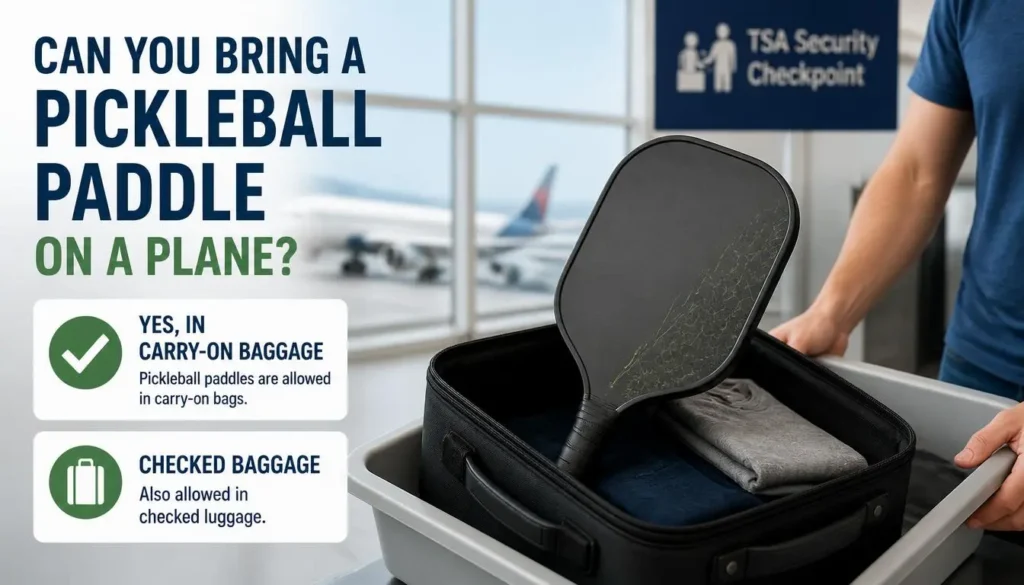
Yes, you can bring a pickleball paddle on an airplane in most cases. In the United States, pickleball paddles are generally allowed in both carry-on and checked baggage. However, TSA officers have the final authority at the security checkpoint, and airlines may have their own baggage rules.
If you are traveling with a high-quality or tournament paddle, keeping it in your carry-on is usually the safest choice. It helps protect your paddle from damage and makes it easier to keep it with you throughout your trip.
What You Should Know Before You Fly
- Most pickleball paddles are allowed in both carry-on and checked luggage.
- TSA officers make the final decision during the security screening process.
- Standard-size paddles usually fit inside carry-on bags and sports backpacks.
- Airline baggage policies may vary, especially on international flights.
- Carrying your paddle onboard is the best way to reduce the risk of damage or loss.
Why Do Airports Allow Pickleball Paddles?
Airports allow pickleball paddles because they are considered standard sports equipment and are not generally classified as prohibited items. TSA guidelines. A paddle does not contain sharp edges, hazardous materials, or built-in components that normally create security concerns during airport screening.
That said, every bag goes through a security check. While pickleball paddles are usually permitted, TSA officers can inspect any item if they believe it needs a closer look. This is why travelers should pack their paddles neatly and follow both TSA and airline guidelines.
What Makes Pickleball Paddles Acceptable for Air Travel?
- They are sports equipment, not restricted or dangerous items.
- Most paddles have a simple design and do not contain prohibited materials.
- They can be easily screened with standard airport security equipment.
- TSA focuses on safety, not the sport the equipment is used for.
- Proper packing helps speed up the screening process and reduces unnecessary inspections.
What Can Prevent You From Bringing Your Paddle?
Although pickleball paddles are usually allowed on airplanes, a few situations can still create problems at the airport. The paddle itself is rarely the issue, but how you pack it, the airline you fly with, or the security officer’s judgment can affect whether your trip goes smoothly. TSA officers have the final authority
Knowing what can trigger extra screening helps you avoid delays and gives you more confidence before heading to the airport.
Common Reasons You May Face a Delay
- TSA officers have the final authority to approve any item at the security checkpoint.
- Poor packing can lead to extra inspection if your paddle is difficult to identify on the scanner.
- Airline baggage rules may differ, especially for smaller regional or international carriers.
- Traveling with several paddles or sports gear may require additional screening.
- Items packed with the paddle, such as tools or restricted objects, can cause delays even if the paddle is allowed.
What Size and Type of Paddle Is Best for Air Travel?

Most standard pickleball paddles are easy to travel with because they are compact enough to fit inside a carry-on suitcase, sports backpack, or paddle bag. The material of the paddle usually does not affect airport security, but choosing a protective case can help prevent damage during your trip.
Also Read: What Makes a Good Pickleball Paddle?
If you own an expensive paddle, keeping it in your carry-on is often the best option. This gives you better control over your equipment and reduces the risk of it being damaged in checked luggage.
Standard Pickleball Paddle Travel Guide
| Feature | Typical Specification | Travel Tip |
| Paddle Length | Up to 17 inches | Fits in most carry-on bags. |
| Paddle Width | Up to 8 inches | Easy to pack in backpacks or paddle cases. |
| Paddle Weight | About 7–9 ounces | Lightweight and convenient for travel. |
| Common Materials | Graphite, carbon fiber, fiberglass, composite, or wood | These materials are generally allowed on airplanes. |
| Best Storage | Protective paddle cover or padded bag | Helps prevent scratches and accidental damage. |
What to Keep in Mind
- Most regulation paddles are small enough for carry-on luggage.
- Carbon fiber, graphite, fiberglass, composite, and wooden paddles are generally treated the same during security screening.
- A padded paddle cover provides extra protection while traveling.
- Always check your airline’s carry-on size limits before packing.
- Keep your paddle separate from restricted items to avoid unnecessary inspections.
What About Traveling With Other Pickleball Equipment?
Bringing a pickleball paddle is only part of the trip. Many players also travel with balls, shoes, bags, and other gear. The good news is that most pickleball equipment is allowed on airplanes, but packing each item the right way can help you avoid delays and protect your equipment.
Before you fly, check both TSA guidelines and your airline’s baggage policy. This simple step helps ensure all of your gear arrives safely and without surprises at the security checkpoint.
Can You Bring Other Pickleball Gear on a Plane?
| Equipment | Carry-On | Checked Bag | Notes |
| Pickleball Paddle | Yes | Yes | TSA officer has the final decision. |
| Pickleball Balls | Yes | Yes | Plastic balls are generally allowed. |
| Paddle Bag | Yes | Yes | Counts as part of your baggage allowance. |
| Court Shoes | Yes | Yes | Pack them where they fit best. |
| Athletic Clothing | Yes | Yes | No special restrictions. |
| Portable Net | Usually No | Yes | Most nets are too large for carry-on luggage. |
What You Should Know
Pickleball balls are generally allowed in both carry-on and checked bags.
Shoes and clothing can be packed in either type of luggage.
Paddle bags help protect your equipment and keep everything organized.
Portable nets are usually better packed in checked luggage because of their size.
Review your airline’s baggage rules if you’re traveling with a full set of equipment.
What Should Tournament Players Know Before Flying?
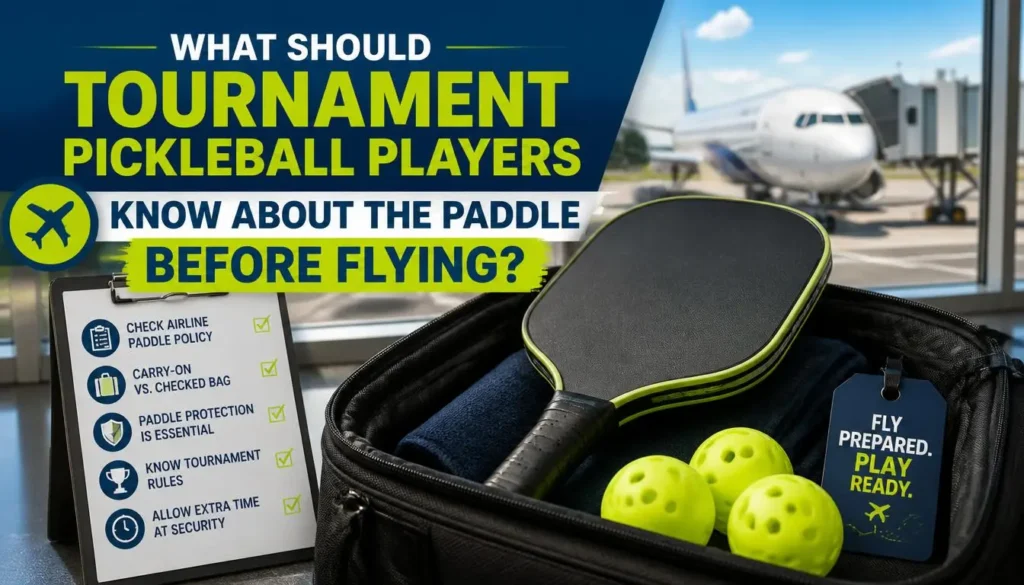
If you’re flying to a pickleball tournament, protecting your paddle should be a top priority. A damaged paddle can affect your performance, so it’s best to pack it carefully and plan before leaving for the airport.
Many tournament players choose to carry their main paddle onboard and pack a backup paddle in checked luggage. This gives them peace of mind in case one paddle is delayed or damaged during the trip.
Travel Tips for Tournament Players
Carry your primary paddle in your carry-on whenever possible.
Pack a backup paddle if you’re traveling to an important event.
Use a padded paddle cover to protect against scratches and impacts.
Avoid placing heavy items directly on top of your paddle.
Arrive at the airport early if you’re traveling with multiple sports items.
When Should You Be Extra Careful?
Most travelers can bring a pickleball paddle without any issues, but there are situations where you should take extra care. International flights, tight connections, expensive paddles, or traveling with several pieces of sports equipment can increase the chances of delays, inspections, or accidental damage.
Planning and packing your gear properly can help you avoid unnecessary stress and keep your trip on schedule.
Situations That Require Extra Attention
- Flying internationally may involve different security or baggage rules.
- Carrying an expensive paddle is safer than checking it with your luggage.
- Packing multiple paddles or sports gear may lead to additional screening.
- Taking connecting flights means you should review the baggage policies for every airline on your itinerary.
- Checking your paddle without a protective case increases the risk of damage.
Also Read: Why Are Pickleball Paddles So Expensive?
How Can You Avoid Problems at the Airport?
Traveling with a pickleball paddle is usually simple, especially if you prepare before leaving home. A few smart steps can help you get through airport security faster, protect your equipment, and reduce the chance of unexpected delays.
The best approach is to know the rules, pack your paddle properly, and arrive at the airport with enough time for security screening.
Simple Ways to Make Your Trip Easier
- Check TSA guidelines before your travel date to stay updated on current rules.
- Review your airline’s baggage policy, especially for carry-on size limits.
- Pack your paddle in a padded cover to prevent scratches and damage.
- Keep sports equipment organized so security officers can inspect it easily if needed.
- Arrive at the airport early, particularly if you’re traveling with multiple bags or sports gear.
FAQs:
Does a Pickleball Paddle Count as a Carry-On or Personal Item?
A paddle usually counts as part of your carry-on allowance, not a separate personal item, so pack it inside your main bag or backpack.
Is There a Weight or Size Limit for Pickleball Paddles on Flights?
Most airlines don’t set a specific paddle limit, but it still needs to fit within your carry-on’s overall size and weight allowance.
Can You Bring Two Pickleball Paddles on One Flight?
Yes, you can bring more than one paddle, though carrying several at once may lead to extra screening at security.
Do International Flights Allow Pickleball Paddles Too?
Yes, most international carriers allow pickleball paddles, but it’s smart to confirm baggage rules for each airline on your route.
Will a Damaged Paddle Get Rejected at Security?
No, a damaged paddle would not be rejected at security since TSA screens for safety, not the paddle’s condition.
Conclusion:
So, are pickleball paddles allowed on airplanes? Yes, both carry-on and checked luggage welcome your paddle without hassle. Just pack it properly, follow TSA guidelines, and check your airline’s baggage policy. Whether you’re a casual player or heading to a tournament, your pickleball paddle can travel safely with you, every time.