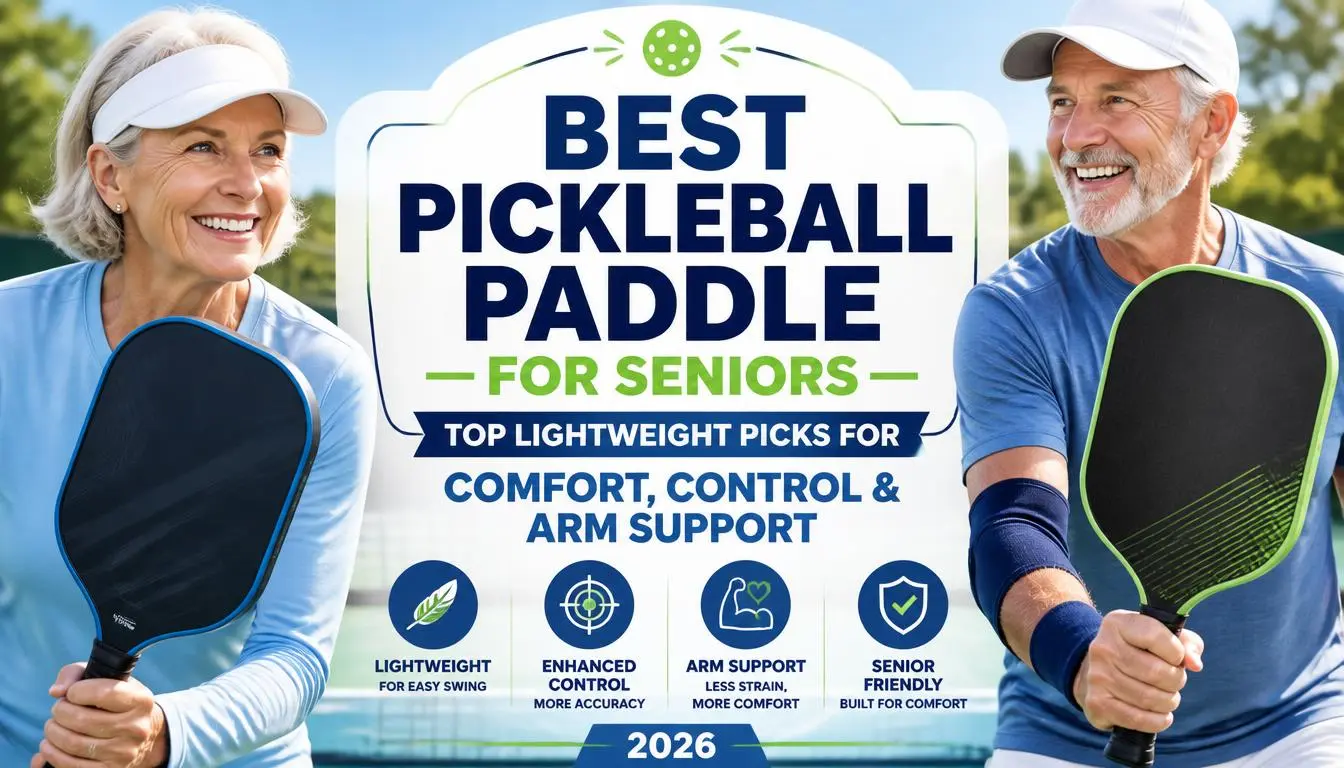
Best Pickleball Paddle For Seniors (2026 Buyer’s Guide)
The best pickleball paddle for seniors is lightweight, easy to control, and comfortable to hold. It should reduce arm strain, absorb vibration, and provide a large sweet spot for consistent shots. Choose a paddle that matches your skill level and playing style.
In this guide, you will discover the best pickleball paddles for seniors, learn which features matter most for comfort and performance, and find the right paddle to improve control, reduce arm strain, and make every game more enjoyable.
What Is the Best Pickleball Paddle for Seniors?
The best pickleball paddle for seniors is lightweight, comfortable to hold, and easy to control. It should have a large sweet spot, reduce vibration, and help you play longer without putting extra stress on your arm or shoulder.
Choosing the right paddle is not just about buying the most expensive model. The best paddle is the one that matches your strength, skill level, and playing style. Seniors often benefit from paddles that are easy to swing, provide better control, and feel comfortable throughout the game. A well-balanced paddle can improve confidence, reduce fatigue, and make every match more enjoyable.
Key features of a senior-friendly paddle:
Lightweight: Makes the paddle easier to swing and reduces arm fatigue.
Large sweet spot: Helps produce cleaner shots, even on off-center hits.
Comfortable grip: Reduces pressure on the hand and improves control.
Low-vibration core: Helps protect the wrist, elbow, and shoulder.
Balanced design: Offers a good mix of power, control, and forgiveness.
Which Paddle Is the Best Overall for Most Seniors?
For most seniors, the best overall pickleball paddle is one that combines a lightweight build, a comfortable grip, and excellent control. A paddle with a carbon fiber or graphite face and a polymer honeycomb core is a great choice because it offers consistent performance while reducing vibration.
The ideal paddle should feel comfortable from the first game. It should be easy to maneuver at the net, stable during rallies, and forgiving on off-center shots. Many senior players also prefer a paddle with a medium grip size because it provides better comfort and reduces strain during long matches.
A great overall paddle should offer:
- Easy handling: Helps improve reaction time and shot placement.
- Comfortable feel: Makes longer games less tiring.
- Reliable control: Keeps shots more accurate.
- Shock absorption: Reduces stress on the elbow and shoulder.
- Long-lasting performance: Maintains its feel over regular play.
Why Does the Right Paddle Matter More as You Age?
The right pickleball paddle becomes more important as you get older because it can improve comfort, reduce arm strain, and help you play with better control. A paddle that fits your needs allows you to enjoy longer games while lowering the risk of common injuries.
As players age, changes in strength, grip, and reaction time can make a heavy or poorly balanced paddle harder to use. The right paddle works with your body instead of against it. It helps you swing more smoothly, hit cleaner shots, and stay comfortable throughout every match. Even a small difference in weight or grip size can have a big impact on your overall performance and confidence.
Why the right paddle matters:
- Reduces arm fatigue: A lighter paddle is easier to swing during long games.
- Improves control: Better balance helps place shots more accurately.
- Protects your joints: Less vibration means less stress on the wrist, elbow, and shoulder.
- Builds confidence: Comfortable equipment helps you play more naturally.
- Makes the game more enjoyable: Less pain allows you to focus on having fun.
How a Good Paddle Improves Comfort and Control
A good pickleball paddle makes every shot feel more stable and comfortable. It helps seniors react faster, control the ball more easily, and play with greater confidence while reducing unnecessary strain on the body.
Comfort comes from the right combination of paddle weight, grip size, and core material. A well-designed paddle absorbs vibration, feels balanced in your hand, and requires less effort to swing. Better control also means fewer mistakes, allowing you to keep the ball in play and enjoy more consistent rallies.
A quality paddle helps by:
- Keeping your grip comfortable: Reduces hand fatigue during play.
- Providing better balance: Makes every swing feel smoother.
- Improving shot accuracy: Helps place the ball where you want it.
- Absorbing vibration: Reduces stress on the elbow and shoulder.
- Increasing consistency: Makes it easier to hit solid shots.
What Features Should Seniors Look for Before Buying?
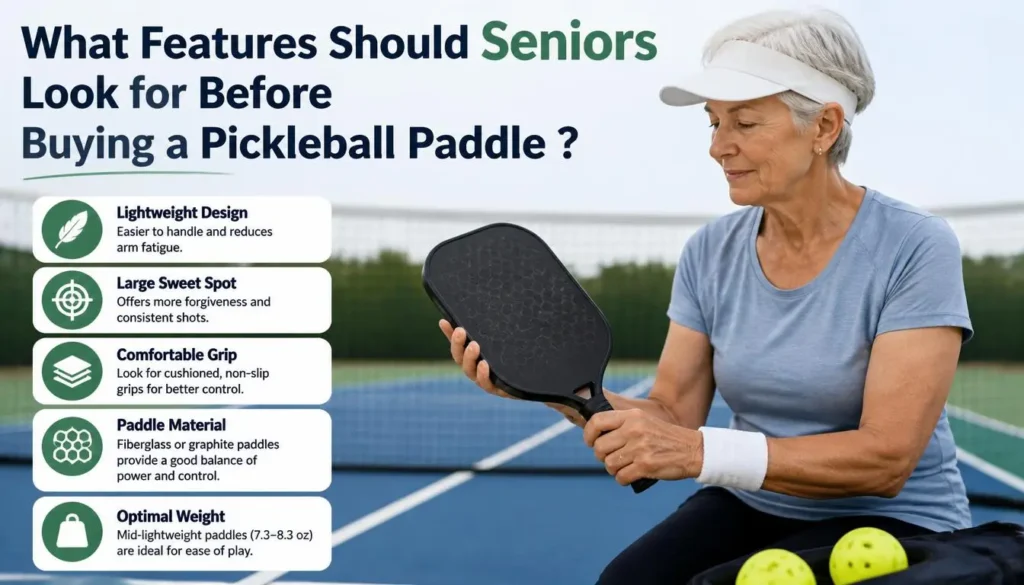
The best pickleball paddle for seniors should have the right combination of weight, grip comfort, material, and control. Official equipment rules. These features help players enjoy better performance while reducing stress on the arm, wrist, and shoulder.
Many seniors make the mistake of choosing a paddle based only on price or popularity. A paddle that works well for a younger or more powerful player may not be the best choice for an older player. The right paddle should match your playing style, physical comfort, and experience level. Understanding these important features makes it easier to choose a paddle that feels natural and improves your game.
Important features seniors should consider:
- Paddle weight: Affects swing speed, comfort, and power.
- Grip size: Determines hand comfort and control.
- Paddle material: Influences feel, durability, and performance.
- Sweet spot: Helps create more consistent shots.
- Paddle shape: Changes control, reach, and maneuverability.
How Paddle Weight Affects Performance
Paddle weight is one of the most important factors for seniors because it directly affects comfort and swing control. A paddle that is too heavy can cause fatigue, while a paddle that is too light may reduce power and stability. Equipment Standards
Most senior players prefer a lightweight or midweight paddle because it offers a good balance between easy handling and strong performance. The right weight allows smoother swings, faster reactions, and less pressure on the arm during longer games.
Also Read: How Long Do Pickleball Paddles Last?
General paddle weight ranges:
- Lightweight (7.3 ounces or less): Best for quick reactions and less arm strain.
- Midweight (7.4–8.4 ounces): Offers a balance of power, control, and comfort.
- Heavyweight (8.5 ounces or more): Provides more power but may increase fatigue.
Compare paddle weight ranges before buying:
| Paddle Weight | Best For | Benefits |
| Lightweight | Seniors who need comfort | Easier swings and less fatigue |
| Midweight | Most senior players | Balanced power and control |
| Heavyweight | Strong players seeking power | More force but requires more strength |
Why Grip Size Is Important for Comfort
Grip size affects how comfortably you hold the paddle and how well you control your shots. The wrong grip size can create hand fatigue and may increase stress on your wrist and elbow.
A comfortable grip allows a natural hold without squeezing too tightly. Most senior players benefit from a grip size that feels secure but still allows easy wrist movement.
A proper grip size helps with:
- Better control: Makes paddle movement more natural.
- Less hand fatigue: Reduces the need to grip too tightly.
- Lower injury risk: Limits unnecessary stress on joints.
Which Paddle Material Performs Best?
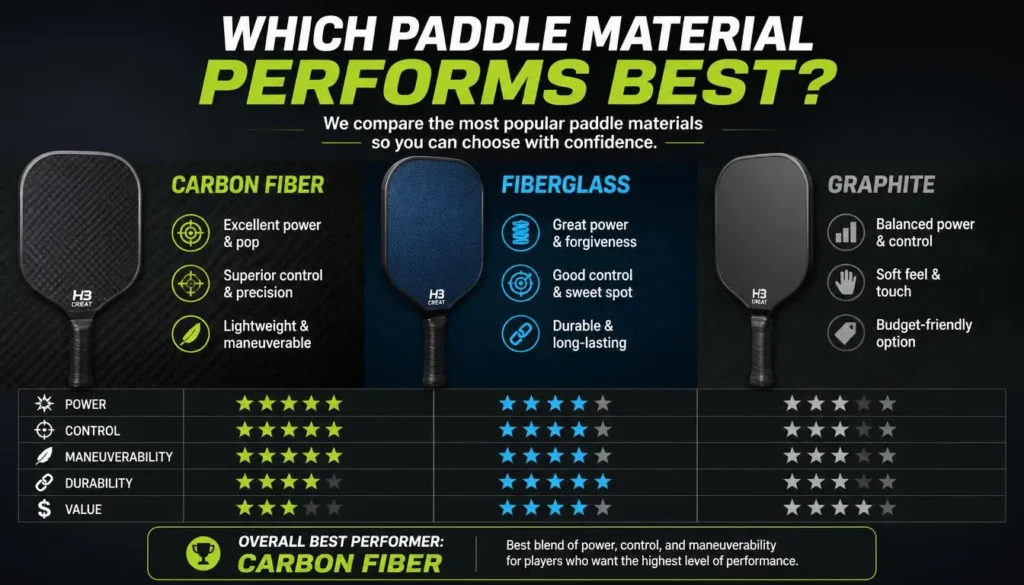
The material of a pickleball paddle affects its feel, power, control, and durability. For many seniors, carbon fiber and graphite paddles are popular because they provide a softer feel with excellent control.
A paddle material should match your playing needs. Players who want more touch and accuracy often prefer control-focused materials, while power players may choose materials designed for stronger shots.
Also Read: Are Friday Pickleball Paddles Good?
Common paddle materials:
- Carbon fiber: Offers excellent control and a responsive feel.
- Graphite: Provides a lightweight design with quick handling.
- Fiberglass: Creates more power but may feel less controlled.
Why the Sweet Spot Matters for Consistent Shots
The sweet spot is the area on the paddle face where shots feel the best and produce the most consistent results. A larger sweet spot is especially helpful for seniors because it provides more forgiveness on missed hits.
A paddle with a forgiving sweet spot helps players maintain control even when they do not hit the ball perfectly in the center.
Benefits of a larger sweet spot:
- More consistent shots: Improves accuracy.
- Better forgiveness: Helps on off-center hits.
- More confidence: Makes gameplay easier.
What Paddle Shape Is Easiest to Control?
Paddle shape affects reach, power, and maneuverability. For many seniors, a standard or slightly wider paddle shape is easier to control because it provides stability and a larger hitting area.
A longer paddle may offer extra reach and power, but it can require more control. Seniors who value comfort and accuracy often prefer balanced paddle shapes.
Common paddle shapes:
Standard shape: Best for balanced performance.
Widebody shape: Offers a larger sweet spot and more forgiveness.
Extended shape: Provides extra reach and power.
Which Paddle Is Best for Different Playing Styles?
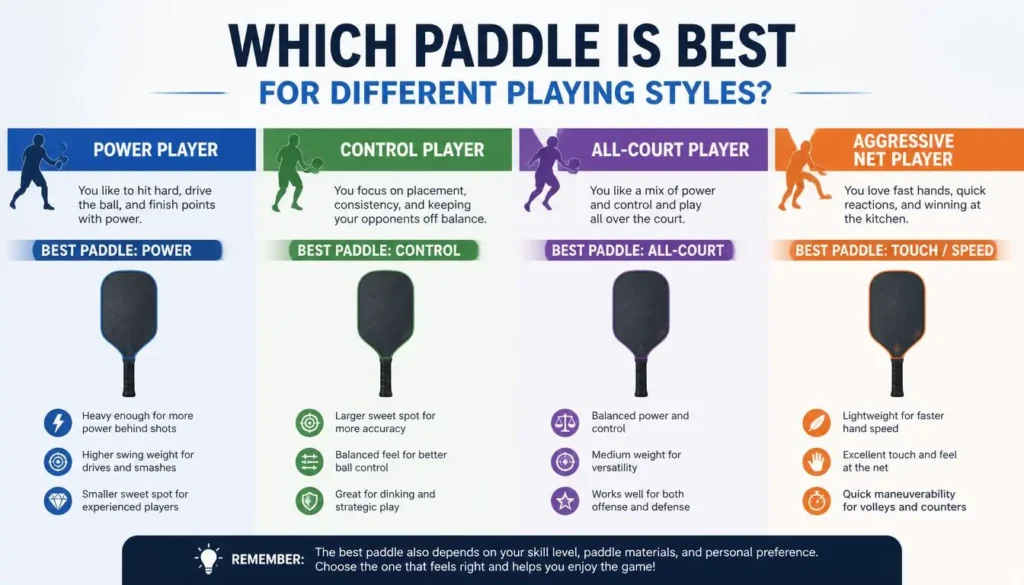
The best pickleball paddle for seniors depends on how you play the game. A beginner may need more forgiveness and control, while an experienced player may want more power, speed, or precision.
Every senior player has different goals on the court. Some players enjoy casual games and need a comfortable paddle that is easy to handle. Others play competitively and need a paddle that helps with faster reactions and stronger shots. Choosing a paddle based on your playing style helps you get better performance and more enjoyment from every match.
Your ideal paddle choice depends on:
- Skill level: Beginners usually need more control and forgiveness.
- Playing style: Power players and control players need different features.
- Physical comfort: Seniors should choose a paddle that feels easy to use.
- Game frequency: Regular players may need better durability.
Best Choice for Beginners
For senior beginners, the best paddle is lightweight, forgiving, and easy to control. A paddle with a large sweet spot helps new players make better shots while building confidence on the court.
Beginners should focus less on maximum power and more on comfort and consistency. A balanced paddle makes learning easier because it allows smoother swings and better ball control.
Beginner-friendly paddle features:
- Lightweight design: Makes learning easier and reduces fatigue.
- Large sweet spot: Forgives mistakes on missed hits.
- Comfortable grip: Improves control and confidence.
- Balanced feel: Helps develop proper technique.
Best Option for Intermediate Players
Intermediate senior players often need a paddle that provides both control and power. At this stage, players usually understand their style and need equipment that helps improve their overall performance.
A midweight paddle with a responsive surface is often a great choice because it supports accurate shots while still providing enough power for stronger plays.
Intermediate paddle benefits:
- Better shot placement: Helps with strategic gameplay.
- Balanced performance: Supports both offense and defense.
- Improved consistency: Helps during longer rallies.
Best Paddle for Competitive Seniors
Competitive senior players usually need a paddle that offers speed, control, and durability. These players benefit from advanced materials and designs that help them react quickly and maintain accuracy during intense matches.
A higher-quality paddle can provide better feel and stability, which matters when every shot affects the outcome of the game.
Competitive paddle features:
- Responsive surface: Provides better ball control.
- Strong construction: Handles frequent play.
- Fast maneuverability: Helps during quick exchanges.
Best Paddle for Players With Tennis Elbow
For seniors with tennis elbow concerns, the best paddle is one that reduces vibration and limits stress on the arm. A lightweight paddle with a comfortable grip and shock-absorbing core can make playing more comfortable.
The goal is to reduce unnecessary strain while still allowing enjoyable gameplay.
Helpful paddle features:
- Vibration control: Reduces impact on the elbow.
- Comfortable weight: Prevents extra arm pressure.
- Proper grip size: Avoids excessive hand tension.
Best Paddle for Power
Senior players who want more powerful shots should choose a paddle with a slightly heavier build and a responsive surface. These paddles help generate stronger shots without requiring too much extra effort.
However, too much weight can create fatigue, so balance is more important than choosing the heaviest paddle.
Power-focused paddle features:
- Slightly heavier design: Creates stronger shots.
- Responsive face material: Adds extra pop.
- Stable construction: Improves power control.
Best Paddle for Control
Players who prefer accuracy and placement should choose a paddle designed for control. These paddles help with soft shots, quick resets, and accurate placement near the kitchen line.
Control-focused paddles are often preferred by seniors who enjoy strategy and consistency over aggressive power.
Control paddle features:
- Soft touch feel: Improves precision.
- Large sweet spot: Keeps shots consistent.
- Easy handling: Helps with quick movements.
When Should You Replace Your Pickleball Paddle?
You should replace your pickleball paddle when it no longer performs the way it used to or shows signs of wear. A worn-out paddle can reduce control, affect shot accuracy, and place more stress on your arm during play.
Even the best pickleball paddles wear down over time. Frequent play, accidental drops, and normal use can weaken the paddle face or core. As the paddle loses its original performance, you may notice less consistency, reduced power, or more vibration on impact. Replacing your paddle at the right time helps you play comfortably and maintain your confidence on the court.
Also Read: How To Clean A Pickleball Paddle?
Common signs it’s time for a new paddle:
- Less control: Your shots become less accurate than before.
- Visible damage: Cracks, dents, or edge guard damage appear.
- More vibration: The paddle feels harsher on contact.
- Lower performance: The paddle no longer feels responsive.
- Worn grip: The handle becomes slippery or uncomfortable.
Signs Your Paddle Is Losing Performance
A paddle usually gives clear warning signs before it completely wears out. Paying attention to these changes can help you replace it before it starts affecting your game.
If your paddle feels different from when it was new, it may no longer deliver the same level of control or comfort. Small changes can make a noticeable difference, especially during longer matches.
Watch for these signs:
- Shots feel inconsistent: The ball doesn’t respond like it used to.
- More missed shots: Even well-timed swings feel less accurate.
- Unusual sounds: The paddle may sound hollow or different on impact.
- Surface wear: The face becomes smooth or visibly damaged.
- Grip problems: The handle feels loose or uncomfortable.
How Long Does a Pickleball Paddle Last?
Most quality pickleball paddles last one to five years, depending on how often you play, the paddle’s construction, and how well you take care of it. Players who play several times a week usually replace their paddles sooner than occasional players.
Proper storage and regular cleaning can help extend the life of your paddle. Avoid leaving it in extreme heat or cold, and inspect it regularly for damage to maintain the best performance.
Paddle lifespan
| Playing Frequency | Expected Paddle Life |
| Occasionally (1–2 times per month) | 4–5 years |
| Weekly (1–2 times per week) | 2–4 years |
| Frequently (3–5 times per week) | 1–3 years |
| Competitive play | Around 1–2 years |
Tips to make your paddle last longer:
- Store it indoors: Avoid extreme temperatures.
- Use a paddle cover: Protects the surface from damage.
- Clean it regularly: Removes dirt and ball residue.
- Check the grip: Replace it when it becomes worn.
How to Choose the Right Pickleball Paddle for Your Needs
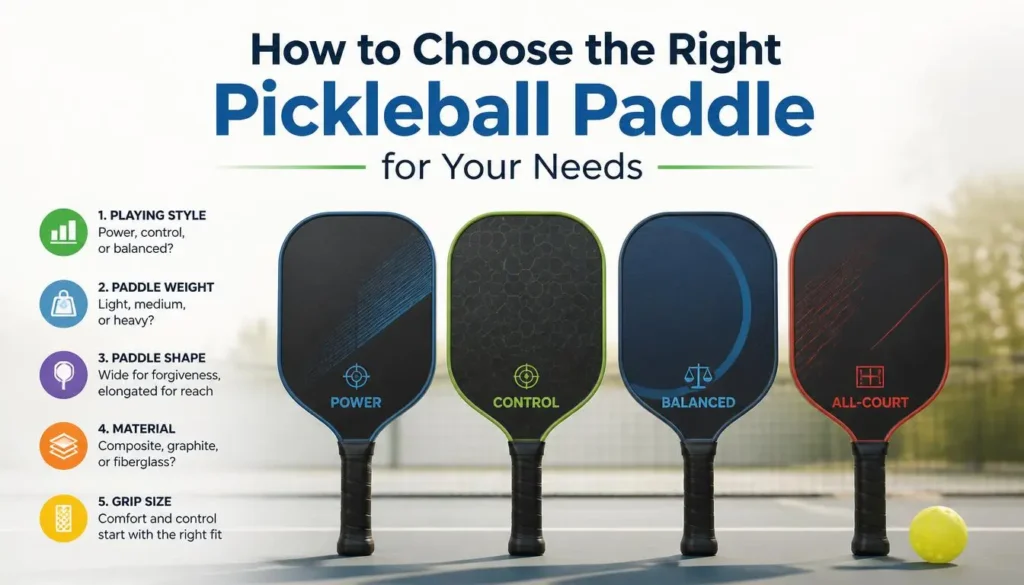
Choosing the right pickleball paddle starts with understanding your comfort, skill level, and playing style. The best paddle is the one that feels natural in your hand and helps you play with confidence, control, and less fatigue.
Many seniors focus on brand names or price, but those are not the most important factors. A paddle should match how you play and support your physical needs. Whether you play for fun, fitness, or competition, selecting the right weight, grip size, and material can make a noticeable difference in your performance and comfort.
Keep these factors in mind before buying:
- Choose the right weight: A lighter paddle is easier to swing and reduces arm fatigue.
- Pick a comfortable grip size: It improves control and prevents hand strain.
- Match your playing style: Decide if you need more power, control, or a balanced feel.
- Think about comfort: Look for a paddle that absorbs vibration and feels stable.
- Set a realistic budget: Buy the best paddle that fits both your needs and your budget.
Match Your Paddle to Your Skill Level
Your skill level plays a major role in choosing the right paddle. A beginner’s needs are different from those of an experienced or competitive player, so selecting a paddle designed for your level can improve your game more quickly.
As your skills improve, your paddle preferences may also change. Starting with the right paddle makes learning easier and helps you build confidence on the court.
| Skill Level | Recommended Paddle Features |
| Beginner | Lightweight, large sweet spot, easy control |
| Intermediate | Balanced power and control, responsive face |
| Advanced | Premium materials, precision, and faster response |
Key takeaway:
- Beginners: Focus on comfort and forgiveness.
- Intermediate players: Look for balanced performance.
- Advanced players: Choose paddles that match your competitive style.
Avoid These Common Buying Mistakes
Many seniors buy a paddle based on advertisements or recommendations without considering their own needs. Avoiding a few common mistakes can save money and improve your playing experience.
The right paddle should fit your body and playing style, not simply be the newest or most expensive model.
Mistakes to avoid:
- Buying the heaviest paddle: More weight is not always better.
- Ignoring grip size: An uncomfortable grip can lead to fatigue.
- Choosing based only on price: Expensive doesn’t always mean better.
- Skipping product reviews: Real user feedback provides valuable insights.
- Not testing comfort: If possible, hold or demo a paddle before buying.
How to Test a Paddle Before Buying
Testing a paddle before purchasing helps you understand how it feels during real play. Even two paddles with similar specifications can perform differently in your hand.
If you have the opportunity, try a few swings or play a short game before making your final decision. Comfort and confidence are just as important as technical specifications.
What to check during a test:
- Comfort: Does the grip feel natural?
- Weight: Can you swing it easily?
- Control: Are your shots accurate?
- Balance: Does the paddle feel stable?
- Vibration: Does it feel comfortable after repeated shots?
FAQs:
What Grip Size Is Best for Senior Pickleball Players?
A medium grip size works best for most seniors because it provides better comfort, improves control, and helps reduce hand and wrist fatigue during longer games.
How Much Should You Spend on a Pickleball Paddle?
Most seniors can find a high-quality pickleball paddle between $80 and $180, depending on the features, materials, and level of performance they need.
Is a Lightweight Pickleball Paddle Better for Seniors?
Yes. A lightweight paddle is usually better because it reduces arm fatigue, improves maneuverability, and makes it easier to react during fast rallies.
Can the Right Pickleball Paddle Help Prevent Arm Pain?
Yes. A paddle with a comfortable grip, vibration-reducing core, and balanced weight can reduce stress on the wrist, elbow, and shoulder.
Should Seniors Buy an Expensive Pickleball Paddle?
No. A higher price does not always mean better performance. The best paddle is the one that matches your comfort, skill level, and playing style.
Conclusion:
Choosing the best pickleball paddle for seniors comes down to comfort, weight, grip, and playing style. A lightweight paddle with good control and a large sweet spot can improve performance and reduce arm strain. Compare your options carefully and choose a paddle that helps you play with confidence and enjoy every game.