Best Pickleball Shoes For Plantar Fasciitis: Top Picks For Pain-Free Play 2026
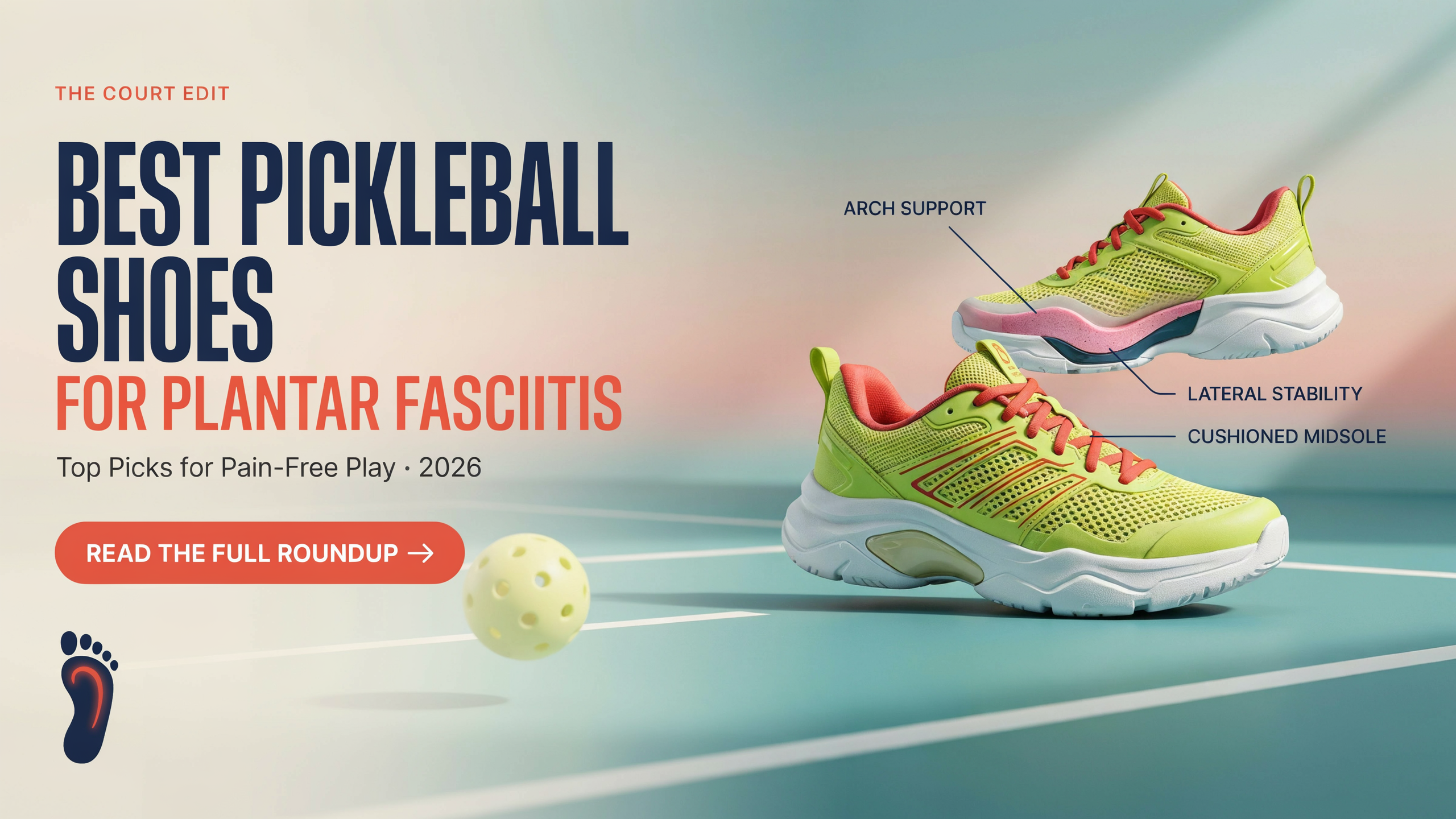
The best pickleball shoes for plantar fasciitis in 2026 should offer excellent cushioning, arch support, stability, and a comfortable fit. Look for shoes that reduce heel pressure while supporting quick court movements, so your feet stay comfortable during play.
In this article, we will explore the best pickleball shoes for plantar fasciitis in 2026, including top options for cushioning, arch support, stability, and comfort, so you can find a pair that fits your feet and playing style.
Which Pickleball Shoes Are Best for Plantar Fasciitis in 2026?
The best pickleball shoes for plantar fasciitis combine soft cushioning, reliable arch support, and strong side-to-side stability. A comfortable fit matters just as much, because the right shoe should protect your heel without making your movements feel restricted.
What to look for:
- Cushioning: Helps reduce the impact your heels feel on hard pickleball courts.
- Arch support: Keeps your foot supported and may reduce unnecessary strain.
- Stability: Helps your feet stay controlled during quick cuts and lateral movements.
- Comfortable fit: Avoid shoes that squeeze your toes or allow your heel to slide.
- Good traction: Gives you a secure grip without sacrificing natural movement.
Why Do Pickleball Shoes Matter for Plantar Fasciitis?
Pickleball shoes matter because the sport puts repeated stress on your heels and feet. The right pair can provide cushioning, support, and stability, while poorly fitted shoes may make foot discomfort worse during play.
- Hard court impact: Repeated movement on hard courts can put extra stress on your heels.
- Quick movements: Pickleball involves sudden stops, starts, and side-to-side movements.
- Better support: A supportive shoe helps keep your foot stable during these movements.
- Proper cushioning: Good cushioning can help absorb some of the impact from each step.
- Correct fit: A secure, comfortable fit helps prevent unnecessary pressure on your feet.
What Makes Plantar Fasciitis Worse When Playing Pickleball?
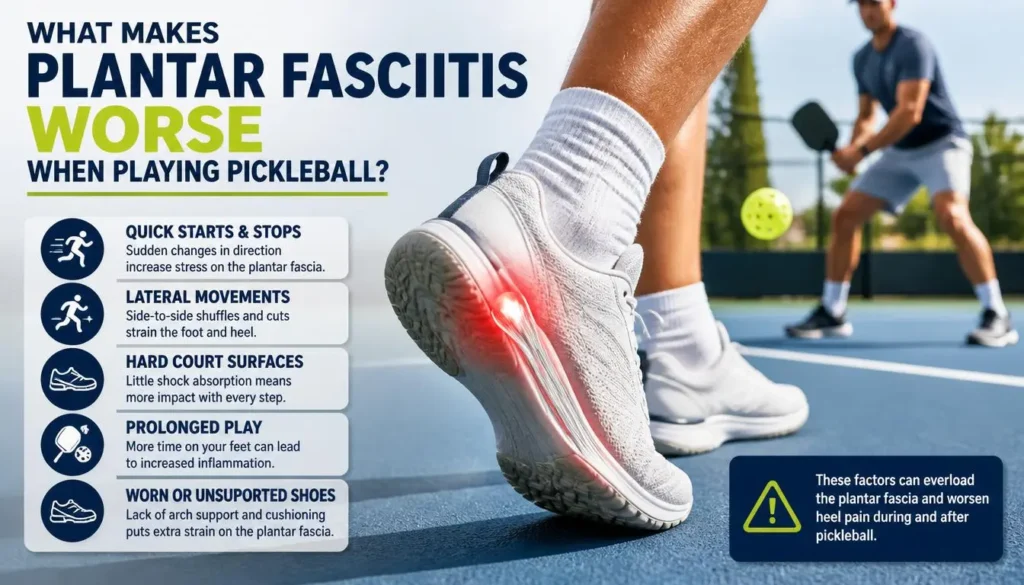
Plantar fasciitis can feel worse during pickleball when your feet face repeated impact, sudden movements, or poor support. Hard courts and unsupportive shoes can add extra strain to the heel and the bottom of the foot.
How Hard Courts Increase Heel Stress
Pickleball courts are firm, so every step and landing sends some impact through your feet. Playing for long periods can increase heel stress, especially when your shoes do not provide enough cushioning.
Why Quick Stops and Side-to-Side Movements Matter
Pickleball requires frequent lateral movements, quick stops, and short sprints. These actions place extra demand on your feet and can increase discomfort when your shoes lack proper stability.
How the Wrong Shoes Can Add More Foot Strain
Shoes with poor cushioning, weak support, or an improper fit may put more pressure on sensitive areas. Worn-out soles can also reduce stability and make each movement harder on your feet.
What Features Should You Look for in Pickleball Shoes for Plantar Fasciitis?
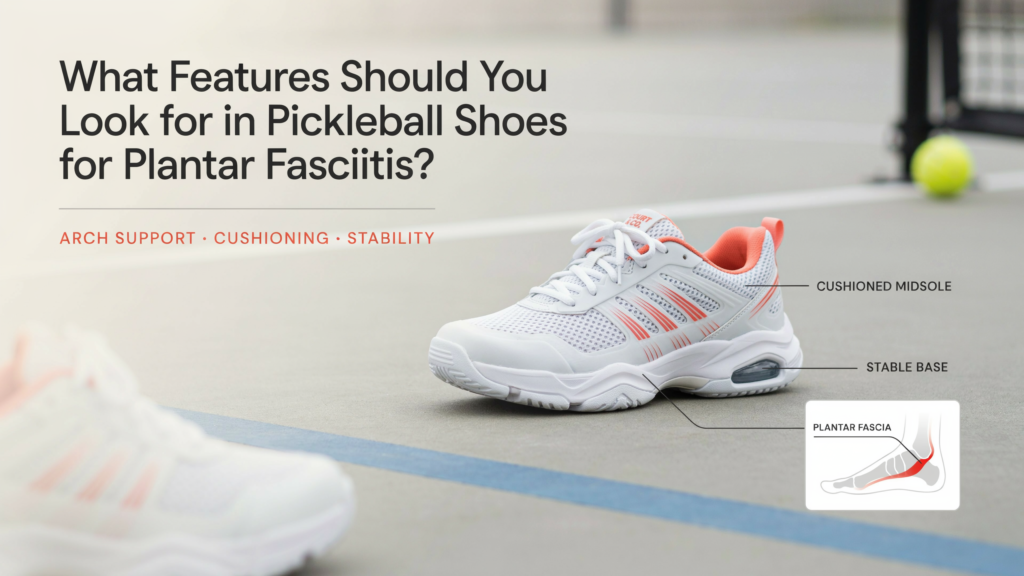
Look for pickleball shoes with enough cushioning, supportive structure, good lateral stability, and a comfortable fit. The goal is to reduce unnecessary foot stress while still giving you the grip and control needed on the court.
How Much Cushioning Do You Need?
Choose cushioning that feels comfortable without making the shoe too soft or unstable. Good heel cushioning can help absorb some court impact and make longer pickleball sessions more comfortable.
Is Arch Support Important for Plantar Fasciitis?
Yes, proper arch support can help distribute pressure more evenly across your foot. However, the best level of support depends on your foot shape, so avoid assuming that firmer support is always better.
What Heel Drop Is Best for Plantar Fasciitis?
A moderate heel-to-toe drop may feel more comfortable for some players because it can reduce tension on the calf and plantar fascia. There is no single drop that works best for everyone.
How Much Lateral Stability Should a Pickleball Shoe Have?
Pickleball involves frequent side-to-side movements, so stability is essential. Look for a shoe with a secure heel, supportive upper, and stable base that keeps your foot controlled during quick changes of direction.
What Fit and Toe Box Should You Choose?
Your shoe should hold your heel securely while leaving enough room for your toes to move naturally. Avoid tight shoes that squeeze the forefoot, as pressure and discomfort can build during longer matches.
Also Read: Best Pickleball Shoes For Wide Feet:
What Shoe Specifications Matter Most for Plantar Fasciitis?
Shoe specifications can help you compare different pickleball shoes before buying. Focus on cushioning, heel-to-toe drop, stability, weight, traction, and fit rather than choosing a shoe based on one feature alone.
Cushioning and Heel Protection
Good cushioning can make hard-court play more comfortable by reducing some of the impact felt under your heels. Look for responsive cushioning that feels supportive rather than overly soft.
Heel-to-Toe Drop
Heel-to-toe drop describes the height difference between the heel and forefoot. A moderate drop may feel more comfortable for some players, but your foot shape and personal comfort should guide the choice.
Weight and Flexibility
A lighter shoe can move feel easier, while some structure is still needed for stability. Choose a shoe that bends naturally at the forefoot without feeling loose or unstable.
Outsole Grip and Court Traction
Good traction helps you stay controlled during quick stops and lateral movements. Pickleball shoes should grip the court well without feeling sticky or hindering natural movement.
Wide-Width and Toe Box Options
If you have wider feet, look for wide-width versions or a roomy toe box. Your toes should have enough space to spread naturally without your heel slipping inside the shoe.
Should You Wear Running Shoes or Pickleball Shoes for Plantar Fasciitis?
Running shoes can feel comfortable because they often have strong cushioning, but they are designed mainly for forward movement. Pickleball shoes provide better lateral stability and court traction, which are important during matches.
When Running Shoes May Feel More Comfortable
Running shoes may suit casual players who mainly want cushioning and do not make many aggressive side-to-side movements. However, their softer and taller design may feel less stable on the pickleball court.
Why Court Shoes Offer Better Lateral Support
Pickleball shoes are built for quick lateral movements, sudden stops, and changes of direction. Their wider, more stable base can help keep your feet controlled during active play.
Which Pickleball Shoes Are Best for Different Playing Needs?
There is no single shoe that works perfectly for every player with plantar fasciitis. Your best choice depends on your foot shape, playing style, comfort needs, and how much support you want.
Best Shoes for Maximum Cushioning
Players who spend long hours on hard courts may prefer shoes with generous heel and forefoot cushioning. The right cushioning should feel protective without making the shoe unstable.
Best Shoes for Stability and Overpronation
Players who overpronate may benefit from a stable shoe that helps control excessive inward foot movement. Look for a supportive base and secure heel rather than relying on cushioning alone.
Best Shoes for Wide Feet
Wide-footed players should prioritize a roomy toe box and, when available, a true wide-width option. A comfortable fit can prevent unwanted pressure around the toes and forefoot.
Best Lightweight Shoes for Faster Players
Fast players may prefer a lighter shoe that does not feel bulky during quick movements. Make sure the reduced weight does not come at the cost of stability or heel support.
Best Shoes for Seniors With Plantar Fasciitis
Older players may value cushioning, stability, and easy comfort over an extremely lightweight design. A secure heel and supportive base can make the feel more controlled on the court.
Also Read: Best Pickleball Paddle For Seniors
Best Budget-Friendly Pickleball Shoes
A lower price does not always mean poor performance. Look for essential features such as decent cushioning, court-specific traction, a secure fit, and enough lateral support before paying extra for premium materials.
Are Pickleball Shoes Good for Playing With Plantar Fasciitis?
Yes, the right pickleball shoes can make playing more comfortable by providing cushioning, stability, and court-specific support. However, shoes are only one part of managing plantar fasciitis and cannot guarantee that pain will disappear.
Can You Play Pickleball With Mild Plantar Fasciitis?
Some players with mild symptoms may continue playing if they can move comfortably and do not notice worsening pain. Pay attention to how your feet feel during and after each session.
Should You Play If Heel Pain Gets Worse During a Match?
If your heel pain keeps increasing during play, it is better to stop rather than push through it. Continuing despite worsening pain can make it harder to recover and return comfortably.
Can the Right Shoes Prevent Plantar Fasciitis From Getting Worse?
Supportive footwear may reduce unnecessary stress on your feet, but it cannot prevent every case from worsening. Training load, recovery, foot mechanics, and overall activity also matter.
When Should You Stop Playing Pickleball With Plantar Fasciitis?
Mild discomfort does not always mean you must stop playing, but worsening or persistent pain deserves attention. If symptoms interfere with normal walking or continue to increase, take a break and consider professional advice.
Which Symptoms Should You Take Seriously?
Pay attention to sharp or increasing heel pain, significant swelling, difficulty walking, or symptoms that continue after rest. These signs should not simply be ignored so you can keep playing.
When Is It Time to See a Doctor or Podiatrist?
Consider seeing a healthcare professional when pain is persistent, severe, or affecting everyday activities. Professional evaluation can help identify the cause and determine an appropriate treatment plan.
How Can You Reduce Plantar Fasciitis Pain While Playing Pickleball?
The best approach combines suitable footwear with sensible playing habits and recovery. Mayo Clinic: Plantar Fasciitis — Diagnosis and Treatment. Give your feet enough support, avoid sudden increases in court time, and pay attention to changes in pain.
Choose Shoes That Match Your Foot Type
Your feet may need different levels of width, cushioning, and support than another player’s. Choose based on your actual fit and comfort rather than copying someone else’s shoe.
Use Supportive Insoles or Orthotics When Needed
Some players find supportive insoles or prescribed orthotics helpful, especially when their existing footwear lacks the support they need. If you have ongoing foot problems, professional guidance is the safer choice.
Warm Up Your Feet Before Playing
A gradual warm-up prepares your muscles and joints for movement before you start playing at full speed. Begin with easy walking and gentle movements before harder court activity.
Stretch Your Calves and Plantar Fascia After Playing
Gentle stretching can help maintain flexibility around the calves and feet after activity. Avoid forcing a stretch or continuing if it causes sharp or worsening pain.
Replace Worn-Out Pickleball Shoes
Even a good shoe loses performance as its cushioning, tread, and structure wear down. Replace shoes when the sole is noticeably worn, cushioning feels flat, or the shoe no longer provides a secure fit.
How Do You Choose the Right Pickleball Shoe for Your Feet?
Start with your biggest need, such as cushioning, stability, width, or lightweight movement, then check whether the shoe provides the other essential features. The best shoe is the one that fits securely and feels comfortable during real court movement.
| Your Main Need | What to Prioritize |
| Heel comfort | Cushioning and heel protection |
| Wide feet | Wide sizing and roomy toe box |
| Overpronation | Stable base and supportive structure |
| Fast movement | Lightweight design with good stability |
| Long sessions | Cushioning, comfort, and durability |
| Maximum court control | Lateral stability and traction |
FAQs:
What Type of Shoe Helps Reduce Heel Pressure During Pickleball?
Look for good cushioning, reliable support, a secure fit, and enough stability for quick court movements.
How Often Should You Replace Pickleball Shoes for Plantar Fasciitis?
Replace them when cushioning feels worn, traction decreases, or the shoe no longer gives your feet stable support.
Can You Play Pickleball With Plantar Fasciitis?
Yes. Many players can continue playing when symptoms are mild, but they should monitor pain and avoid pushing through worsening symptoms.
Do More Cushioned Shoes Always Help Plantar Fasciitis?
No. Extra cushioning is not automatically better; the shoe also needs proper support, stability, fit, and comfortable movement.
Are Expensive Pickleball Shoes Always Better for Plantar Fasciitis?
No. A higher price does not guarantee a better fit or more suitable support; the right features matter more than the price tag.
Conclusion:
In conclusion, the best pickleball shoes for plantar fasciitis in 2026 should balance cushioning, arch support, stability, traction, and fit. Choosing the right pair can make court movement more comfortable and reduce unnecessary foot stress, helping you play with greater confidence while protecting your feet.