Elongated vs Widebody Pickleball Paddle: Which Is Better?
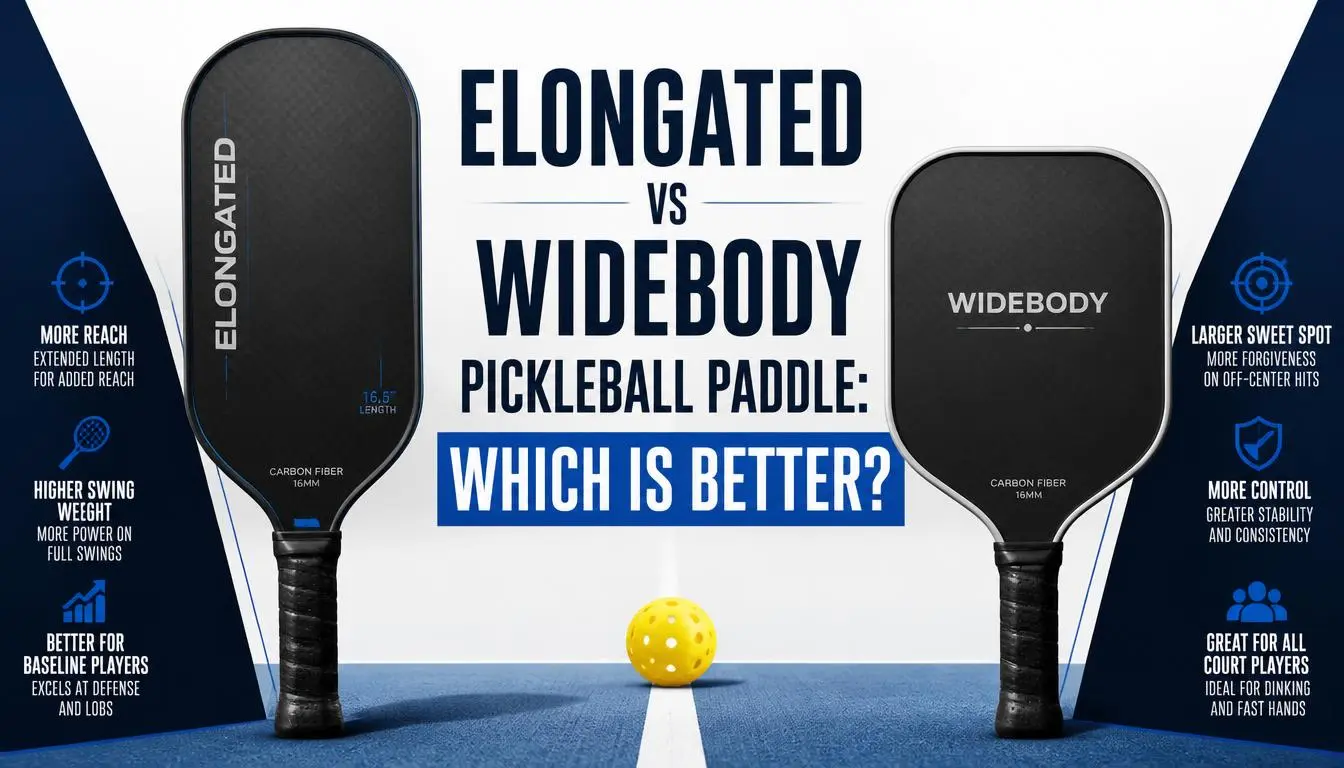
An elongated paddle offers more reach, leverage, and power, while a widebody paddle provides a larger sweet spot, stability, and quicker handling. The better choice depends on your playing style and priorities.
In this journey, you will discover how elongated and widebody pickleball paddles differ in reach, power, control, and forgiveness, helping you understand which paddle shape fits your playing style and game best.
Which Pickleball Paddle Shape Is Better for You?
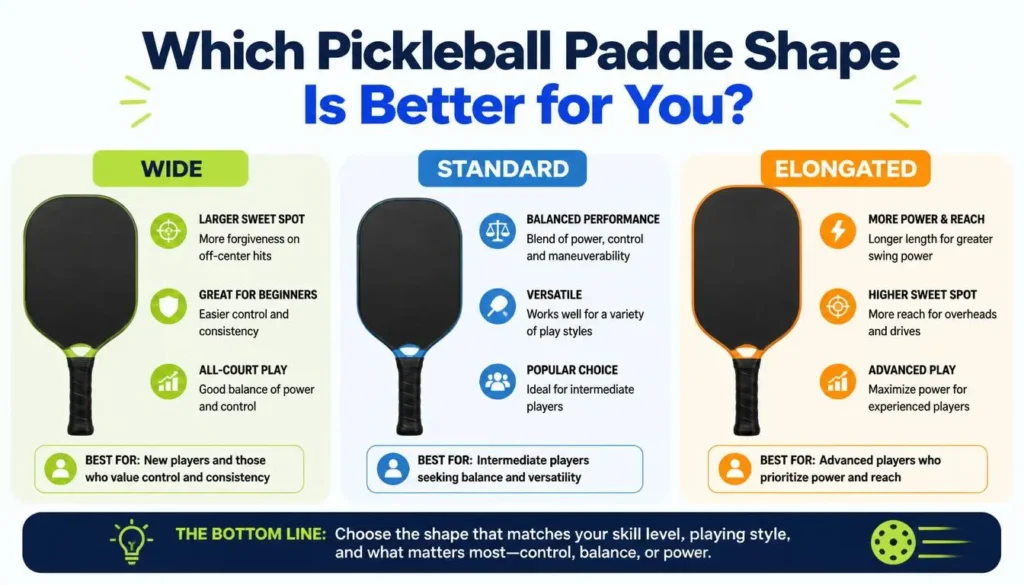
There is no single winner for every player. Elongated paddles give you extra reach and leverage, while widebody paddles offer a wider hitting area and easier handling. Your playing style should decide which one makes more sense.
Choose Elongated for More Reach and Leverage
An elongated paddle can be a good fit if you like attacking from the baseline, need extra reach, or use a two-handed backhand. The longer face can help you reach wide shots and create leverage on serves and drives.
Choose Widebody for More Forgiveness and Quick Handling
A widebody paddle gives you more face width, which can make off-center hits feel more forgiving. Its compact shape can also feel easier to move during quick exchanges at the kitchen, especially in doubles.
The easiest way to choose: If you often wish you had more reach, try an elongated one. If you value a larger hitting area and easier reactions, a widebody may suit you better.
Why Does Paddle Shape Change How You Play?
Paddle shape changes where the ball hits, how much reach you get, and how easily you can move the paddle. A longer face favors reach and leverage, while a wider face gives you more room for solid contact.
How Length Affects Reach and Power
A longer paddle puts more of the hitting surface farther from your hand. This can give you extra reach and leverage on serves, drives, overheads, and difficult balls, although power also depends on weight, balance, and construction.
How Width Affects Stability and Forgiveness
A wider face gives you more room to make clean contact, especially when your timing is not perfect. That extra width can also improve stability on blocks and quick exchanges near the kitchen.
Why Sweet Spot Location Matters
The sweet spot is not positioned the same way on every shape. Elongated paddles tend to place the useful hitting area higher, while widebody designs spread it more across the face, changing how each paddle feels during different shots.
What Is the Real Trade-Off Between Elongated and Widebody?
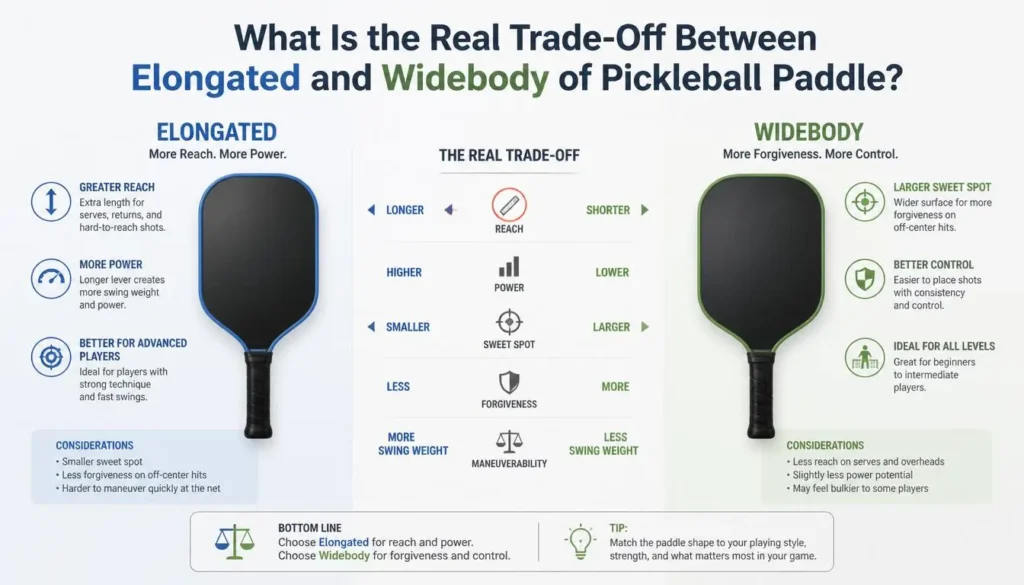
The main trade-off is simple: elongated paddles give you more reach and leverage, while widebody paddles give you more width, stability, and forgiveness. Neither shape is better in every situation.
More Reach vs. a Larger Sweet Spot
An elongated paddle extends farther, which can help when you are reaching for wide balls or hitting from the baseline. A widebody gives you more face width, making off-center contact easier to handle.
Power and Spin vs. Maneuverability and Control
Elongated designs can provide more leverage for drives, serves, and spin-heavy shots. Widebody paddles are generally easier to move quickly, which can help during fast kitchen exchanges and defensive shots.
Why a Longer Paddle Is Not Always More Powerful
Length can help create leverage, but paddle shape alone does not decide power. Weight, swing weight, balance, core, and face construction also affect how hard and consistently you can hit the ball.
Elongated vs Widebody Paddle Dimensions and Specifications
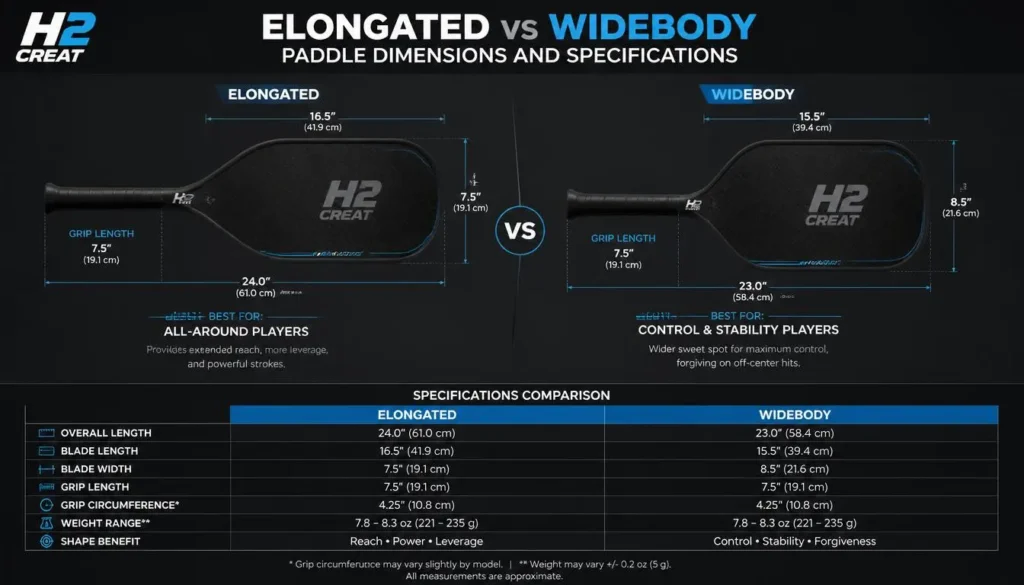
The two shapes follow a simple trade-off: elongated paddles are longer and narrower, while widebody paddles are shorter and wider. Most elongated models are around 16.5 × 7.5 inches, while widebody models are commonly about 16 × 8 inches
| Specification | Elongated | Widebody |
| Typical length | 16.5 in | 16 in |
| Typical width | 7.5 in | 8 in |
| Main advantage | Reach and leverage | Stability and forgiveness |
| Common use | Singles, drives, reach | Doubles, blocks, quick hands |
Typical Elongated Paddle Size
An elongated paddle is usually about 16.5 inches long and 7.5 inches wide. That extra length gives you more reach, while the narrower face can make the paddle feel more demanding on off-center hits.
Typical Widebody Paddle Size
Widebody paddles commonly measure around 16 inches long and 8 inches wide. The added width creates more hitting area and can make the paddle feel stable and forgiving during fast exchanges.
USA Pickleball Size and Shape Limits
For tournament play, USA Pickleball limits a paddle to a total length of 17 inches and a combined length and width of 24 inches. USA Pickleball official paddle rules. Paddle weight has no specific limit under the current equipment rules.
How Handle Length Changes the Feel
Handle length matters more than many players expect. A longer handle can give two-handed players extra room and leverage, while a shorter handle may feel quicker during rapid hand exchanges.
How Does Each Paddle Shape Perform on the Court?
The difference becomes clearer once you take both shapes onto the court. Elongated paddles tend to shine when reach and attacking shots matter, while widebody paddles feel more forgiving during blocks, resets, and quick exchanges.
Which Shape Is Better for Singles?
Elongated usually has the edge in singles because the extra length helps cover wide balls and gives you more reach on baseline shots. It can also add leverage to serves and drives.
Which Shape Is Better for Doubles?
Widebody is often the easier choice for doubles, especially if you spend a lot of time at the kitchen. Its wider face can give you more margin on quick blocks, counters, and off-center contact
Which Shape Is Better at the Kitchen Line?
For fast kitchen exchanges, widebody generally feels easier to handle because its wider face offers more forgiveness and stability. Elongated can still work well, but its narrower face demands more precise contact.
Which Shape Helps More on Baseline Shots?
Elongated has an advantage from the baseline because its longer face gives you extra reach and leverage. This can be useful for deep drives, serves, and balls that pull you toward the sidelines.
Which Shape Is Better for Two-Handed Backhands?
Elongated can be a natural fit for a two-handed backhand because the longer handle and extended paddle shape can give you more room and leverage. Still, handle length varies by model, so check the actual specifications before buying.
Which Shape Is Better for Your Playing Style?
The best shape depends on how you win points, not simply your skill level. Elongated paddles tend to suit players who want reach and attacking leverage, while widebody paddles often fit players who value quick hands, stability, and forgiveness.
Best Shape for Aggressive and Power Players
If you attack with drives, serves, and overheads, an elongated paddle can give you extra reach and leverage. It is especially useful when you like to pressure opponents from the baseline or hit aggressive passing shots.
Best Shape for Control and Touch Players
If your game is built around dinks, drops, resets, and soft placement, a widebody paddle can make more sense. Its wider face gives you a little more room for clean contact during controlled exchanges.
Best Shape for Beginners
For many beginners, a widebody paddle is the easier starting point because its broader face can be more forgiving when contact is not perfect. As your consistency improves, you can decide whether you want more reach or attacking power.
Best Shape for Competitive Players
Competitive players use both shapes, so there is no universal winner. Singles players often favor elongated paddles, while many doubles players choose widebody or hybrid designs for fast hands and defensive stability.
Best Shape for Tennis Players Switching to Pickleball
If you are coming from tennis, an elongated paddle may feel more familiar because its longer profile offers a racquet-like reach and leverage. However, your actual paddle choice should still match how you play pickleball.
A useful rule: Choose the shape that fixes your biggest problem on the court. If you struggle to reach or generate leverage, look at an elongated. If you struggle with mishits or fast exchanges, a widebody may be the better fit.
Also Read: Best Pickleball Paddle For Tennis Elbow (2026)
When Should You Avoid an Elongated or Widebody Paddle?
The wrong shape can make your paddle feel harder to control than it should. If you are constantly late on quick shots or struggling with mishits, your paddle shape may not match your game. Swing weight also plays a major role.
Signs an Elongated Paddle Is Too Difficult to Maneuver
If your reactions feel slow at the kitchen or the paddle feels heavy during quick hand battles, an elongated shape may be demanding too much from your swing. Its longer profile often comes with higher swing weight.
Signs You Need More Forgiveness From a Widebody
A widebody may be the better move if you regularly miss the sweet spot or want more stability on blocks and resets. Its wider face gives you more room for solid contact.
When Paddle Weight Matters More Than Shape
Before changing shapes, check the paddle’s weight and swing weight. A light elongated paddle can feel easier to move than a heavy widebody, so shape alone should never be the only factor in your decision.
Also Read: How To Choose A Pickleball Paddle Weight:
What If Neither Shape Feels Right?
You do not have to force yourself into an elongated or widebody paddle. If you want some extra reach without giving up too much forgiveness, a hybrid shape can offer a useful middle ground.
Should You Try a Hybrid Paddle?
A hybrid paddle sits between the two shapes, giving you some of the reach of an elongated paddle with more width and forgiveness. It can be a smart option if neither extreme feels comfortable.
How to Test Paddle Shapes Before Buying
If possible, demo both shapes before spending money. Pay attention to how quickly you can move the paddle, how often you miss the center, and whether you feel more comfortable at the kitchen or baseline.
How Long Does It Take to Adjust to a New Shape?
Give yourself several sessions before judging a new shape. Your timing, reach, and hand speed may feel different at first, so one awkward game is not enough to decide whether a paddle is right for you.
FAQs:
Is a Widebody Paddle Easier to Use Than an Elongated One?
Yes. Its wider face is generally more forgiving on mishits and can feel easier during quick exchanges.
Can an Elongated Paddle Help You Hit Harder?
Yes. Its longer profile can provide extra leverage and reach, although weight, swing weight, and construction also affect power.
Is Widebody Better for Beginners?
Yes. The wider hitting area can give newer players more forgiveness while they develop consistent contact.
Is Elongated Better for Every Singles Player?
No. It can be useful for reach and court coverage, but the best shape still depends on your technique and playing style.
Does Paddle Shape Decide How Much Spin You Get?
No. Shape can influence leverage, but surface texture, swing speed, technique, and paddle construction also play major roles.
Conclusion:
An elongated paddle offers more reach and leverage, while a widebody paddle provides forgiveness, stability, and quick handling. In the end, the best Elongated vs Widebody Pickleball Paddle choice depends on your playing style, comfort, and the shots you want to improve.