Carbon Fiber vs Fiberglass Pickleball Paddle: Which Is Better?
Carbon fiber pickleball paddles generally provide better control, spin, and a softer feel, while fiberglass paddles offer more power and pop. The better choice depends on your playing style: choose carbon for control and spin, or fiberglass for easy power.
In this guide, we will compare carbon fiber vs fiberglass pickleball paddles to help you understand their differences in power, spin, control, feel, and durability and choose the right one for your playing style.
Carbon Fiber or Fiberglass: Which Pickleball Paddle Is Better?
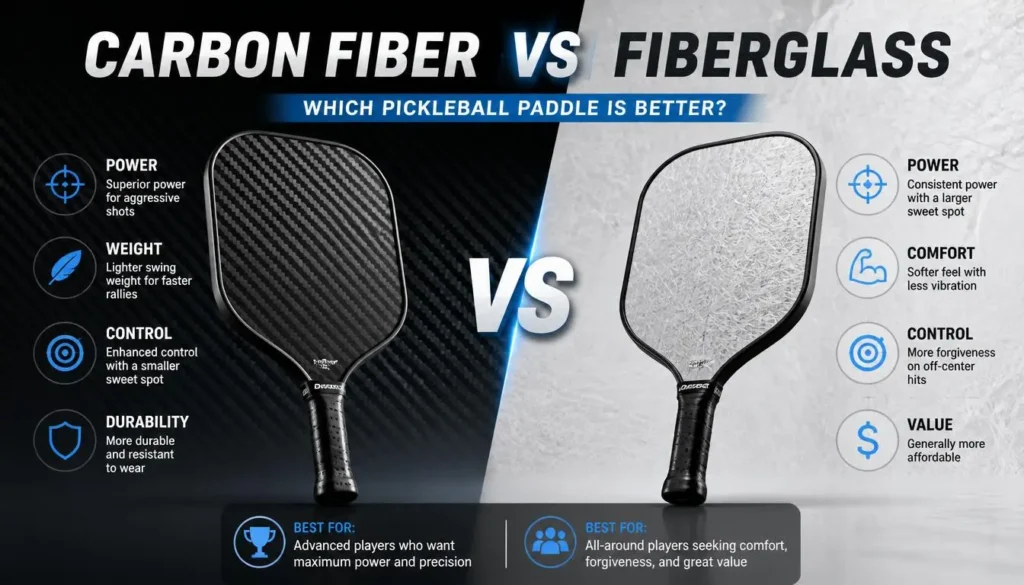
Neither material is automatically better. Carbon fiber is usually the better choice for control, spin, and a more consistent feel, while fiberglass is known for easy power and pop. The right option depends on your playing style, skill level, and what you want from your paddle.
Why Do These Paddle Materials Feel So Different?
The biggest difference comes from how each face reacts when the ball hits it. Carbon fiber feels firmer and more controlled, while fiberglass flexes more and gives a livelier, springier response. The core, thickness, and surface texture also affect the final feel.
In simple terms, carbon tends to give you more predictable feedback, while fiberglass can make it easier to get up to speed without a hard swing. That difference becomes noticeable in soft shots, drives, and off-center hits.
What Actually Causes the Difference in Paddle Performance?
The face material matters, but it is not the only thing controlling how a paddle plays. The core, thickness, surface texture, weight, shape, and overall construction can change its power, spin, control, and feel.
That is why two paddles with carbon fiber faces can still feel very different on the court. Looking at the whole paddle, not just the material name, helps you make a smarter choice.
Carbon Fiber vs Fiberglass: How Do They Compare?
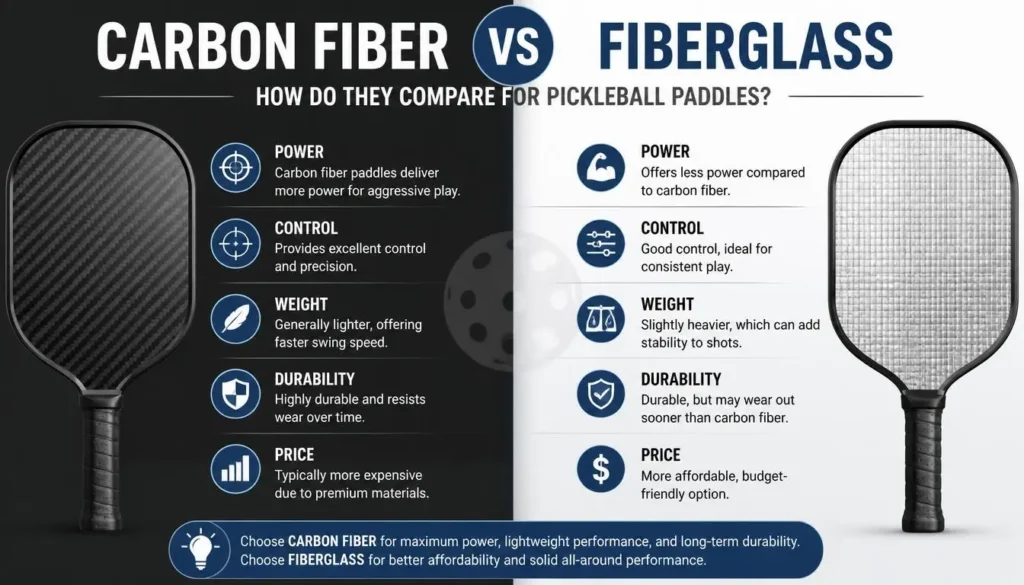
Carbon fiber usually gives you better control and spin, while fiberglass tends to provide more pop and easy power. Neither is automatically better. Your choice depends on how you play and whether you value precision or effortless pace.
| Performance Factor | Carbon Fiber | Fiberglass |
| Power | Controlled power | More pop |
| Spin | Higher potential | Moderate |
| Control | Excellent | Good |
| Feel | Firmer and consistent | Softer and livelier |
| Forgiveness | Good | Often more forgiving |
| Best for | Control and spin | Easy power and beginners |
Power and Pop: Which Paddle Hits Harder?
If your main goal is easy power, fiberglass usually has the edge because its face tends to flex more, giving the ball extra pop. Carbon fiber can still produce strong shots. Still, it generally rewards a faster, more deliberate swing.
For players who like aggressive drives and want pace without having to swing as hard, fiberglass can feel livelier. Carbon fiber is better suited to players who want to control where that power goes.
Spin Potential: Which Paddle Helps You Create More Spin?
Carbon fiber generally has the edge for spin, especially when the paddle uses a textured or raw carbon surface. Its face can grip the ball more effectively, helping players create topspin, slice, and shaped shots.
Fiberglass can still produce useful spin, but the result depends heavily on its surface texture and overall construction. So, don’t judge spin by the material name alone; the face texture matters too.
Control and Touch: Which Paddle Feels More Precise?
Carbon fiber generally offers better control and a more predictable feel, especially on dinks, resets, and soft shots. Fiberglass has a livelier response, which can feel forgiving but may require more adjustment when you need to take pace off the ball.
If your game depends on placement and soft hands, carbon fiber is usually the better fit. If you prefer a softer, more lively response and easy power, fiberglass can still be a comfortable choice.
Feel and Feedback: Which Paddle Gives You Better Touch?
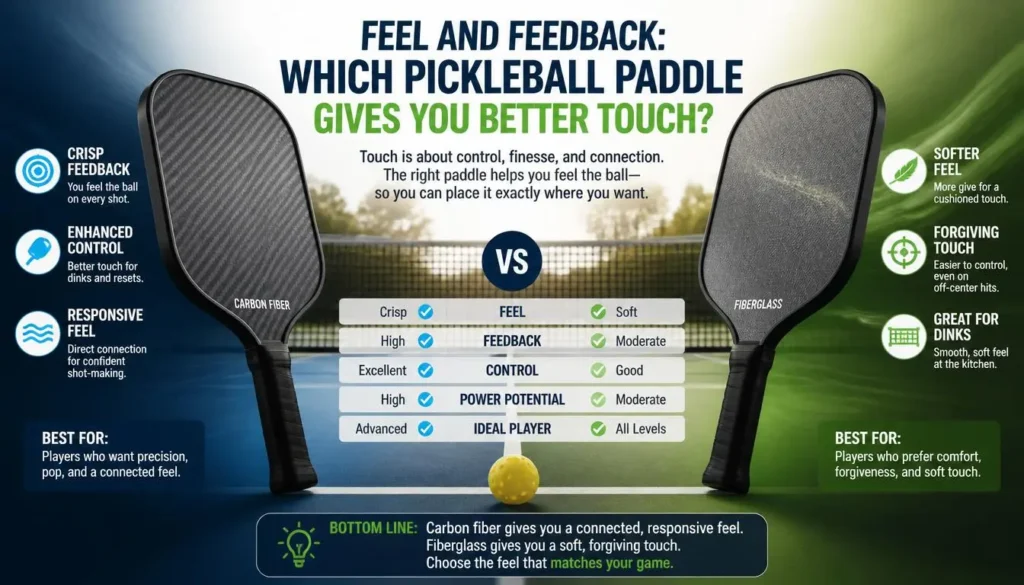
Carbon fiber usually gives a firmer, more connected feel, while fiberglass tends to feel softer and livelier on contact. Carbon can make ball placement feel more predictable, while fiberglass can feel more forgiving when your contact is not perfect.
For players who enjoy precise dinks, resets, and controlled shots, carbon fiber is often the better match. Fiberglass can suit players who prefer a softer response and a little more forgiveness during rallies.
Sweet Spot and Forgiveness: Which Paddle Is Easier to Use?
Fiberglass usually feels more forgiving on off-center hits, thanks to its flexible face and lively response. Carbon fiber tends to reward cleaner contact, giving experienced players a more precise response when they strike the ball near the center.
For beginners, that extra forgiveness can make fiberglass easier to learn with. However, core thickness, paddle shape, and weight distribution also affect the effective sweet spot, so the face material is only part of the story.
Durability: Which Paddle Holds Up Better Over Time?
Carbon fiber is generally considered the more durable option, especially for players who play often. However, durability depends on the paddle’s construction, core, surface texture, and how it is stored and used, not just the face material.
Fiberglass paddles can still last well with normal recreational use. The bigger concern is gradual surface wear, loss of texture, dead spots, or damage from hard impacts, so a well-made fiberglass paddle may outlast a poorly built carbon paddle.
Price and Value: Is Carbon Fiber Worth the Extra Cost?
Carbon fiber often costs more, but that does not automatically make it the better value. Fiberglass can be a smart choice for beginners who want easy power at a lower price, while carbon fiber may be worth paying more for if you regularly play and value control, spin, and feel.
The price gap is also smaller than it used to be. In 2026, good carbon fiber paddles are available at lower prices, so you should compare the whole paddle face, core, construction, weight, and surface rather than paying extra simply for the words “carbon fiber.”
Which Paddle Performs Better in Real Pickleball Situations?
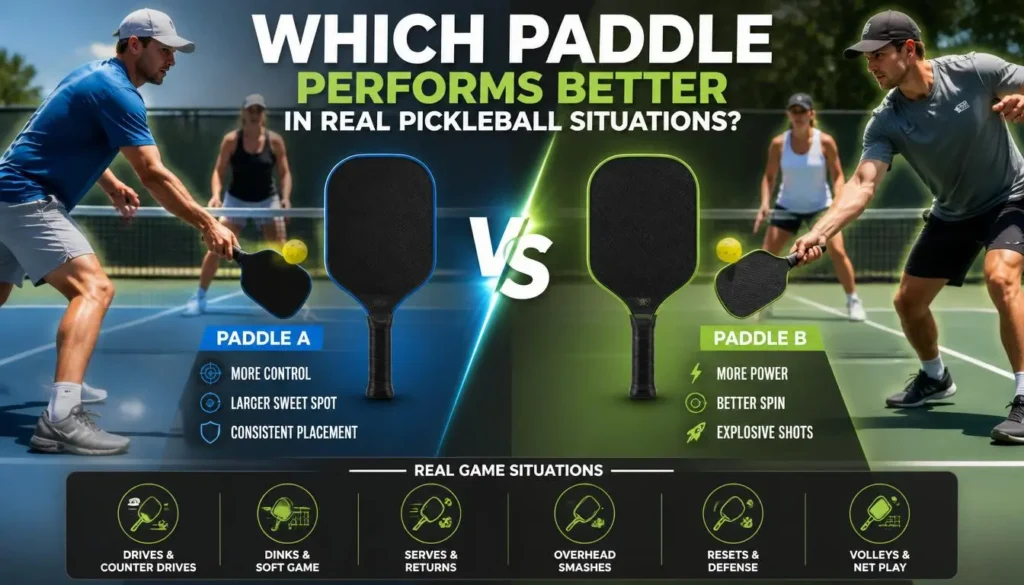
The better paddle depends on where and how you play the point. Carbon fiber usually shines in dinks, resets, and controlled shots, while fiberglass can feel stronger during drives, volleys, and quick put-aways because of its extra pop.
That difference becomes easier to understand when you look at common situations on the court. A player who spends more time at the kitchen may value control, while a power-focused player may prefer the lively response of fiberglass.
At the Kitchen Line: Which Paddle Gives You Better Control?
Carbon fiber usually has the edge at the kitchen line because its controlled response makes dinks, resets, blocks, and soft shots easier to place. Fiberglass has more pop, which can make delicate shots harder to keep low if you are not careful.
If your game depends on patience, soft hands, and accurate placement, carbon fiber is often the better fit. Still, paddle thickness, core, weight, and surface texture can change how much control you actually get.
Dinks and Resets: Which Paddle Makes Soft Shots Easier?
Carbon fiber is generally the better choice for dinks and resets because it offers a more controlled response and helps you manage the ball’s pace. This can make it easier to keep soft shots low and place them accurately.
Fiberglass gives the ball more pop, which is useful for power but can make delicate shots harder to control. If your game relies heavily on the soft game, carbon fiber is usually the better fit
Third-Shot Drops: Which Paddle Gives You Better Control?
Carbon fiber is usually the better choice for third-shot drops because its controlled response helps you soften the ball, add spin, and place the shot more accurately. This matters when you are trying to land the ball deep enough to reach the kitchen without giving your opponent an easy attack.
Fiberglass can still perform well, especially for players who need extra help generating depth. However, its livelier response may require more touch to keep a drop from traveling too far.
Drives and Overheads: Which Paddle Gives You More Power?
Fiberglass usually feels more powerful on drives and overheads because its flexible face can create extra pop with less effort. Carbon fiber can still hit hard, but it generally gives you more control over how that power is produced.
If you like attacking from the baseline or finishing points with overheads, fiberglass can feel lively and easy to use. A heavier paddle or thinner core can also add power, so the face material is not the whole story.
Fast Hands Battles: Which Paddle Gives You Better Control?
Carbon fiber is often the better choice for fast exchanges at the kitchen, where quick reactions and controlled blocks matter. Its firmer response can help experienced players keep counters and hand battles more predictable.
Fiberglass can add useful pop, but that extra rebound may make it harder to slow down a fast ball when you need a soft block. Your paddle weight and swing weight also affect how quickly you can get the paddle into position.
Singles vs Doubles: Which Paddle Works Better?
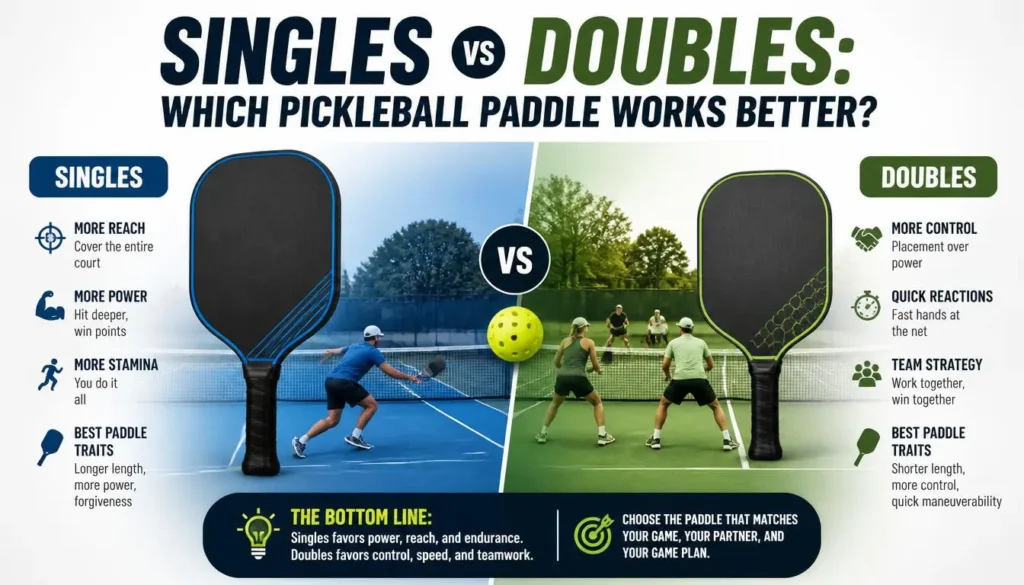
Neither material is automatically better for singles or doubles. Carbon fiber can suit doubles players who rely on kitchen control, while fiberglass can appeal to singles players who want easy power from the baseline. Your playing style matters more than the format alone.
In doubles, control and resets are especially valuable because so many points are decided near the kitchen. In singles, extra power and reach can become more important during baseline exchanges.
Which Paddle Material Fits Your Skill Level?
Your skill level can help narrow the choice, but it should not decide for you. Beginners often benefit from forgiveness and easy power, while experienced players may value the control and spin that carbon fiber can provide.
The best choice is the paddle that matches your current technique and the areas of your game you want to improve.
Is Fiberglass Better for Beginners?
Fiberglass can be a good beginner choice because it offers easy power and a forgiving response. You do not need a highly developed swing to get useful pace from the paddle.
However, a beginner who already values spin and control can start with carbon fiber. The goal is to choose a paddle that helps you learn rather than simply choosing the cheapest material.
When Should an Intermediate Player Choose Carbon Fiber?
Carbon fiber becomes more attractive once you can control your swing and want more precise placement, spin, and touch. Players who regularly practice dinks, drops, resets, and counters may notice these benefits more than a casual player.
If you are starting to outgrow a basic paddle, carbon fiber can be a useful upgrade, but look at the core, weight, and surface texture before buying.
Is Carbon Fiber Better for Advanced Players?
Carbon fiber is often a strong fit for advanced players because experienced players can take advantage of its control, spin potential, and consistent response. But advanced players should choose based on their exact style rather than the material label.
A power-focused advanced player may still prefer a fiberglass or hybrid setup, especially when the paddle’s core and weight provide the response they want.
When Should You Avoid Choosing a Paddle by Face Material Alone?
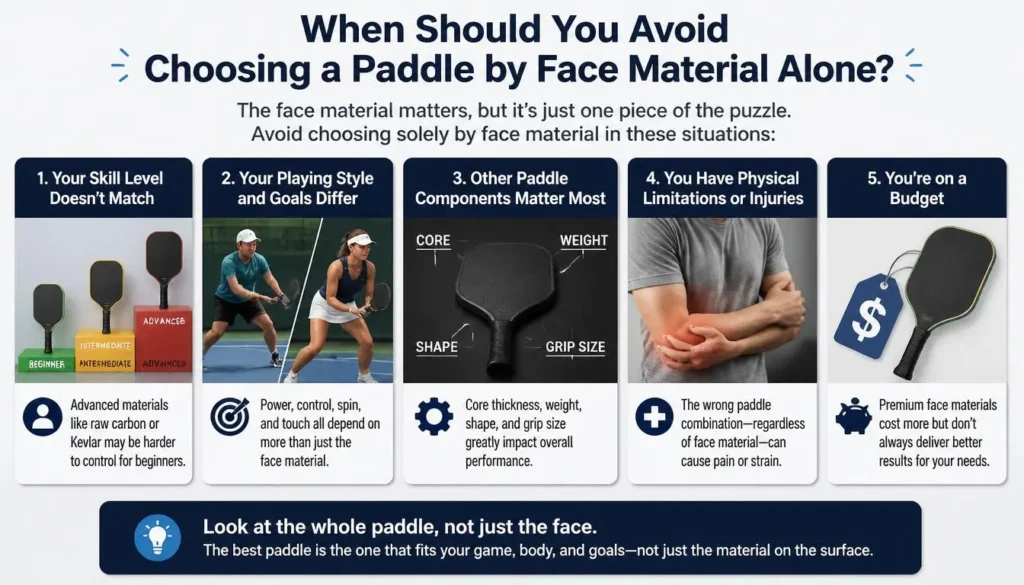
Do not buy a paddle simply because it says carbon fiber or fiberglass. Core thickness, paddle weight, shape, surface texture, and construction can change the way the paddle performs just as much as the face material.
This is especially important when two paddles use the same face material but feel completely different on the court.
When Paddle Weight Matters More
Paddle weight can affect power, stability, and how quickly you move the paddle. A heavier paddle can add stability and power, while a lighter one may feel quicker during fast exchanges.
If two paddles have similar face materials but different weights, the heavier or lighter option may have a bigger effect on your game than the face material itself.
When Paddle Shape Changes the Result
Paddle shape affects reach, sweet spot, maneuverability, and playing style. A widebody shape can offer more room for error, while an elongated shape can provide extra reach and leverage.
That means a well-designed fiberglass or carbon paddle can outperform another paddle made from the same material simply because its shape better matches your game.
When Core Thickness Affects Your Decision
Core thickness can change the balance between power and control. Thinner cores often produce a quicker, more powerful response, while thicker cores are commonly chosen by players who want a softer, more controlled feel.
So, if you are comparing two paddles, do not look at the face material alone. A 14mm carbon paddle and a 16mm carbon paddle can feel very different.
When Surface Texture Matters More Than the Material
If spin is your priority, surface texture deserves close attention. A textured carbon face can provide strong spin potential, but the surface finish matters because not every carbon or fiberglass paddle has the same grip on the ball. USA Pickleball equipment standards
This is why simply choosing “carbon fiber” does not guarantee maximum spin. Check the actual surface design and how durable that texture is.
How Can You Choose the Right Paddle for Your Playing Style?
Start with the shots you use most. Choose fiberglass if you want easy pop and forgiveness; choose carbon fiber if control, spin, and precise placement matter more. Pickleball paddle buying guide. Then check the paddle’s weight, core, shape, and surface before making your final choice.
A paddle should support the way you already play while giving you room to improve.
Choose Fiberglass If You Want Easy Power
Choose fiberglass if you want more pop, easy pace, and a forgiving response without needing a highly developed swing. It can be a practical option for beginners, casual players, and power-focused players.
Choose Carbon Fiber If You Want More Control
Choose carbon fiber if you care more about spin, touch, control, and predictable placement than effortless pop. It is especially useful for players who spend more time working on dinks, resets, drops, and controlled counters.
Consider a Hybrid Option If You Want a Balance
If you want a middle ground, a hybrid paddle can combine carbon fiber and fiberglass or use different construction layers to balance power, control, and feel. This can be useful when neither traditional option fully matches your game.
Before buying, check exactly how the manufacturer uses each material because “hybrid” can mean different constructions from one paddle to another.
FAQs:
What Is the Main Difference Between Carbon Fiber and Fiberglass Paddles?
Carbon fiber favors control and spin, while fiberglass provides more pop and easy power. The best choice depends on your playing style.
Which Paddle Material Should a New Pickleball Player Choose?
Fiberglass is often easier for beginners because it offers easy power and forgiveness, but carbon fiber can work well if control and spin are your priorities.
Is Carbon Fiber Better for Spin?
Yes. Carbon fiber generally offers higher spin potential, especially when paired with a textured or raw carbon surface.
Is Fiberglass Better for Power?
Yes. Fiberglass usually provides more pop and easy power, making it a good option for players who want pace without a hard swing.
Is a Carbon Fiber Paddle Worth the Extra Cost?
Yes, if you value control, spin, and feel and play regularly; otherwise, a quality fiberglass paddle can offer better value.
Conclusion:
Choosing between a carbon fiber vs fiberglass pickleball paddle comes down to your playing style. Carbon fiber offers control, spin, and feel, while fiberglass delivers easy power and pop. Consider your skill level, paddle construction, and game style to find the right fit.