USA Pickleball Rating Explained: Levels, DUPR & What Your Rating Means
USA Pickleball ratings measure your current playing ability using verified match results. Skill levels describe your abilities, while DUPR provides the official rating for USA Pickleball-owned events. Your rating helps find fair competition and track progress over time.
In this guide, you will learn how USA Pickleball ratings work, what each level means, how DUPR fits into the system, and what your rating says about your playing ability so you can understand your level with confidence.
What Does a Pickleball Rating Actually Tell You?
A pickleball rating is a number that estimates your current playing ability based on match results. It helps players find fair competition, choose suitable events, and track improvement over time.
Is a Rating the Same as a Skill Level?
No. A skill level describes what you can consistently do on the court, while a rating is calculated from verified match results. Understanding this difference helps prevent much of the confusion around pickleball numbers
Why Do Players Need a Pickleball Rating?
Ratings help organize competitive play by matching players with opponents closer to their ability. They are especially useful for leagues, tournaments, and players who want to measure their progress.
Why Are Pickleball Ratings So Confusing?
Pickleball ratings can be confusing because skill levels, ratings, rankings, and different rating providers are not the same thing. A player may also have separate ratings for different formats.
Why Can Your Skill Level and Rating Be Different?
Your skill level is based on your abilities and knowledge, while a rating responds to actual match performance. Because they measure different things, the two numbers may not always match perfectly.
Why Do Different Pickleball Rating Systems Exist?
Different providers use their own systems and algorithms. USA Pickleball currently identifies DUPR as its official exclusive rating system for USA Pickleball-owned events, while UTR Pickleball Rating is also used in some sanctioned tournaments.
What Do the Different Pickleball Levels Mean?
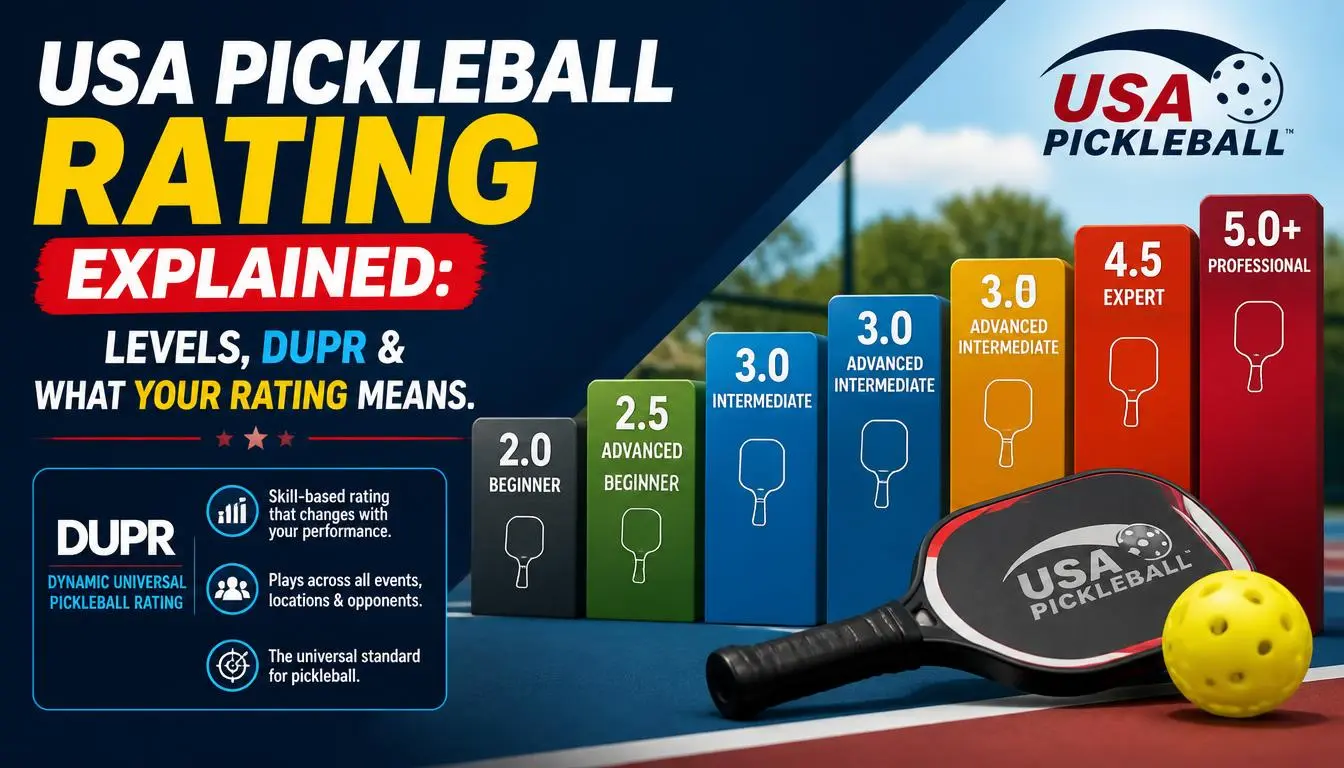
Pickleball levels show a player’s general ability, from learning the basics to advanced competitive play. The descriptions matter because a level reflects consistency, shot control, strategy, and decision-making, not simply power.
What Does a Beginner-Level Player Look Like?
A beginner is still learning the rules, scoring, basic positioning, and how to hit consistent shots. The main focus is building control and keeping rallies going.
What Does a 3.0 Player Typically Look Like?
A 3.0 player usually understands the basics and can maintain some rallies but is still developing consistency, court awareness, and shot control.
What Does a 3.5 Player Typically Look Like?
A 3.5 player generally has better consistency and understands basic strategy. They are developing more reliable serves, returns, dinks, and third-shot decisions.
What Does a 4.0 Player Typically Look Like?
A 4.0 player usually shows stronger consistency, better court positioning, and more purposeful strategy. They can execute important shots more reliably under normal competitive pressure.
What Does a 4.5 Player Typically Look Like?
A 4.5 player generally combines strong shot control with advanced strategy and consistency. They can handle faster games and make better decisions when opponents apply pressure.
What Does a 5.0+ Player Typically Look Like?
A 5.0+ player demonstrates a high level of consistency, strategy, court awareness, and execution. These players are often serious tournament competitors or elite-level players.
How Does the DUPR Rating System Work?
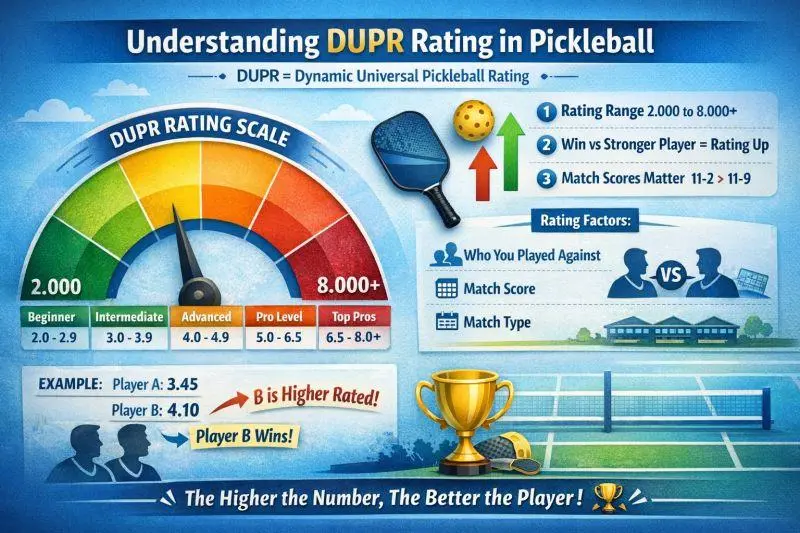
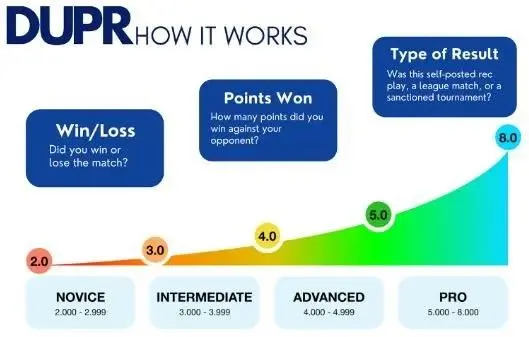
DUPR uses match results to estimate your playing level and updates as eligible results are processed. USA Pickleball player ratings: performance compared with what the system expects matters, not simply whether you win or lose.
Also Read: What Is DUPR Pickleball?
What Does DUPR Stand For?
DUPR stands for Dynamic Universal Pickleball Rating. It provides players with a numerical rating based on match results and is currently the official, exclusive rating system for USA Pickleball-owned events.
What Rating Scale Does DUPR Use?
DUPR ratings range from 2.000 for beginner-level players to 8.000 for professional-level players. Your exact number gives a more precise picture of your current competitive level.
Are Singles and Doubles Ratings Separate?
Yes. Rating providers commonly calculate separate Singles and Doubles ratings because the two formats require different skills and produce different match data
What Does Your DUPR Rating Say About Your Game?
Your DUPR rating gives a numerical estimate of your current competitive ability. A higher number generally reflects stronger performance, but your exact rating should be compared within the context of the system rather than treated as a permanent label.
Is a Higher DUPR Rating Always Better?
Generally, a higher rating reflects a higher estimated competitive ability. However, the most useful goal is an accurate rating that helps you play in the right division and against suitable opponents.
What Is Considered a Good DUPR Rating?
There is no single rating that is “good” for every player. The right benchmark depends on your experience, goals, competition, and whether you play casually or competitively.
Can Your DUPR Rating Change Over Time?
Yes. Your rating can change as new eligible match results are processed. More verified results can also help create a more stable picture of your current ability.
How Do You Get a Pickleball Rating?
You get a rating by creating a profile with a rating provider and playing eligible matches. After enough verified results are processed, the provider can establish and update your rating.
How Do You Create a DUPR Profile?
Create a free DUPR account, then connect your match activity via eligible events, clubs, or recorded results, in accordance with the platform’s current rules. Create a DUPR rating.
Which Matches Can Affect Your Rating?
Eligible match types depend on the provider and how results are submitted. USA Pickleball notes that verified matches from tournaments, leagues, and qualifying club sessions can contribute when results are submitted and processed.
How Many Matches Do You Need Before Your Rating Becomes More Reliable?
A new rating can be less stable because there is less match data behind it. As more eligible results are added, the system has a clearer picture of your playing level.
What Happens to Your Rating in Different Match Situations?

Your rating can respond differently depending on your opponents and how your performance compares with expectations. That is why looking only at wins and losses does not always explain a change in rating.
Also Read: How To Choose A Pickleball Paddle Weight:
Can You Lose Rating Points Even If You Win?
Yes. In DUPR, underperforming relative to the expected result can affect your rating even when you win. The score and expected performance can matter, not just the final winner.
What Happens When You Beat a Higher-Rated Player?
A strong performance against a higher-rated opponent can provide a positive rating signal. The exact change depends on the provider’s algorithm and the match details.
What Happens When You Lose to a Lower-Rated Player?
Losing to a lower-rated opponent may negatively affect your rating because the result can differ from the system’s expected outcome. The exact impact depends on the full match context.
Do Tournament Matches Affect Your Rating?
Eligible tournament matches can affect your rating when results are submitted to and processed by the provider. USA Pickleball-owned events now feed results into DUPR under the current partnership.
When Should You Worry About Your Pickleball Rating?
You usually do not need to worry about small rating changes. Pay closer attention when your rating seems inaccurate because of incorrect results, too little data, or a major difference between your current number and your consistent performance.
Why Is Your Rating Moving Up and Down So Much?
Early ratings can be more volatile because the system has limited match data. As more verified results are added, the rating can become a more stable reflection of your ability.
Why Does Your Rating Not Match How Good You Feel You Are?
Your personal view of your ability may differ from your recorded competitive results. Rating systems use match data, while skill levels focus more directly on demonstrated abilities and proficiencies.
What Should You Do If a Match Result Is Wrong?
Check the provider’s process for disputing or correcting the result. Accurate names, partners, and scores are important because incorrect information can affect how a match is attributed.
How Can You Improve Your Pickleball Rating?
The best way to improve your rating is to improve your actual game and produce stronger, consistent results in eligible matches. Focus on skill development instead of chasing small changes in the number.
Play More Verified and Competitive Matches
Regular eligible match play gives the rating system more information about your current ability. Consistent results can also help make your rating less volatile.
Focus on Playing Equal or Stronger Opponents
Competitive matches against suitable opponents can provide more useful performance data. USA Pickleball also notes that results against similar or higher-rated players can have a stronger impact.
Improve the Skills That Decide Close Games
Work on fundamentals such as deep serves and returns, third-shot choices, dinks, resets, shot selection, and reducing unforced errors. These skills can have a major effect on competitive results.
Make Sure Every Match Result Is Accurate
Confirm your scores, opponents, and partners whenever required. Clean and correct data helps prevent errors that could affect your rating.
What Is the Difference Between a Rating and a Ranking?
A rating estimates how strong you are, while a ranking shows where you stand relative to other players based on competitive results over a defined period.
What Does a Pickleball Rating Measure?
A rating estimates your current playing ability using match results processed through a provider’s system.
What Does a Pickleball Ranking Measure?
A ranking represents your position compared with other players based on results within a competitive system or period
How Do DUPR, UTR-P, and Older UTPR Information Differ?
These systems should not be treated as interchangeable because they use different providers, scales, and methods. For current USA Pickleball information, it is important to separate today’s rating options from older UTPR-focused content.
What Changed With UTPR?
Older articles may still discuss UTPR as the main USA Pickleball rating system. Current USA Pickleball guidance now identifies DUPR as the official exclusive rating system for USA Pickleball-owned events.
Is UTR-P the Same as DUPR?
No. UTR Pickleball Rating and DUPR are different rating systems. USA Pickleball currently recognizes both in its broader tournament ecosystem, depending on the event.
FAQs:
Is a 4.0 Pickleball Rating Good?
Yes, a 4.0 rating generally indicates a strong intermediate-to-advanced player with solid consistency, strategy, shot control, and competitive skills.
Can I Play Pickleball Without a Rating?
Yes, you can play recreational pickleball without a rating, but a rating can help you find suitable competition and enter certain competitive events.
Does DUPR Replace USA Pickleball Skill Levels?
No. Skill levels describe your playing abilities, while DUPR provides a numerical rating based on match results. They measure different aspects of your game.
Can My Rating Go Down Even If I Win?
Yes. Your rating can decrease after a win if your performance is below what the system expected based on the opponents and match results.
How Long Does It Take to Get a Pickleball Rating?
It depends on the rating provider and your match history. Your rating becomes more reliable as you add more eligible and verified match results.
Are Singles and Doubles Ratings Different?
Yes. Singles and doubles can have separate ratings because they require different skills, strategies, and styles of play.
Conclusion:
Understanding your USA Pickleball rating starts with knowing the difference between skill levels and ratings. DUPR helps measure your current performance through match results, while your rating can guide competition, track progress, and show where your pickleball game can improve.