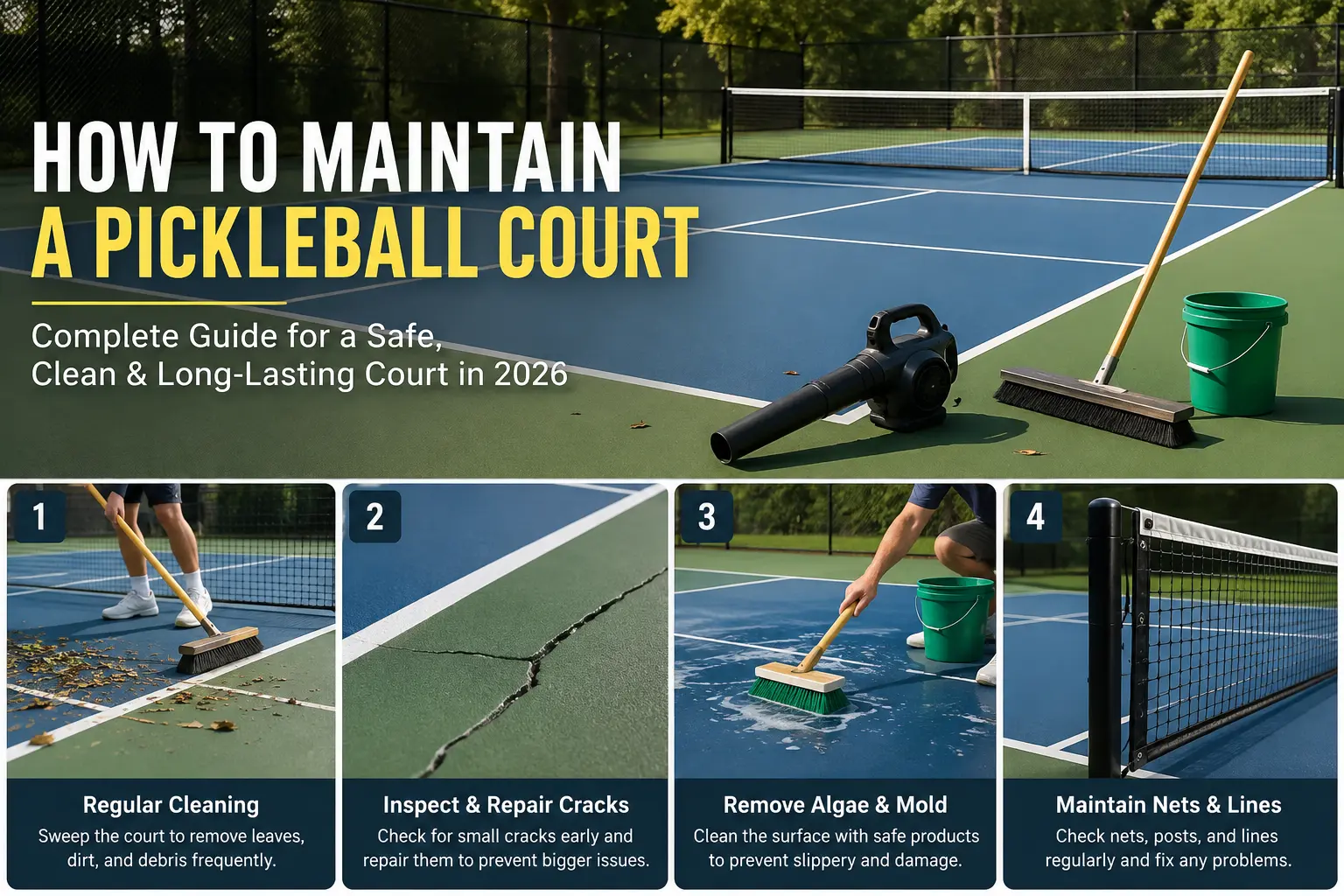
Pickleball Court Maintenance: 2026 Guide To Cleaning & Repairs
Pickleball court maintenance means regularly cleaning the surface, removing debris, checking for cracks, controlling water and algae, maintaining lines and nets, and repairing damage early. Proper care keeps the court safe, playable, and helps extend its surface life.
In this article, you will learn how to maintain a pickleball court in 2026, from regular cleaning and crack repairs to preventing surface damage, maintaining nets and lines, and knowing when professional resurfacing is needed.
How Do You Maintain a Pickleball Court?
Regular pickleball court maintenance means keeping the surface clean, dry, and free from debris while checking for cracks, standing water, algae, damaged lines, and net problems. Small issues should be fixed early to prevent expensive repairs later.
What Should You Check During a Routine Court Inspection?
Look for cracks, loose surface material, puddles, algae, faded lines, damaged fencing, and loose net posts. A quick inspection helps you find problems before they affect safety or court performance.
How Often Should a Pickleball Court Be Maintained?
Basic cleaning should be done regularly, while deeper inspections can be scheduled weekly, monthly, seasonally, and annually. The right frequency depends on weather, court use, surface type, and surrounding conditions.
How Often Should You Clean a Pickleball Court?
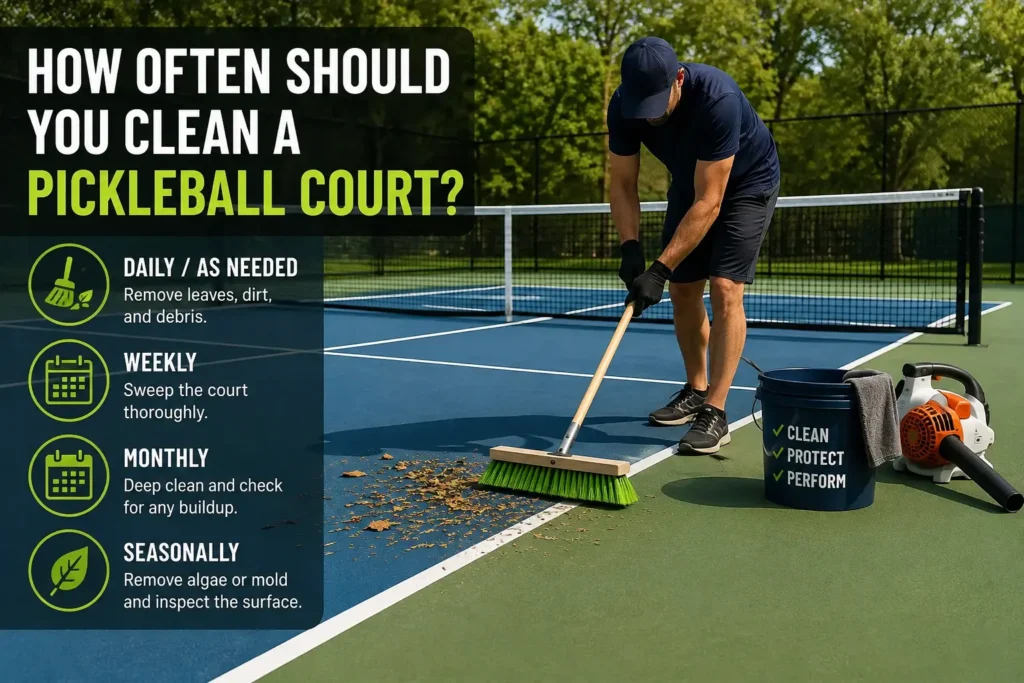
A pickleball court should be cleaned regularly to remove leaves, dirt, dust, and other debris. Frequent cleaning prevents surface buildup and helps keep the court safe and playable.
How Often Should You Sweep a Pickleball Court?
Sweep the court whenever leaves, dirt, or other debris collect on the surface. High-use outdoor courts may need sweeping several times a week, especially after storms or windy weather.
How Do You Remove Dirt and Debris From a Pickleball Court?
Use a soft court-safe broom or suitable blower to remove loose debris. Avoid dragging heavy equipment or using tools that can scratch or damage the playing surface.
How Do You Remove Algae and Mold From a Pickleball Court?
Remove organic growth with a cleaning method approved for the court surface. Do not allow algae or mold to remain because they can make the court slippery and contribute to surface deterioration.
What Is the Best Way to Clean a Pickleball Court?
Start by removing loose debris, then clean the surface with appropriate water and a court-safe cleaning method. Always follow the surface manufacturer’s recommendations because aggressive cleaning can damage coatings.
Can You Pressure Wash a Pickleball Court?
Pressure washing can damage some court coatings if excessive pressure is used. Before using a pressure washer, check the surface manufacturer’s instructions and choose the safest cleaning method for that specific court.
What Cleaning Products Are Safe for Pickleball Courts?
Use cleaning products specifically recommended for the court’s surface and coating. Avoid harsh chemicals, abrasive cleaners, and products that can weaken or discolor acrylic surfaces.
What Causes Pickleball Court Damage?
Weather, water, heavy use, poor drainage, debris, organic growth, and surface movement can gradually damage a pickleball court. Identifying the cause is important because simply repairing the visible damage may not solve the underlying problem.
How Does Water Damage a Pickleball Court?
Standing water can weaken the surface and contribute to cracks, algae, and other deterioration. Good drainage and quick removal of puddles are important parts of long-term court maintenance.
Can Sun and Heat Damage a Pickleball Court?
Long-term UV exposure and extreme heat can contribute to fading and surface wear. Proper coatings and regular inspections can help protect the playing surface from weather-related deterioration.
Can Heavy Court Use Cause Damage?
Frequent play naturally increases surface wear, especially on busy public or community courts. Regular inspections help identify worn areas before they become larger maintenance problems.
How Do You Prevent Cracks in a Pickleball Court?
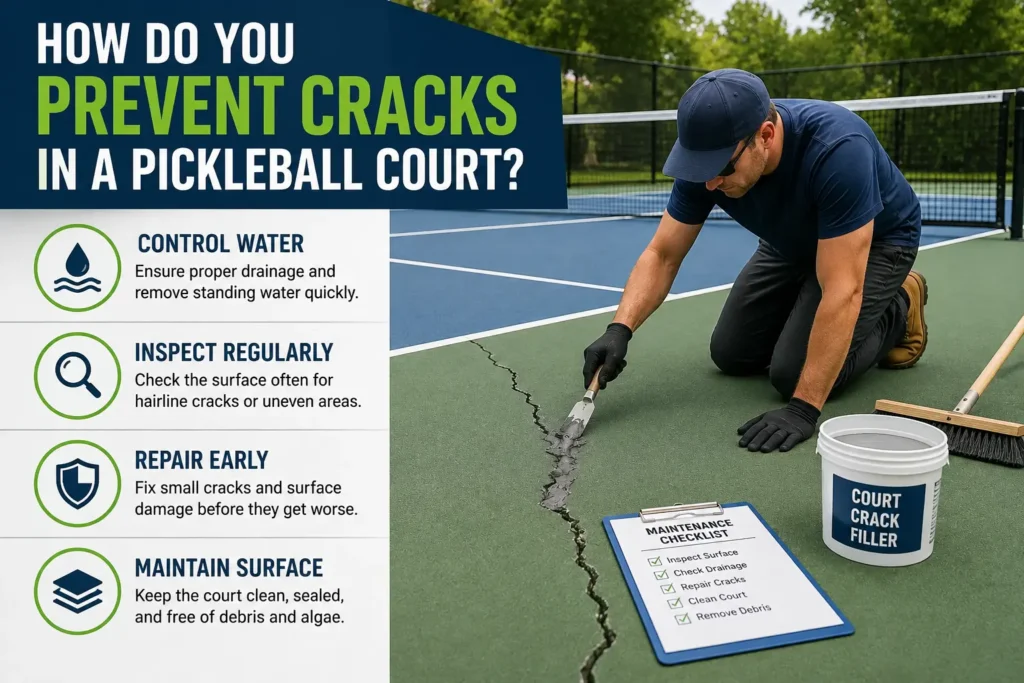
Preventing cracks starts with controlling water, maintaining proper drainage, inspecting the surface regularly, and repairing small problems early. Recurring or large cracks may indicate movement below the playing surface.
How Do You Find Small Cracks Early?
Inspect the court regularly for hairline cracks, widening joints, and areas where the surface appears uneven. Finding these problems early gives you a better chance of making a simple repair.
Why Do Pickleball Court Cracks Keep Coming Back?
Recurring cracks can result from movement, drainage problems, temperature changes, or issues beneath the surface. If a repaired crack repeatedly returns, professional evaluation may be necessary.
When Should a Court Crack Be Professionally Repaired?
Consider professional repair when cracks are large, spreading, recurring, or accompanied by uneven areas. Structural or base-related problems usually require more than a simple surface patch.
When Should a Court Crack Be Professionally Repaired?
Consider professional repair when cracks are large, spreading, recurring, or accompanied by uneven areas. Structural or base-related problems usually require more than a simple surface patch.
How Do You Maintain Different Pickleball Court Surfaces?
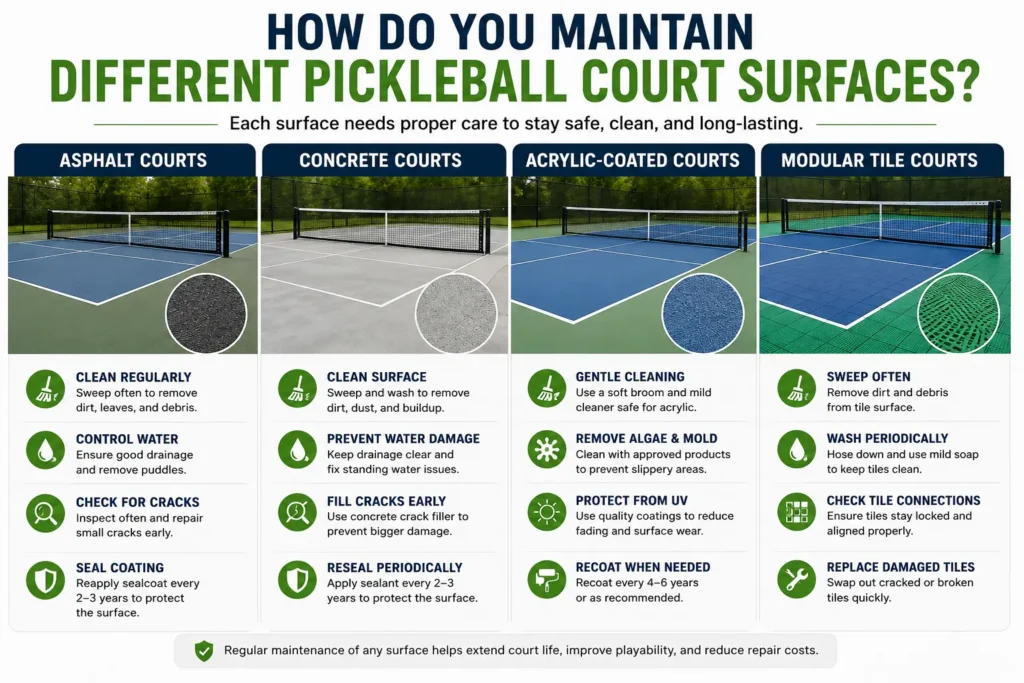
Maintenance depends partly on whether the court is asphalt, concrete, acrylic-coated, or made from modular tiles. Each surface can have different cleaning, repair, and resurfacing requirements.
How Do You Maintain an Asphalt Pickleball Court?
Keep asphalt courts clean and dry, monitor cracks, and address drainage problems quickly. Regular surface inspections can help prevent small defects from becoming larger areas of deterioration.
How Do You Maintain a Concrete Pickleball Court?
Check concrete for cracks, surface wear, drainage issues, and coating damage. USA Pickleball — Court Construction & Maintenance Manual. Repairs should address significant cracks or movement before applying new surface coatings.
How Do You Maintain an Acrylic Pickleball Court Surface?
Use gentle, manufacturer-approved cleaning methods and avoid abrasive tools or harsh chemicals. Regularly inspect the acrylic coating for fading, wear, peeling, and other surface problems.
How Do You Maintain Modular Pickleball Court Tiles?
Remove dirt and debris regularly and check tiles for movement, damage, or loose sections. Replace damaged tiles when necessary and keep the area beneath the system clean and properly drained.
How Do You Maintain Pickleball Court Lines and Nets?
Court lines and nets should be checked regularly because they affect both play and appearance. Clean the area around them and repair faded markings, damaged posts, or loose net components when needed.
How Do You Keep Pickleball Court Lines Visible?
Keep the playing surface clean and avoid abrasive cleaning methods that can wear down painted lines. If markings become significantly faded, use a compatible court-line coating or professional repainting service.
How Do You Maintain a Pickleball Net?
Inspect the net, straps, posts, and hardware for wear or damage. Keep the net properly positioned and replace damaged components rather than allowing them to interfere with play.
When Should You Resurface a Pickleball Court?
Resurfacing is usually considered when the court has widespread surface wear, fading, minor cracks, or a deteriorating coating that routine maintenance can no longer correct. The actual timing depends on court condition, climate, and usage.
What Are the Signs a Pickleball Court Needs Resurfacing?
Common warning signs include widespread fading, surface wear, numerous repaired cracks, rough areas, peeling coatings, and poor playing conditions. These problems suggest that cleaning and small repairs may no longer be enough.
How Often Should a Pickleball Court Be Resurfaced?
There is no fixed schedule for every court. Many outdoor courts may need resurfacing after several years, but climate, construction quality, drainage, maintenance, and playing frequency can significantly affect the timeline.
What Happens If You Delay Court Resurfacing?
Delaying resurfacing can allow small surface problems to spread and may eventually increase repair costs. Regular inspections help determine whether maintenance is still enough or resurfacing has become necessary.
How Much Does Pickleball Court Maintenance Cost?
Maintenance costs vary based on the court’s size, surface condition, local labor rates, cleaning needs, repairs, and resurfacing requirements. Routine maintenance is generally much less expensive than allowing damage to develop unchecked.
What Does Routine Pickleball Court Maintenance Cost?
Routine costs can include cleaning supplies, equipment, minor repairs, line maintenance, and occasional professional services. The total depends on whether the court is privately maintained or professionally serviced.
How Much Does Pickleball Court Resurfacing Cost?
Resurfacing costs depend on court condition, surface system, materials, labor, repairs, and location. Get a current local estimate instead of relying on one fixed national price.
Is DIY Pickleball Court Maintenance Cheaper?
The owner can often handle basic tasks such as sweeping, debris removal, and routine inspections. Professional help is more valuable for significant cracks, resurfacing, drainage issues, and structural problems.
What Is the Best Pickleball Court Maintenance Schedule?
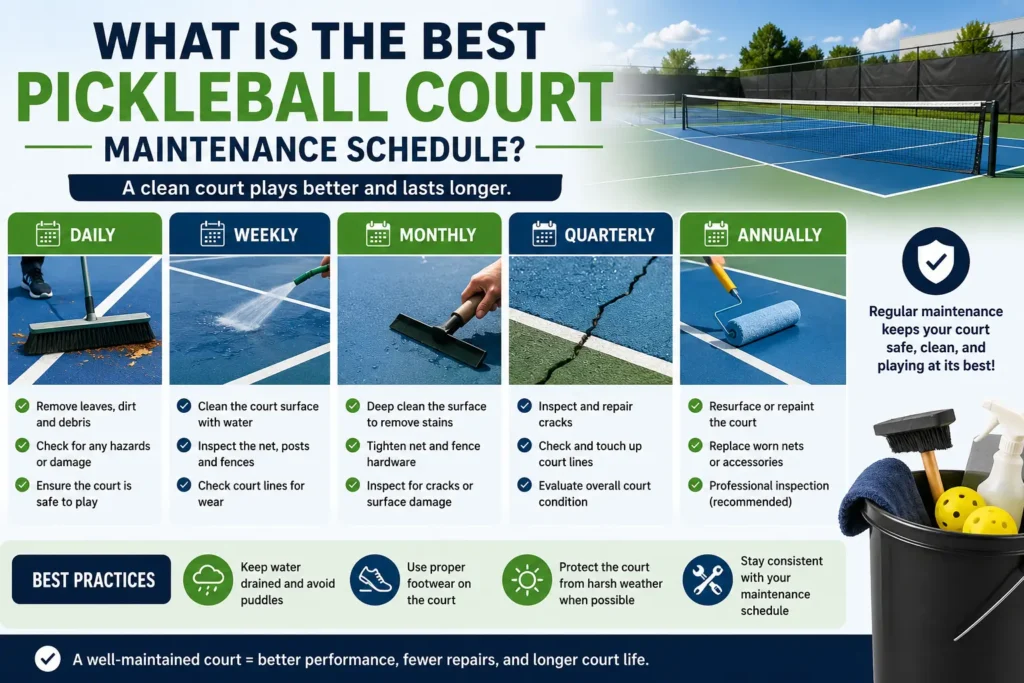
A simple maintenance schedule makes it easier to prevent problems and control long-term costs. Daily or weekly cleaning can be combined with monthly inspections and more detailed seasonal and annual checks.
Daily Pickleball Court Maintenance
Remove leaves, dirt, and other debris and look for standing water or obvious damage. Busy outdoor courts may need these quick checks more frequently.
Weekly Pickleball Court Maintenance
Sweep the playing surface thoroughly and inspect the net, lines, surface, and surrounding area. Look for new cracks, algae, surface wear, or drainage problems.
Monthly Pickleball Court Maintenance
Perform a more detailed inspection of cracks, coatings, drainage, fencing, posts, and court equipment. Record developing problems so repairs can be planned before they become serious.
Seasonal Pickleball Court Maintenance
Inspect the court after periods of heavy rain, extreme heat, freezing weather, or storms. Remove organic growth and address weather-related damage before the next playing season.
Annual Pickleball Court Maintenance
Complete a full condition assessment and review previous repairs. Decide whether the court needs cleaning, crack repair, coating work, professional maintenance, or resurfacing during the coming year.
When Should You Repair, Resurface, or Replace a Pickleball Court?
The right solution depends on the severity and cause of the damage. Minor surface problems may only need cleaning or repair, while widespread deterioration or structural problems can require resurfacing or replacement.
When Is a Pickleball Court Repair Enough?
Choose repair when damage is limited, and the underlying court remains structurally sound. Small cracks, isolated surface defects, and minor equipment problems can often be addressed without resurfacing the entire court.
When Is Resurfacing the Better Option?
Resurfacing makes more sense when wear, fading, or surface defects affect large areas but the underlying court is still stable. It can restore the playing surface without rebuilding the entire court.
When Should You Consider Replacing a Pickleball Court?
Replacement may be necessary when the underlying base has severe structural problems, drainage cannot be corrected economically, or deterioration is too extensive for resurfacing to provide a lasting solution.
What Maintenance Mistakes Should You Avoid?
The wrong cleaning methods, delayed repairs, poor drainage management, and unsuitable chemicals can shorten a court’s useful life. Good maintenance is not only about what you do but also what you avoid.
Don’t Ignore Small Cracks
Small cracks can become larger when water enters the surface or movement continues. Inspect and address cracks early rather than waiting until they affect play.
Don’t Leave Standing Water on the Court
Persistent puddles should not be treated as normal. Find and address the drainage problem because repeated water exposure can contribute to surface damage.
Don’t Use Harsh Cleaning Methods
Aggressive chemicals, abrasive tools, or excessive pressure can damage court coatings. Always choose a cleaning method suitable for the specific surface.
Don’t Treat Every Court Surface the Same Way
Asphalt, concrete, acrylic systems, and modular tiles have different maintenance needs. Follow the recommendations for the specific surface rather than applying one method to every court.
FAQs:
How Can I Make My Pickleball Court Last Longer?
Regular cleaning, quick crack repairs, good drainage, and routine inspections can help protect the surface and extend its usable life.
What Should I Do If My Pickleball Court Keeps Developing Cracks?
Check for drainage or underlying movement rather than repeatedly filling the cracks. Recurring or spreading cracks may need professional inspection.
Can You Play Pickleball on a Wet Court?
Yes, but it is better to wait until the surface is completely dry because moisture can make the court slippery and increase the risk of falls.
Does Regular Maintenance Reduce Pickleball Court Repair Costs?
Yes. Finding and fixing small problems early can help prevent larger damage and reduce the need for expensive repairs or resurfacing.
Can You Maintain a Pickleball Court Yourself?
Yes. Basic cleaning, debris removal, and inspections can be DIY tasks, while major cracks, drainage issues, and resurfacing are better handled professionally.
Conclusion:
Proper pickleball court maintenance keeps your court clean, safe, and playable throughout the year. Regular cleaning, crack repairs, drainage checks, and inspections can prevent costly damage. Follow this 2026 guide to cleaning and repairs to extend surface life and know when resurfacing or professional help is needed.