What Are the Different Shots in Pickleball? 10 Essential Shots
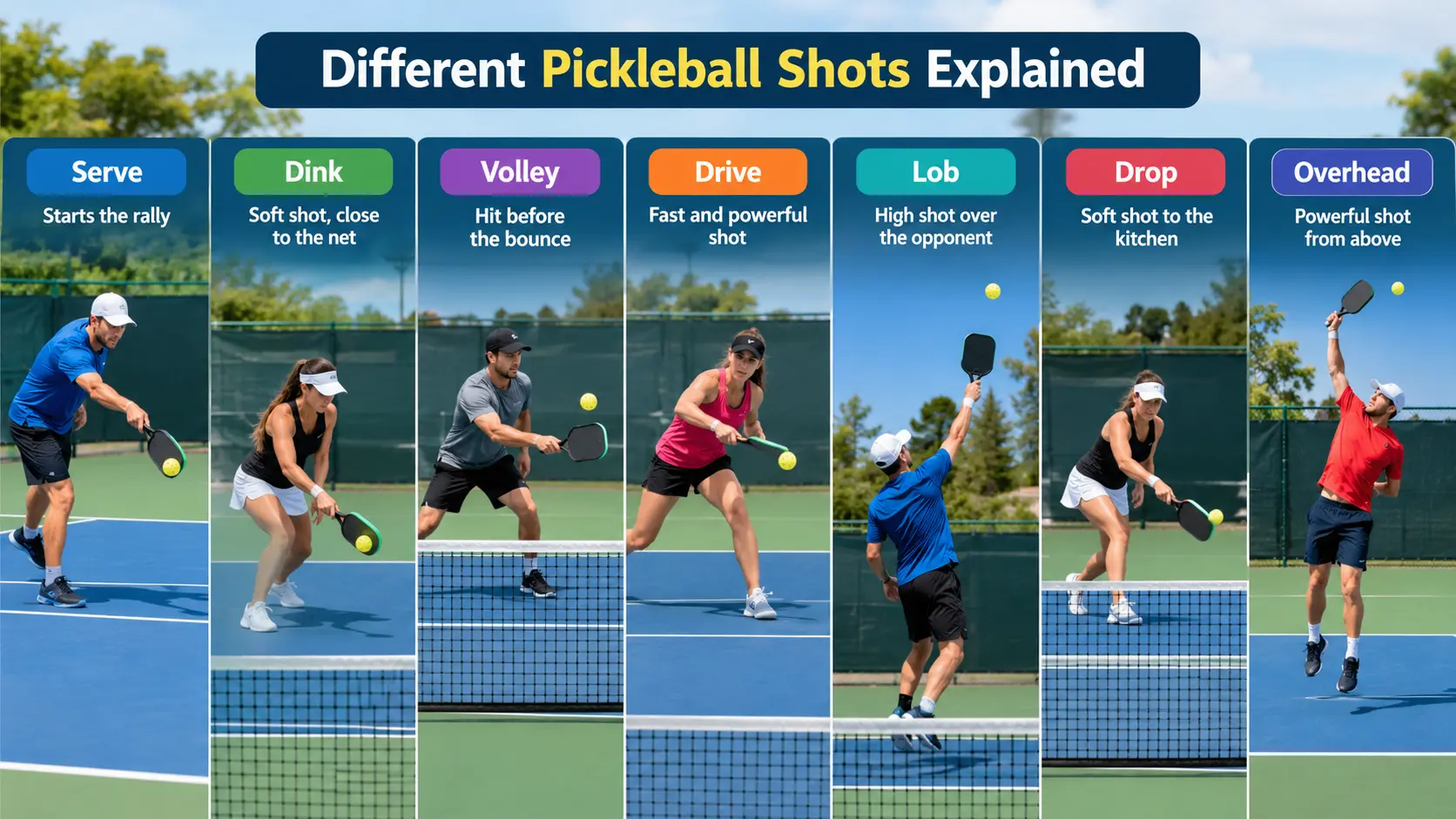
The different shots in pickleball include serves, returns, dinks, volleys, drives, lobs, drops, overheads, and groundstrokes. Each shot has a specific purpose, helping players control rallies, create opportunities, defend effectively, and attack their opponents during games.
In this guide, we will explore the different shots in pickleball, including serves, returns, dinks, volleys, drives, lobs, drops, and overheads, and explain when to use each shot during a game.
Understanding the Main Pickleball Shots
Pickleball uses a variety of shots for serving, defending, attacking, and controlling rallies. Each shot has a different purpose, and knowing when to use them can help players make better decisions and play more consistently.
Serve
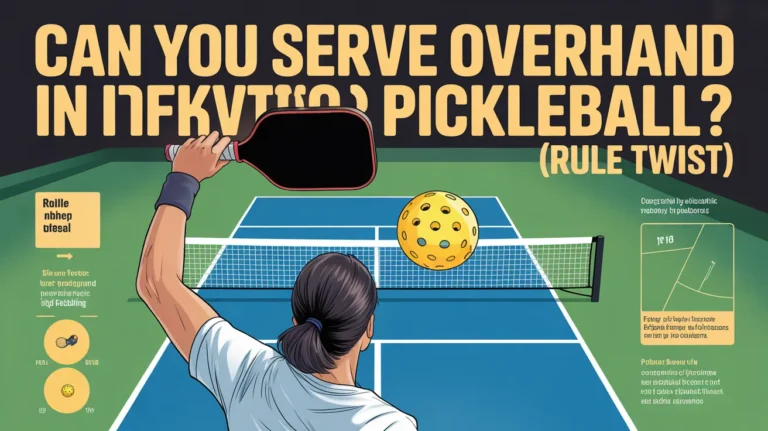
The serve starts every pickleball rally. It is hit diagonally across the court and must land in the opponent’s correct service area.Official USA Pickleball rules. A good serve focuses on consistency, depth, placement, and enough control to make the return difficult.
Also Read: What Are The Rules For Pickleball?
What Is the Purpose of a Pickleball Serve?
The main purpose of a serve is to start the rally while giving the serving team an opportunity to create an advantage. Players can vary the serve with different depths, speeds, directions, and spins.
What Makes a Good Pickleball Serve?
A good serve is consistent and lands deep enough to make the return more difficult. Beginners should generally focus on getting the ball in play before trying to add excessive power or complicated techniques.
Return of Serve
The return of serve is the shot used by the receiving team after the opponent serves. A deep return can keep the serving team farther from the Kitchen and give the receiving team time to move forward toward the non-volley zone. USA Pickleball recommends controlled, deep returns as a fundamental strategy.
How Do You Hit a Good Return of Serve?
Watch the ball carefully, prepare your paddle early, and focus on control. Aiming deep toward the baseline or through the middle can reduce the opponent’s attacking options.
Why Is a Deep Return Important?
A deep return makes it harder for the serving team to move quickly to the Kitchen. It can also give the receiving team time to establish a strong position near the non-volley zone.
Dink Shot
A dink is a soft, controlled shot that is hit from near the Kitchen and lands in the opponent’s non-volley zone. The goal is to keep the ball low and make it difficult for the opponent to attack. USA Pickleball describes the dink as a soft shot intended to land inside the opposing non-volley zone.
When Should You Use a Dink?
Dinks are commonly used when both players or teams are near the Kitchen. Instead of hitting the ball hard, players use touch and placement to create opportunities.
Why Is the Dink Important in Pickleball?
A well-controlled dink can force an opponent to hit upward or make an error. Dinking also allows players to patiently work for an attackable ball rather than trying to hit every shot with power.
Volley
A volley is a shot hit before the pickleball bounces. Volleys are especially common near the Kitchen line, where players have less time to react. A controlled volley can be used to block a fast shot, redirect the ball, or attack an opponent’s weak return.
When Do You Hit a Volley?
You can hit a volley when the ball is in the air and you are legally positioned to do so. Volleys are particularly useful during fast exchanges near the non-volley zone.
What Is a Block Volley?
A block volley uses a short, controlled paddle motion to absorb the opponent’s pace and send the ball back with control. It can be useful when an opponent hits a fast drive toward you.
Drive
A drive is a fast, powerful shot hit with pace toward the opponent’s court. It can put pressure on opponents and may force a weak response. USA Pickleball explains that a third-shot drive can be effective when the return is high enough to attack and the player can step into the ball with balance.
When Should You Hit a Drive?
A drive can be useful when the ball bounces high enough to attack or when your opponent is out of position. It can also be used to create a weaker return that gives you another opportunity to move forward.
Third-Shot Drive vs. Third-Shot Drop
The third-shot drive uses pace and pressure, while the third-shot drop uses a softer trajectory to land in the opponent’s Kitchen. The right choice depends on the height, location, and speed of the return
Third-Shot Drop
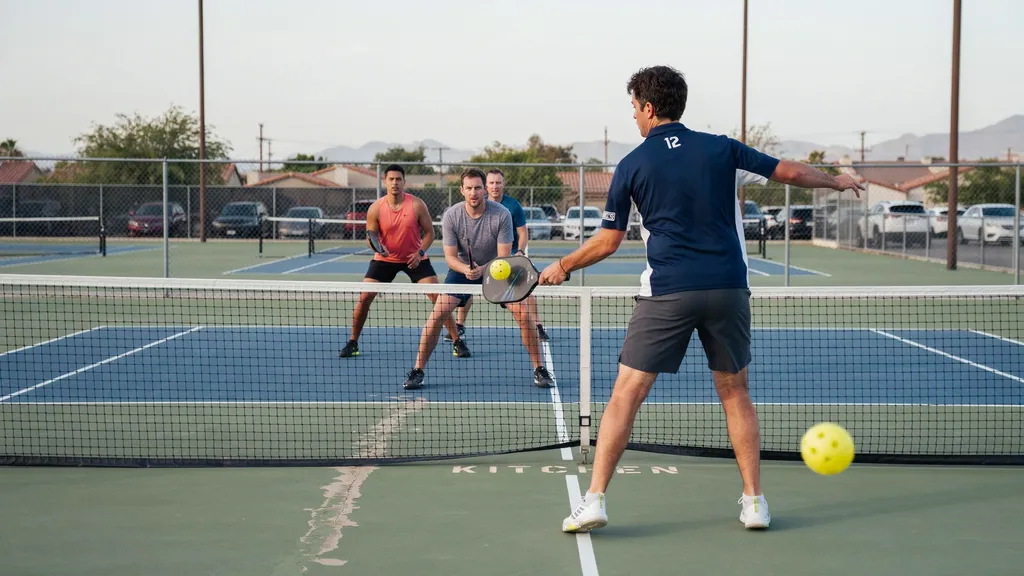
The third-shot drop is a soft, controlled shot hit by the serving team after the serve and return. Its goal is to land softly in the opponent’s Kitchen, making it harder for them to attack and giving the serving team time to move forward. USA Pickleball describes it as a key transition shot from the baseline toward the Kitchen.
Why Is the Third-Shot Drop Important?
The serving team starts farther from the Kitchen, while the receiving team can move forward after returning the serve. A successful drop can help the serving team transition toward the Kitchen instead of trying to win the rally immediately.
Third-Shot Drop vs. Drive: Which Should You Use?
A drop can be useful when you need a controlled shot to move forward, while a drive can be useful when the ball is high enough to attack. Both are important options, and players should learn to recognize the situation before choosing one.
Lob
A lob is a high shot that sends the pickleball over the opponent’s head. It can be used offensively to move opponents away from the Kitchen or defensively to create time to recover position. USA Pickleball identifies both offensive and defensive lobs as useful shots.
When Should You Use a Lob?
An offensive lob can be effective when opponents are close to the Kitchen and are not expecting the ball to go over their heads. A defensive lob can give you time to recover when you are pulled out of position.
What Makes a Good Lob?
A good lob needs enough height and depth to get over the opponent while remaining inside the court. Placement and timing are important because a short lob can give the opponent an easy overhead attack.
Overhead Smash
An overhead smash is a powerful shot hit above the head, usually when an opponent sends a high ball or lob. The goal is generally to hit the ball downward into an open area or toward an opponent’s feet. USA Pickleball recommends contacting the ball as high as possible and avoiding dangerous backpedaling when moving for an overhead.
When Should You Hit an Overhead?
An overhead is usually appropriate when you have enough time and space to get underneath a high ball. It is commonly used against an opponent’s lob that does not force you too far back.
How Do You Handle a Lob Before Hitting an Overhead?
Move quickly into position rather than backpedaling. Turn and run when necessary, then get underneath the ball so you can make controlled contact in front of your body.
Reset Shot
A reset is a soft, controlled shot designed to slow down a fast rally and make the ball difficult to attack. Players often use resets when transitioning from the baseline toward the Kitchen or when defending against an aggressive shot.
When Should You Use a Reset?
A reset can be useful when you are under pressure and need to take pace off the ball. Instead of responding with another hard shot, you can use a softer shot to regain control of the rally.
Why Is the Reset Useful?
The reset can help turn a defensive situation into a neutral one. With good control and placement, it can give you and your partner time to improve your court position.
Groundstroke
A groundstroke is a shot hit after the pickleball bounces. Forehand and backhand shots are common groundstrokes, and players can use them from the baseline or transition area. Groundstrokes can be hit with different speeds, heights, and amounts of spin depending on the situation.
What Is a Forehand Groundstroke?
A forehand groundstroke is hit on the dominant side of the body after the ball bounces. Players often use it for returns, drives, and other shots from the back or middle of the court.
What Is a Backhand Groundstroke?
A backhand groundstroke is hit on the opposite side of the body from the forehand. It can be played with one or two hands depending on the player’s technique and preference.
How Do You Choose the Right Pickleball Shot?
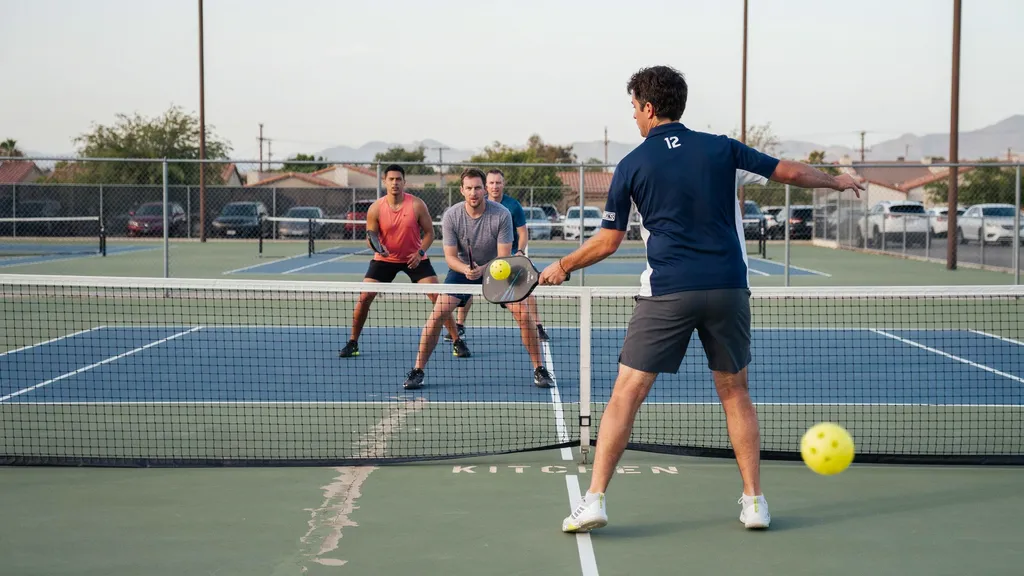
Choosing the right shot depends on where you are on the court, where your opponent is positioned, how high the ball bounces, and how much time you have. For example, a high ball may give you an opportunity to drive, while a low ball may call for a controlled drop or reset.
Consider Your Position on the Court
Your location affects which shots are practical. Players at the baseline may use drives, drops, and groundstrokes, while players near the Kitchen frequently use dinks and volleys.
Consider Your Opponent’s Position
Look at where your opponent is standing before choosing a shot. An opponent close to the Kitchen may be vulnerable to a well-placed lob, while an opponent moving forward may be vulnerable to a deep drive.
Choose Control Over Power When Necessary
Not every ball should be hit hard. Soft shots such as dinks, drops, and resets can help control the pace and create better opportunities for the next shot.
Which Pickleball Shots Should Beginners Learn First?
Beginners should first develop a consistent serve, return of serve, forehand, backhand, volley, dink, and basic drive. Once these fundamentals become comfortable, learning the third-shot drop, lob, reset, and overhead can expand your options during rallies.
Also Read: How To Start Playing Pickleball?
Best Shots to Practice as a Beginner
Start with shots that help you keep the ball in play:
- Serve
- Return of serve
- Forehand groundstroke
- Backhand groundstroke
- Volley
- Dink
- Drive
- Third-shot drop
- Lob
- Overhead
This progression gives beginners a foundation before moving into more advanced shot selection and strategy.
What Is the Difference Between a Dink, Drop, and Drive?
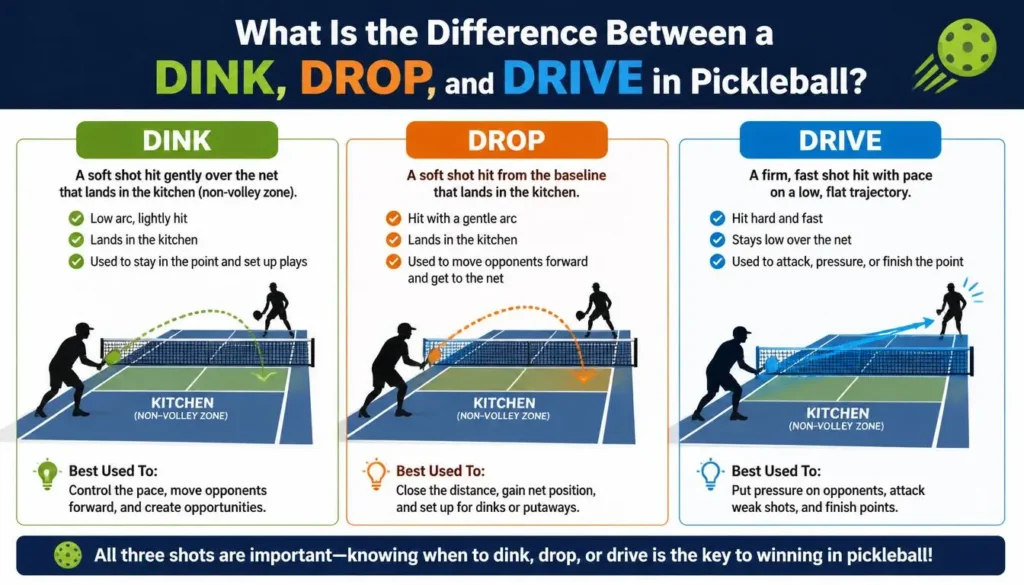
The main difference is the shot’s speed, trajectory, and purpose. A dink is usually a soft shot played near the Kitchen, a drop is a soft transition shot intended to land in the opponent’s Kitchen, and a drive is a faster shot designed to apply pressure. USA Pickleball specifically distinguishes the third-shot drop and drive as two major options.
| Shot | Main Purpose | Typical Pace |
| Dink | Control and patience | Soft |
| Drop | Transition toward the Kitchen | Soft |
| Drive | Pressure and attack | Fast |
How Can You Improve Your Pickleball Shots?
Improving your shots requires consistent practice, good footwork, controlled paddle preparation, and learning when to use each shot. Start by developing consistency before adding more power. Pickleball fundamentals. Practice individual shots first, then practice choosing the correct shot during realistic rallies.
Practice Placement Before Power
Instead of trying to hit every ball harder, practice placing the ball where you want it to go. Consistent placement can make your shots more effective and reduce unforced errors.
Practice Different Shots in Game Situations
Once you can perform individual shots consistently, practice using them during rallies. Work on recognizing whether a ball should be dinked, driven, dropped, lobbed, or attacked.
FAQs:
What Is the Easiest Pickleball Shot for Beginners?
The dink and basic groundstroke are good starting points because they help beginners develop control, consistency, and confidence before learning more advanced shots.
How Many Different Shots Can You Use in Pickleball?
Players can use many different shots, including serves, returns, dinks, volleys, drives, drops, lobs, overheads, resets, and groundstrokes.
Can You Use Spin on Pickleball Shots?
Yes, players can add spin to several pickleball shots, including serves, drives, drops, and dinks. Spin can change the ball’s movement and make it more difficult to control.
Can You Hit a Pickleball Shot With Both Hands?
Yes, some players use both hands for certain shots, particularly backhands. A two-handed backhand can provide additional stability and control.
Can You Hit Different Shots From the Same Position?
Yes, players can choose different shots from the same court position depending on the ball’s height, speed, location, and the opponent’s position.
Conclusion:
Pickleball has many different shots, and knowing when to use each one can make a big difference in your game. From serves and returns to dinks, volleys, drives, drops, lobs, and resets, practicing these pickleball shot types can help you play with more control and confidence.