Can You Play Pickleball In The Rain? (Safety & Court Tips)
You should not play pickleball in the rain because wet courts become slippery, increasing the risk of falls. Rain also affects ball bounce, paddle grip, and visibility, making the game less enjoyable. Wait until the court is completely dry before playing safely.
In this article, you will learn whether you can play pickleball in the rain, the safety risks involved, how wet conditions affect the game, and the best tips for protecting yourself, your equipment, and the court.
It’s Possible, but Usually Not Safe
Playing pickleball in the rain is possible, but it is not a good idea. A wet court becomes slippery; the ball does not bounce normally, and the risk of falling increases. For the safest and most enjoyable game, wait until the court is completely dry.
Rain changes the way the game feels and makes every movement less predictable. Even a small amount of water can reduce your grip, slow your reaction time, and affect the ball’s bounce. While some players continue to play in a drizzle, most experts and court managers recommend stopping play because safety should always come first.
Here is why playing on a wet court is not recommended:
- Slippery surface: Wet courts reduce traction, making it easier to slip while running or changing direction.
- Unpredictable bounce: Water makes the ball bounce inconsistently, making rallies less enjoyable.
- Higher injury risk: Slips and sudden falls can lead to sprains, bruises, or more serious injuries.
- Equipment concerns: Moisture can affect paddles, balls, and shoes if they stay wet for too long.
- Better playing experience: Dry courts offer safer movement, a more consistent ball bounce, and more enjoyable games.
This is why experienced players recommend waiting until the court is fully dry before stepping back onto it.
Why Playing on a Wet Court Is Risky
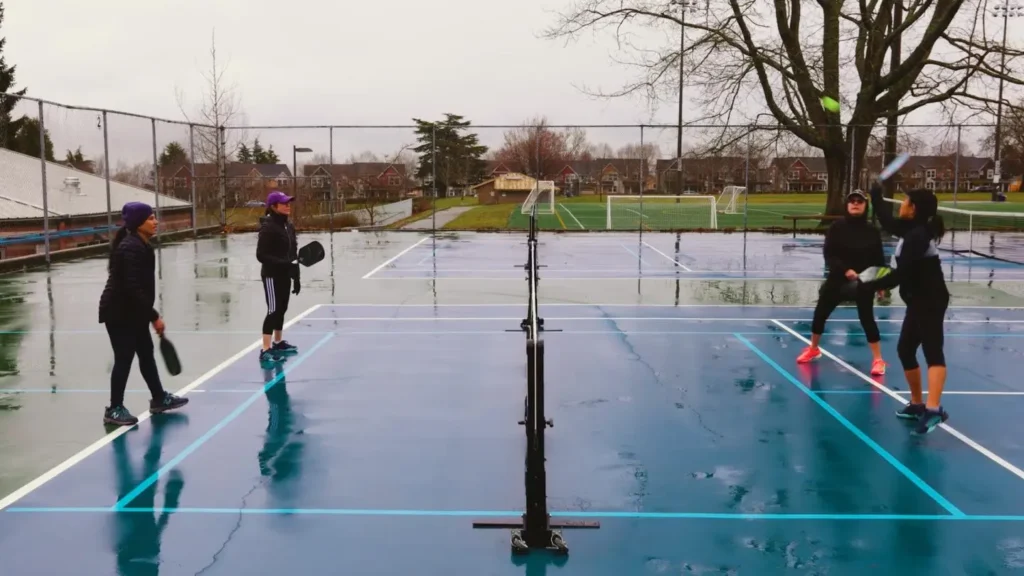
Playing on a wet pickleball court is risky because rain affects both your safety and the quality of the game. A slippery surface, poor ball bounce, and reduced traction make it harder to move confidently and react quickly.
Pickleball is a fast-paced sport that requires quick direction changes, sudden stops, and good balance. When the court is wet, your shoes lose grip, making slips and falls much more likely. At the same time, water changes how the ball bounces, making shots less predictable and rallies harder to control. Even a light layer of moisture can affect the game more than many players expect.
How Rain Changes Court Grip and Footing
Rain leaves a thin layer of water on the court that reduces traction between your shoes and the playing surface. As a result, quick movements become less stable, making it easier to slip when running, stopping, or changing direction.
Even courts that appear only slightly wet can be dangerous because moisture is not always easy to see. This is why experienced players recommend waiting until the entire court is completely dry before returning to play.
Why the Ball Doesn’t Bounce the Same in Wet Conditions
A pickleball is made to perform best on a dry court. When water covers the court or sticks to the ball, the bounce becomes lower and less predictable. Players may notice that shots do not react the same way from one rally to the next.
Wet conditions can also slow the ball and reduce shot accuracy. Instead of enjoying smooth rallies, players spend more time adjusting to inconsistent bounces, making the game less enjoyable.
Can Rain Damage Your Paddle, Ball, or Shoes?
Yes, rain can affect your equipment, especially if it stays wet for a long time. While many modern paddles are built to handle occasional moisture, leaving them wet can reduce their lifespan. USA Pickleball equipment rules. Shoes also lose grip on wet courts, making them less effective during play.
After playing in damp conditions, dry your paddle, ball, and shoes before storing them. This simple habit helps protect your equipment and keeps it in better condition for future games.
How Much Rain Makes Pickleball Unsafe?
Not all rain creates the same level of risk, but any amount of moisture can affect court safety. Even a drizzle can make the surface slippery, while steady or heavy rain creates dangerous playing conditions. The safest choice is to play only when the court is completely dry.
The amount of rain matters, but the condition of the court matters even more. Some courts dry quickly, while others hold water for much longer. Before starting a game, always check the surface for damp spots, puddles, and slippery areas instead of judging by the weather alone.
Light Drizzle vs. Steady Rain
A drizzle may not seem dangerous, but it can still leave enough moisture to reduce traction and affect the ball’s bounce. Players may not notice the slippery surface until they make a quick movement.
Steady rain creates much riskier conditions by soaking the entire court and forming wet patches or puddles. In these conditions, playing should be avoided until the surface is fully dry.
Is It Safe to Play Right After the Rain Stops?
Not always. A court may look dry from a distance but still have damp areas that increase the risk of slipping. Always inspect the entire playing surface before starting a match.
If the court still feels wet or the ball leaves water marks after bouncing, wait a little longer. Playing on a completely dry court is the safest option.
Which Court Surfaces Dry Faster?
Different court surfaces dry at different speeds. Well-maintained asphalt and post-tension concrete courts often dry faster when exposed to sunshine and wind, while older or poorly drained courts may stay wet for much longer.
Also Read: What Are Pickleball Courts Made Of?
| Court Surface | Typical Drying Speed | Playing Recommendation |
| Post-tension concrete | Fast | Safe only after completely dry |
| Asphalt | Moderate to fast | Check for damp spots first |
| Acrylic-coated court | Moderate | Wait until the full surface is dry |
| Poorly drained or older court | Slow | Avoid until all moisture disappears |
No matter which surface you play on, never rely on appearance alone. Walk across the court and check for slippery areas before starting your game.
What Happens If You Keep Playing in the Rain?
Continuing to play in the rain can make the game less safe, less enjoyable, and more frustrating. Wet courts reduce traction; the ball becomes harder to control, and every movement requires extra caution. Even if you avoid falling, the quality of the game usually suffers.
Rain affects more than just the playing surface. Players often slow down to avoid slipping, rallies become shorter because of inconsistent ball bounce, and confidence drops when every step feels uncertain. Instead of focusing on strategy and skill, players spend most of their attention trying to stay balanced.
Playing in the rain can lead to:
- More slips and falls because of reduced traction.
- Shorter rallies are caused by unpredictable ball movement.
- Lower shot accuracy due to inconsistent bounce.
- Less confidence during quick movements.
- A less enjoyable game for everyone on the court.
Casual Practice vs. Competitive Games
Some players may continue a casual practice session during a drizzle, but even then, safety should come first. Slippery courts increase the chance of injury, and poor ball bounce makes practice less effective.
Competitive matches should never be played on a wet court. Fair competition depends on consistent court conditions, and rain makes the game unpredictable for every player. Most organized events delay or suspend outdoor matches until the court is completely dry.
Indoor vs. Outdoor Pickleball During Rain
Indoor courts are the best choice when it is raining because they provide a dry, safe, and consistent playing surface. Players can move confidently, enjoy a normal ball bounce, and play without worrying about weather conditions.
Outdoor courts become much less reliable after rain, even if they appear mostly dry. If indoor facilities are available, they are usually the safest and most enjoyable option until outdoor courts have fully dried.
When Should You Stop Playing Immediately?
You should stop playing as soon as the court becomes slippery, puddles begin to form, or severe weather moves into the area. Waiting too long can increase the risk of injury, even if you have experience playing outdoors.
Many players believe they can finish “just one more game,” but weather conditions can change quickly. A court that feels safe at the beginning of a match can become dangerous within minutes. Paying attention to the court and the weather is always more important than finishing a game.
Wet Spots, Puddles, and Slippery Areas
Small wet spots may not seem dangerous, but they can cause sudden slips during fast movements. Puddles make the court even more unpredictable by affecting both traction and ball bounce.
Before every game, walk across the court and check for damp areas instead of relying on how the surface looks. If any part of the court is slippery, it is safer to wait until it dries completely.
Thunder, Lightning, and Severe Weather Warnings
Rain is not always the biggest danger. Thunderstorms and lightning can become life-threatening, especially on open outdoor courts. If you hear thunder or see lightning, leave the court immediately and move to a safe indoor location. Lightning safety guidelines.
Do not return to play until the storm has completely passed and the court is fully dry. No game is worth risking your safety during severe weather.
What Should You Do Instead?
If rain interrupts your pickleball game, the best decision is to wait until the court is completely dry or move to an indoor court. This keeps you safe, protects your equipment, and allows you to enjoy the game without worrying about slippery conditions.
Instead of trying to play through the rain, use the time to check the court, care for your gear, or find another place to play. A little patience can prevent injuries and help you enjoy a much better game once conditions improve.
How to Dry a Pickleball Court Safely
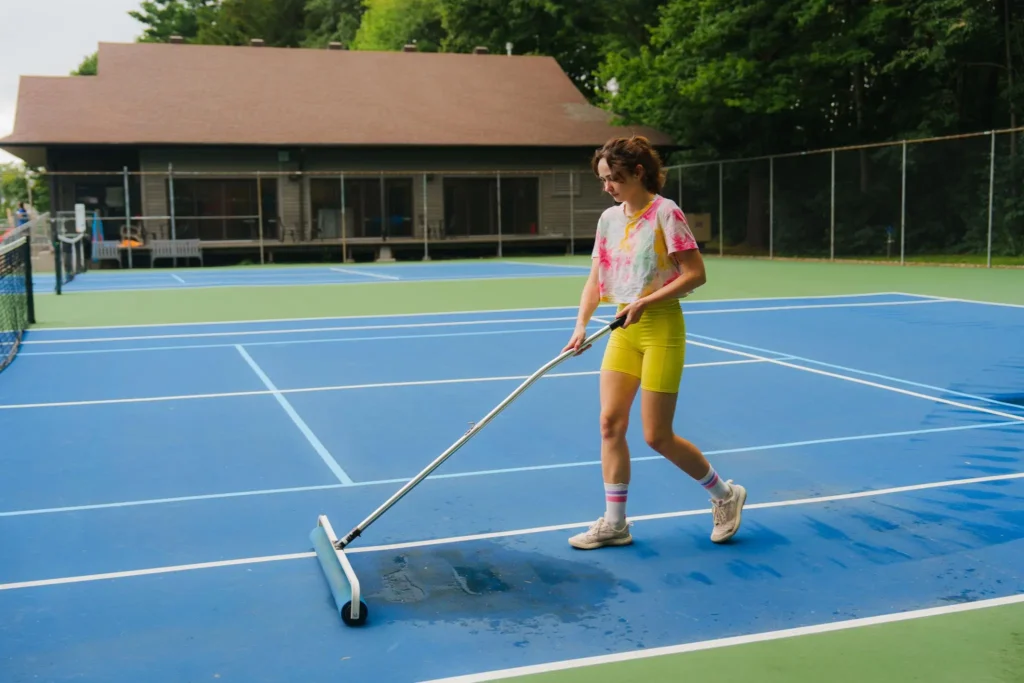
The safest way to dry a pickleball court is to let sunlight and wind remove the moisture naturally. If the facility allows it, you can also use a court squeegee or roller to push standing water off the surface.
Do not play while the court is still damp, even if most of it looks dry. Walk across the entire court and check for slippery spots before starting your game.
Tips for drying a court:
- Use a court squeegee to remove standing water.
- Allow sunlight and airflow to dry the remaining moisture.
- Check shaded areas carefully because they usually stay wet longer.
- Never use towels or household mops on large outdoor courts.
- Start playing only when the entire surface feels dry.
Safe Alternatives When Outdoor Courts Are Wet
Indoor pickleball courts are the best alternative during rainy weather because they provide a dry, consistent, and safe playing surface. They also allow you to practice without worrying about changing weather conditions.
If an indoor court is not available, consider waiting until conditions improve instead of risking an injury on a wet outdoor court.
How to Protect Your Pickleball Equipment From Rain
Rain can leave moisture on your paddle, ball, shoes, and bag. Wipe everything dry as soon as possible and allow your gear to air dry before putting it away. This helps keep your equipment in good condition and ready for your next game.
Store your paddle and balls in a cool, dry place rather than leaving them in a wet bag or a hot car. Proper care extends the life of your equipment and helps maintain its performance.
Also Read: How To Clean A Pickleball Paddle?
FAQs:
Does Rain Damage an Outdoor Pickleball Court?
Yes, frequent play on a wet court can wear down the surface faster and may increase maintenance needs over time.
What Should You Check Before Playing After It Rains?
Check for wet spots, puddles, and slippery areas, and make sure the entire court is completely dry before you start playing.
Can a Wet Pickleball Cause Poor Shot Accuracy?
Yes. A wet pickleball bounces unpredictably and is harder to control, making accurate shots more difficult.
Is It Okay to Use the Same Pickleball Shoes on a Wet Court?
No. Wet courts reduce shoe grip, increasing the risk of slipping even if your shoes are in good condition.
Should You Cancel an Outdoor Pickleball Game Because of Rain?
Yes. If the court is wet or rain continues, postponing the game is the safest choice for all players.
Conclusion:
Can you play pickleball in the rain? Technically, yes, but it is rarely worth the risk. Wet courts affect safety, ball bounce, paddle grip, and overall performance. Waiting for a completely dry court protects you and your equipment and ensures a safer, more enjoyable pickleball experience every time.